
Autor/Autorin

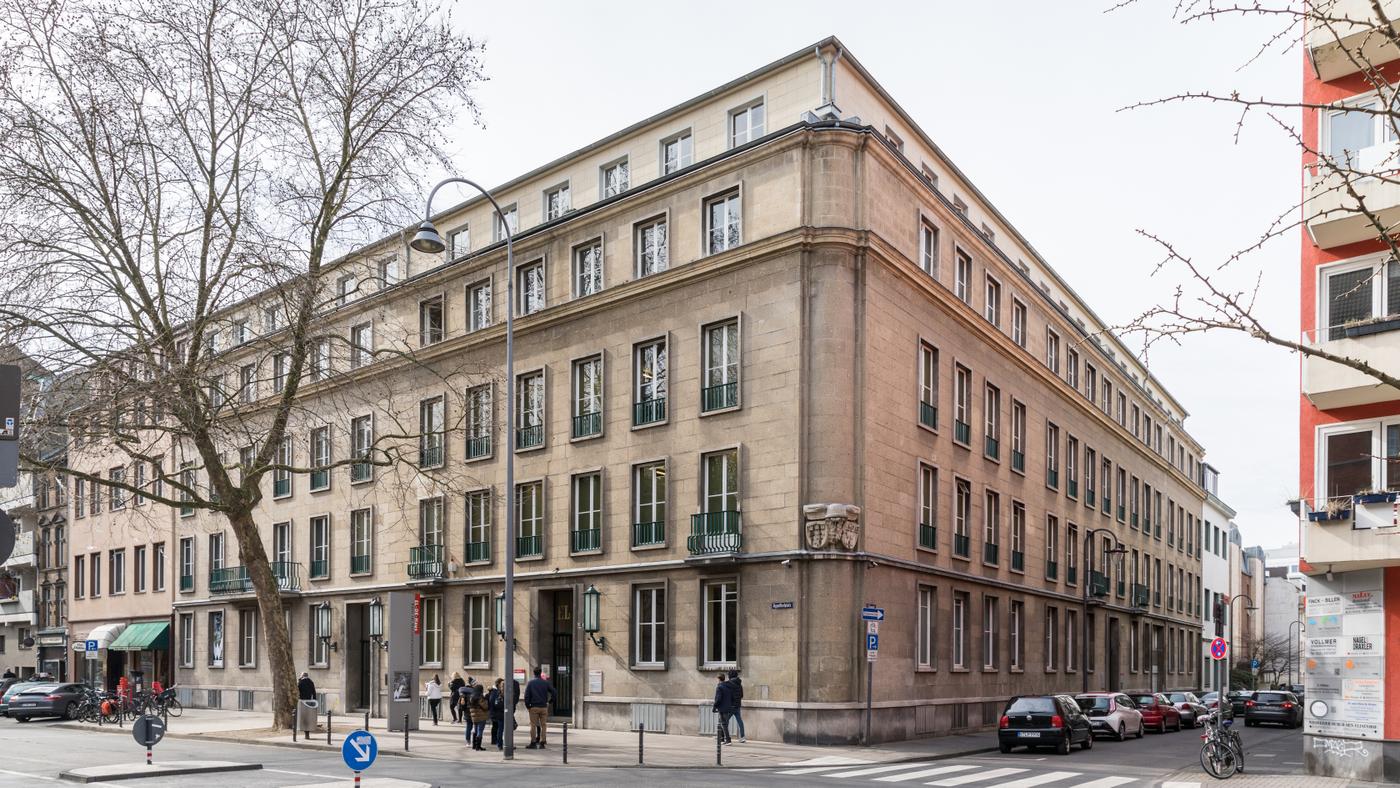
Last year, the EL-DE House in Cologne took another important step towards becoming the „House of Remembrance and Democracy“ that it always wanted to be. Now, following the events in Chemnitz, the expansion of the centre, which is housed in the city’s former Gestapo building on the Rhine, is receiving further support from artists. They want to support the urgently needed fight against anti-Semitism and xenophobia. As reported by WDR, the participants want to waive their fees for three months at seventeen events in order to support the expansion of the building into a „House for Remembrance and Democracy“.
In Cologne, as elsewhere, people who have been campaigning for years for an open confrontation with the Nazi past are looking for new ways to strengthen democracy and human rights. It is tempting to say that it is high time, but the Cologne centre in particular has long distinguished itself through its open and contemporary educational work.
The city council voted in favour of the expansion back in July 2017, with the primary aim of strengthening political education work against right-wing extremism. „ A great decision! “ was the headline of the „Mobile Counselling Service against Right-Wing Extremism NRW“, whose need for premises has grown and is in fact requiring more and more support in these times. The civil society actors involved in the network against right-wing extremism will be provided with conference facilities and rooms for their projects in the „House for Remembrance and Democracy“.
Elsewhere, too, there were already forward-looking possibilities, but the name „NS-DOKU-Zentrum“ remained. For example in Munich, where the city council decided in 2011 – against the votes of the SPD – in favour of an „NS Documentation Centre“. The ambivalent, double-edged argument that the name had become „naturalised“ was used at the time against the new concept of acting for human rights based on Fritz Bauer. Because even the „ stupidest Nazi understands that this is about analysing terror. “ Historical analysis can be that simple, but it can also be wrong, but that’s not what this was about, or wasn’t about at all. Nobody knows for sure.
Long before the Munich decision, it was obvious that analysing Nazi terror and documenting Nazi crimes, however meticulously, is not the best way to prevent the growth of right-wing extremism and racism that has been observed for years and is now particularly evident again. Victims and survivors in particular have repeatedly warned against a self-sufficient, one-sided negative memory and also against a bureaucratised, almost administrative ‚remembering crimes‘ that disregards the diversity of democratic resistance – Fritz Bauer called it self-defence and emergency aid when human rights are violated.
For human history is measured by the actions of the few and not the many, and that the few become more is and remains our task. In a House of Remembrance and Democracy, where not only hastily documented and written documents are produced or new, supposedly necessary changes to the law are pointed out, resistance can be learnt and, above all, lived in the spirit of human rights. Such a project can become a house of remembrance and, above all, of resistance, which is more than necessary. It is urgent when we look towards Chemnitz or the Mediterranean, where thousands of people are dying while the path is blocked for those who want to save and help. In a house for remembrance and democracy, it will be possible to address such pressing open questions. Yes, it’s great that it is now receiving such much-needed support!
Featured image: © Raimond Spekking / CC BY-SA 4.0 (via Wikimedia Commons), CC BY-SA 4.0, https://commons.wikimedia.org/w/index.php?curid=67401112