
Autor/Autorin
A number of biographies of Nazi perpetrators that focus on post-war careers have appeared in the last two decades. Legal contemporary history research has traced paths of social (re-)integration and worked out strategies of exculpation that were pursued by Nazi perpetrators, in other words by a not insignificant part of post-war society. The same applies to attempts by the former functional elites of the „Third Reich“ to influence the image of history. Numerous studies are now available on the personal lines of continuity in administration, politics, the judiciary, science and other areas of society. Albert Speer (1905-1981), Hitler’s star architect and armaments minister, was the protagonist of several biographical works and individual studies. [ 1 ]
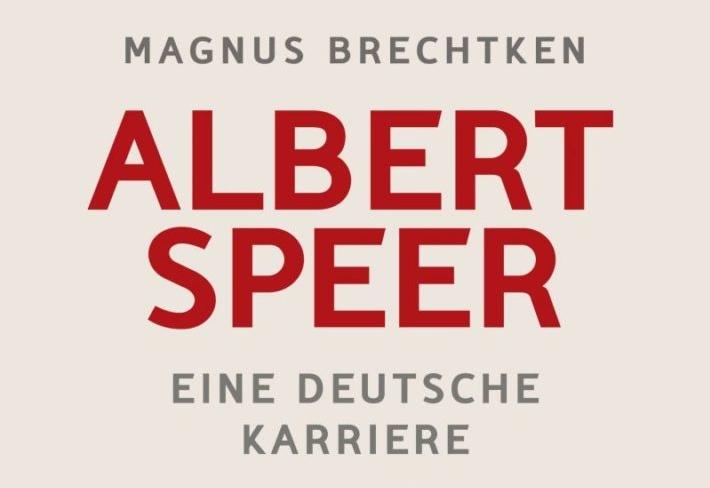
In view of the careless handling of the extensive documentary material by earlier biographers – above all by Joachim Fest – and the well-known influence of Speer on the portrayal of his role before 1945, a further biographical study on „Hitler’s architect“, which separates his self-stylisation from the historical through source-critical analysis, may well appear useful. Especially if it provides new information on Speer’s role in the „Third Reich“ or on the usual strategies of exculpation. Magnus Brechtken, Deputy Director of the Institute of Contemporary History in Munich, has now published a further biography of the architect and armaments manager.
Instead of an introduction, M. Brechtken frames the study with a prologue and epilogue, each with the character of a plea, supplemented by an indictment of previous research and a condemnation of his protagonist. As the author discusses the state of research in a separate chapter (p. 535 ff.), this can be omitted in the introduction. However, a description of his methodological approach would have been desirable. The appeal made with some urgency in the prologue not to follow the (self-)portrayal of the contemporary witnesses, but to critically analyse the available source material (p. 12ff.), is intended as a warning. Especially as it becomes clear in the course of the account that basic methodological rules in dealing with Speer’s staging of the past and the portrayal of his work before 1945 were criminally disregarded.
M. Brechtken begins with a largely chronological outline of Speer’s socialisation up to 1933, although repetitions cannot be avoided in an overall presentation in view of the existing works. Despite some redundancies, Speer’s privileged youth in a wealthy family is sketched stringently and in an easily readable form, and his architectural studies are reconstructed, although the sources provide no indication of any extraordinary talent. Speer had already decided in favour of National Socialism before 1933, was familiar with its world view and goals from the outset and did not rise to the political leadership of the „Third Reich“ because of his outstanding abilities.
After the National Socialists seized power, he pursued his career single-mindedly, knew the racist premises and the regime’s potential for eliminatory violence and was ultimately actively involved in the policy of extermination. He was not the architect and manager of politics and ideology, standing untouched outside the regime’s centres of power. Speer did not find out about the crimes by chance or only rudimentarily, he was significantly involved in them. He came forward with slogans of perseverance in cooperation with Hitler’s propaganda minister Joseph Goebbels when the war had long been lost (p. 272), prolonged the murder as armaments minister by organising and expanding forced labour in cooperation with Heinrich Himmler, and forced the deportation of Berlin’s Jews in order to gain space for the architectural design of the future capital Germania. In a word, from the point of view of the Nazi regime, he was „ideologically solidified.“ (p. 45) M. Brechtken locates his activities as armaments minister precisely in the context of the war of extermination, the interplay with other responsible authorities is worked out, Speer’s attempt after 1945 to present technical work as an end in itself, detached from self-interest and the consequences of his actions, appears at best as autosuggestion. He proves to be the „architect of total war“, who knew the resulting consequences (p. 155 ff.) and was not least responsible for the exploitation and murder of countless forced labourers.
This discrepancy between Speer’s retrospective self-stylisation and his actual role in the unjust state has already been partially elaborated in the works mentioned above. However, Brechtken’s study is the first to prove Speer’s participation in the crimes by meticulously analysing the extensive source material and subsequently deconstructing his self-portrayal in all areas. At the end of the account, Speer, another representative of that „generation of the unconditional“, of objectivity [2 ], emerges from the shadows of a structure of lies.
His self-dramatisation still worked before the International Military Tribunal in Nuremberg. Speer was lucky that numerous documents were unknown or inaccessible at the time. The myth of the apolitical and decent, ideologically unencumbered architect and armaments manager, who was at most guilty in that he did not look closely enough and ask questions, had its starting point here (p. 295 f). This marked the beginning of his second career as a contemporary witness and interpreter of history. He succeeded in distancing himself from the National Socialist „elite“, with whom he sat in the dock, and escaped the impending death sentence. He skilfully launched rumours about a plan to assassinate Hitler, fabulated the armaments management based on forced labour under his responsibility as the basis of the later German economic miracle (p. 310 f.), presented himself as the good Nazi who had never left the bourgeois foundation and had risen to the National Socialist centre of power solely on the basis of his professional skills (p. 305 ff.).
With this style, Speer’s extremely successful self-portrayal after 1945 found positive social resonance and influenced the historical image of post-war West German society. M. Brechtken devotes two extensive chapters to this complex. He opposes the still virulent misconception that National Socialism was something foreign, a mysterious power that overwhelmed the country in January 1933 and suddenly disappeared again in May 1945. He does not ignore the countless Germans who put their lives and endeavours at the service of the Nazi regime for various reasons and takes into account the influence of structural determinants. For this very reason, however, there is a lack of reference to the many years of relevant research. An explicit inclusion of the research controversy surrounding Hitler’s significance in the National Socialist power structure would have been quite relevant with regard to the dismantling of the apologetic, Hitler-centred image of the past that Speer helped to propagate. Here, as with the longevity of Speer’s lies, it is true that the findings of historical scholarship often only have a broad social impact if they do not run counter to collective needs for exculpation. Although he achieved particular prominence, Speer appears as a representative of all those who were committed to National Socialism and helped to shape the „Third Reich“ (p. 11). M. Brechtken sees Speer as exemplary for the bourgeoisie that supported Hitler as well as for the „elite“ that ensured the functioning of the regime in the administration, judiciary, etc. and has already been analysed in detail as the leadership corps of the Reich Security Main Office. [ 3 ]
An interpretation of National Socialism constructed around the person of Hitler and his ideological priorities, which views the development of the unjust state towards systematic mass extermination primarily as the result of the intentions of a strong dictator and a few helpers, was at the centre of a research controversy for a long time. The historians Hans Mommsen and Martin Broszat, to name two protagonists, had long since provided a much more complex picture of National Socialist rule. In their fundamental works, they emphasised the structures of Nazi rule, including the power of a large number of people acting in the National Socialist sense, especially the (inherent) dynamics of groups active in this context, but also exogenous factors that evoked spontaneous, situational reactions. On the basis of findings obtained from numerous sources, Hitler appears here as an unsteady dictator who was weak in decision-making, while structural determinants in the National Socialist system of rule are accorded correspondingly greater importance.
An interpretation of the past that focusses responsibility for Nazi crimes on a few perpetrators and separates the actions of an army of millions from this, limiting hundreds of thousands of contributions to the functioning of the unjust state to career-related motives, while the bourgeois, decent core of these lives allegedly remained untouched, accommodated the widespread need for exculpation and has persisted in many ways to this day.
The lawyer and Auschwitz prosecutor Fritz Bauer (1903-1968) pointed out the problematic nature of this view of history in the course of the Auschwitz trial. With the facts revealed in this trial, a corresponding interpretation of National Socialism was already refuted in the mid-1960s. The tendency of Federal Republican courts to bring charges of aiding and abetting murder and to see the perpetrators in that narrow circle around Hitler correlated with the aforementioned interpretation of Speer & Co. Corresponding images of society and apologetic interpretations of the National Socialist past can be found in a large number of indictments and, above all, judgement statements on National Socialist trials. Their lines of argument reflect the social discourse and at the same time have a (legitimising) effect on it. A consequence of personal continuities from the Nazi regime in the areas of administration, executive and judiciary beyond the end of the war in 1945.
An inclusion of the corresponding findings, a localisation of Speer in the larger context of the only half-hearted Federal Republican „history of confrontation“ with the National Socialist legacy, would have been desirable and insightful, but M. Brechtken’s work remains ambivalent in this respect. It disposes of the remnants of the Speer myth, but outside of academia it remains as powerful as ever. The author does away with the self-image formulated by Fest and outlined by Speer and with misguided interpretations of history. He bases his investigation on the premise that the unjust state could only be realised on the basis of a majority of those who thought and acted in the National Socialist sense. However, over thirty years ago, historians were already emphatically pointing out that a Hitler-centred view of history may meet German society’s need for exculpation, but is not viable as a historical explanation.
If Magnus Brechtken had contextualised his protagonist more strongly within this larger research framework, all that would have remained after the dismantling that had already taken place prior to this work would have been another exemplary representative of the „generation of the unconditional“, who glossed over his concrete responsibility for the Nazi crimes by subsequently smoothing over his biography. Speer’s „German career“ is just one more example of the „success story“ of the (re-)integration of the National Socialists into West German society, while the consequences of the failed denazification are ignored. A thoroughly contemporary, up-to-date interpretation in which the author avoids drawing undesirable conclusions from his research findings that could touch on a still virulent need for exculpation. Here we come full circle from the „success story“ to a national (remembrance) culture that is in danger of ossifying into ritualisation and no longer reaching people.