
Autor/Autorin


During the American Civil War (1861-1865), US President Abraham Lincoln issued Proclamation 95 – the so-called Emancipation Proclamation – on 22 September 1862. It came into force on 1 January 1863 and officially banned slavery in the southern states of the USA. However, due to the ongoing hostilities, Lincoln’s order could only be enforced when the northern troops reached the southern states. Union General Gordon Granger was the first to arrive in the state of Texas on 19 June 1865 – Juneteenth – and officially announce the new law to the inhabitants. – Editor’s note
I have written this article with special reference to 19 June – Juneteenth, the day the American southern states were freed from slavery. It is long, personal and direct. It is meant to be a lament as well as a history lesson, a challenge and a heartfelt invitation for change. It is meant to be a continuation of an important conversation. I hope you will take the time to read it and reflect on it. The text was written with love.
* * *
My business trip to rural North Carolina in January was a short one. One day to get there, half a day to take an affidavit, and then straight back home. When I arrived at the hotel and checked in, a nice white woman in her thirties greeted me at the front desk with a friendly smile. The name tag pinned to her blouse identified her as „Mary“. I handed her my ID and a credit card, and her smile widened when she noticed that my Maryland state driver’s licence identified me as „Ahmed Davis“. „Well, that’s just the most fabulous surname in the world, don’t you think? „Obviously, she was a „Davis“ too.
I agreed with her with a half-smile as I saw my suspicions confirmed. As she spoke to me, she couldn’t have guessed what I was thinking: that she was holding my Maryland driver’s licence because I am a son of the capital city of Baltimore, like my father before me; and like his mother before him, a daughter of Baltimore; but that again, her mother – my great-grandmother Olivia, affectionately known as Grandma O – was from a very different place and time.

You see, when you look at the broader picture, it really wasn’t all that long ago. And I’m hardly the only one of us who can tell such a story. We, Black Americans, celebrate Juneteenth – Emancipation Day, also known as Jubilee Day – as an important date of de jure legal change, but as a country we have not fully recognised the de facto aspects of Juneteenth. Are black people in this country, in 2020, really free? Juneteenth is a cause for celebration, but have the important constitutional amendments after the American Civil War really borne more lasting fruit than the strange one that Billie Holiday sang about in her famous song „ Strange Fruit „?
The trees of the South bear strange fruit, blood on their leaves, blood on their roots. Black bodies swinging in the southern wind, strange fruit dangling from the poplars.
Southern trees bear a strange fruit, blood on the leaves and blood at the root, Black bodies swingin‘ in the southern breeze, strange fruit hanging from poplar tree.
It is one of the existential questions and uncomfortable truths that this country has yet to fully come to terms with: what are the consequences of centuries of physical, mental and emotional subjugation of an entire people and how do they still affect our society in numerous ways today. Many thought the current cries for justice were mainly for George Floyd, Ahmaud Arbery, Trayvon Martin, Breonna Taylor and so many others. But we still weep for Emmett Till and Martin Luther King and Malcolm X and Medgar Evers; we still weep for the Tulsa murders and massacres (from 31 May to 1 June 1921 in Tulsa, Texas). June 1921 in Tulsa, Oklahoma) and Rosewood (a town in Levy County, Florida, in January 1923) and during the Red Summer of 1919 (the result of bloody race riots across much of the United States); and yes, I also still wonder what happened to „40 acres and a mule „. (1)
Stony the road we trod, Bitter the rod we felt in the days when hope unborn had died. But in steady beat, Have not our heavy feet come to the place our fathers longed for?
Stony the road we trod, Bitter the chastening rod, Felt in the days when hope unborn had died, Yet with a steady beat, Have not our weary feet, Come to the place for which our fathers sighed?
The Black experience in America cannot be categorised into a single point of view, represented by a single one of us or transmitted to someone else. We are also different from one another in our backgrounds and origins, our views and politics, and even in our colour (which can undoubtedly be directly linked to some of the heinous consequences of slavery that I mentioned above).
If you were to take a poll of my black colleagues, they would all, like me, stand on end at the question most of us have heard often enough to invite one of us to speak on behalf of all: „Please tell us what black people think about issue x, y or z?“ The situation is far more complicated than me or anyone else being able to give a definitive answer to these questions on behalf of an entire „racial community.“ Do not confuse the actions of individuals with the goals of all. Some march peacefully and pray constantly while doing so, while others take a decidedly less passive stance. A righteous person does not condone looting, nor does he or she participate in it or cause harm to others. At the same time, he or she may fully embrace the impulse to revolt, speaking the language of those Dr King called the ‚unheard‘. Perhaps Frederick Douglass put it best when he spoke of the price of true freedom:
‚Those who profess liberty and yet deprecate agitation are men who want to reap without ploughing the ground. They want rain, lightning and thunder.
Those who profess to favour freedom, and yet deprecate agitation, are men who want crops without plowing up the ground. They want rain without thunder and lightning.
Regardless of social class, education, geography or personality, we realise that we as a people have been mistreated in and by this country, even though we have remained loyal to the country – especially in the military – for far longer than we can explain. Black people like myself wrestle with myself on this point because I know that this is the greatest country in the world – yes, even now; and at the same time, it is a nation in need, in desperate need of true healing and reconciliation; striving for a lasting „racial harmony“ rooted in a structural commitment on the part of the government and private sector to true equality. But firstly, this only works with an open acknowledgement of what was wrong in the past, and secondly, only with genuine efforts to bring about lasting change. One of the many reasons why there was and is so much anger, frustration and pain is the fact that the deaths of black citizens at the hands of police and law enforcement – or those who see themselves as such – were completely unnecessary and preventable. They have generally been met with indifference, platitudes or empty promises of change. And we know that this is not just a blot from the recent past. What so many are now opening their eyes to, reacting to with horror and deep down, has long been the lived experience of Black Americans.
We have travelled a road soaked in tears. On our way through the blood of the slaughtered, we have arrived. Coming from a dark past, we finally stand where the bright glimmer of our shining star falls.
We have come over a way that with tears has been watered. We have come, treading our path through the blood of the slaughtered. Out from the gloomy past, ‚til now we stand at last. Where the white gleam of our bright star is cast.
During an appearance four years ago on the popular Late Show , famed actor Will Smith shared something with host Steven Colbert’s audience that black people have known at least since the advent of the iPhone. Smith said: „Racism isn’t getting worse, it’s just being filmed.“ By then, we had already seen Eric Garner choke to death in New York for allegedly selling single loose cigarettes. Eleven times he pleaded, „I can’t breathe.“ We had also seen Walter Scott shot in the back in South Carolina and the police officers deliberately placing a gun at the scene. Soon after, we saw Philando Castile being shot by a police officer, live, on Facebook – in real time, while sitting in the driver’s seat of his car. And, worryingly, the list goes on and on. We later heard that the young white murderer of a pastor and members of a black church congregation in South Carolina was peacefully taken into custody, and that he was – inexplicably – given a meal at Burger King on the way to the police station. Our lived experience is not the experience of everyone.
Is every black person harassed or mistreated by the police? Certainly not. Does every white person have an unfair advantage in an encounter with the police? It would be foolish to think so. But please understand: Not every police officer has to be racist for law enforcement to have a systemic problem with racism. There are, in fact, very good police officers who protect us every day. However, the mere fact of their existence does not eliminate the historical and institutionalised prejudices that have brought people to the streets. So many of us have been stopped by the police simply because we are Black and have been subjected to racial profiling so often that it has become almost laughable. That we, as black parents, have to educate our children – and especially our black sons – about how to behave when they come into contact with state violence is a sad but realistic testament to the world we live in. Every black person reading this has been taught or explained some variation of this painful ground rule:
You just can’t do what your white friends/colleagues/coworkers do; different rules apply to you.
You simply cannot do what your white friends/colleagues/coworkers do; the rules for you are different.
And they are different. Black people know that. I’d like to think that white people who are honest with themselves probably know this too. That’s why we rarely, if ever, feel comfortable showing our authentic selves in public – even in the workplace.
The overwhelming use of preventable, deadly force by law enforcement in this country against people of colour, especially Black people, is reprehensible and must change. And we are hopeful, to quote the singer Sam Cooke, „ A change is gonna come “ – although we’ve heard that many times before. Please understand that this is not just about the behaviour of the police per se. As horrific as the death of George Floyd and similar situations are, what happened in New York’s Central Park on the same day that Mr Floyd was murdered is actually even more insidious, with a potential for equally horrific consequences.
You see, despite the deadly and unnecessary use of force by police, the vast majority of us do not come into regular contact with the police. But we come into contact with all kinds of people all the time in our everyday lives. When a white woman takes offence to a black bird watcher who merely asks her to put her dog on a leash and then calls the police to falsely accuse him of threatening her life, it dredges up 150 years of this country’s ugly post-Civil War racial history and munitions it anew. It brings back memories of young Emmett Till, who was lynched and castrated for allegedly whistling behind a white woman; it recalls devastating race riots like Rosewood (1923), sparked by a false accusation against a black man for allegedly raping a white woman.
The unspoken threat that day in Central Park was palpable and real: „I’m calling the police, and if they come, you’ll be a target and possibly end up like George Floyd,“ who died later that day, 1200 miles away. Recent events have shown that no black person is immune from this phenomenon; whether you’re meeting at Starbucks in Philadelphia, barbecuing in the park in Oakland or playing golf in central Pennsylvania; whether you’re a little girl selling lemonade or even a world-renowned Harvard professor standing on your own front porch – you can be arrested. And if you’re black, that means you could die. In my view, this is the level of threat we feel and are afraid of – ordinary people we encounter who thus try to use their whiteness as a cudgel against our blackness.
God of our weary years, God of our silent tears. You who have guided us so far on our journey. You who have led us into the light with your power. We ask You to keep us forever on the path.
God of our weary years, God of our silent tears. Thou who has brought us thus far on the way. Thou who has by Thy might, Led us into the light. Keep us forever in the path, we pray.
Mothers have a special place in our hearts. Nowhere is this more true than in the Black community. We have always loved our mothers. And in many ways this too can be traced back to slavery – when slave owners sought to secure their rule by dehumanising and subjugating black men and fathers in particular. Strong black women have kept black families together for hundreds of years; many because they were able to, all because they had to. For many of us, the strongest person we know is a black woman. And so it was completely understandable and unsurprising and heartbreaking to hear Mr Floyd – as a 46-year-old father of five – calling out for his dead mother in the last moments of his life. Black mothers felt this in a way that only they can. Black men felt this in a way beyond reality. I cried.
Black mothers have held black families together not only physically and emotionally, but spiritually. When a people have been oppressed and mistreated for so long, it is that very spiritual foundation that makes the difference for so many. That is why so many historical leaders in the black community were preachers and ministers. And that’s a good thing, because the most fundamental questions we deal with as a country are questions about being human – questions about sin. Those in the know understand what that means – although it is painful and black people have suffered for a long time, there is still joy in the morning . The famous spiritual and Black national anthem, Lift Every Voice and Sing – from which most of the verses quoted here are taken (intentionally out of order) – is an eloquent expression of the struggles we still endure every day. That’s why, in the 1960s, some chanted „ We Shall Overcome “ while others sang „ I Shall Not Be Moved „. That’s why I said in a recent email that love is the better way. Because He (God) has not led us this far to leave us now. Only, we have to make this journey together.
Raise your voices and sing until the earth and sky resound. Let the sound of freedom ring out. Let our cheer rise as high as the starry sky. Let it sound as loud as the roaring sea.
Lift ev’ry voice and sing, ‚til earth and heaven ring. Ring with the harmonies of Liberty. Let our rejoicing rise, high as the list’ning skies. Let it resound loud as the rolling sea.
In my first speech (at an internal seminar for senior lawyers at my firm) when I took over as chair for our National Diversity Initiative almost ten years ago, I stood in a room that no other black managing partner had entered before me – there was none, a situation we sadly find ourselves in again today. I told my colleagues and friends that in order to truly bring about change, we need white people, and especially white people in positions of power and leadership, to speak up and speak out. To help. To take up the cause. I remember it like it was yesterday: you could have heard a pin drop. Some told me later how moved they were by my words; I know that others silently resisted, that they felt I was pointing the finger at them. Some, it seems, may have felt the same about the quote I recently circulated from Dr King about remembering the deafening silence of our friends:
Ultimately, we will remember not the words of our enemies, but the silence of our friends.
In the end, we will remember not the words of our enemies, but the silence of our friends.
I would like to emphasise once again: I had no intention of making derogatory remarks then, nor do I have any now. Rather, it is an explicit acknowledgement of a truism from the lived experience of black people in this country. Change happens when enough compassionate white people speak up and speak out. What we are witnessing now, I believe, is proof of that. It’s wonderful, it’s hopeful, it’s uplifting and it’s been a long time coming.
Before the beginning of this year, many people had never heard of 19 June. You may have seen many companies and international corporate brands come out in favour of racial justice over the past few weeks. A number of law firms have announced that they will make 19 June a public holiday in the future. This is movement. That is also what characterises the beginnings of change. But for lasting change, we need our white, non-black allies and friends to not only embrace the inspiring remarks of Dr King, but to also have the words of a less revered but equally important black hero – Malcolm X – engraved on their souls, who said:
I am for truth, no matter who speaks it. I am for justice, no matter who it is for or against.
I’m for truth, no matter who tells it. I’m for justice, no matter who it’s for or against.
Would that it were forever so for all of us – in word and deed, in spirit and in truth.
Ahmed J. Davis
(*) This is a slightly edited version for German publication of the article originally published in the USA on 20 June 2020 by Ahmed J. Davies, see: https://www.linkedin.com/pulse/reflections-juneteenth-2020-ahmed-j-davis/?articleId=6680305117125783552
(1) „40 acres and a mule“ refers to a special order issued by Union General Tecumseh Sherman on 16 January 1865 for the allotment of land [parcels] to freed slaves, each not to exceed 40 acres (about 16 hectares). It provided for the use of mules borrowed from the army to cultivate the allotted land (editor’s note)
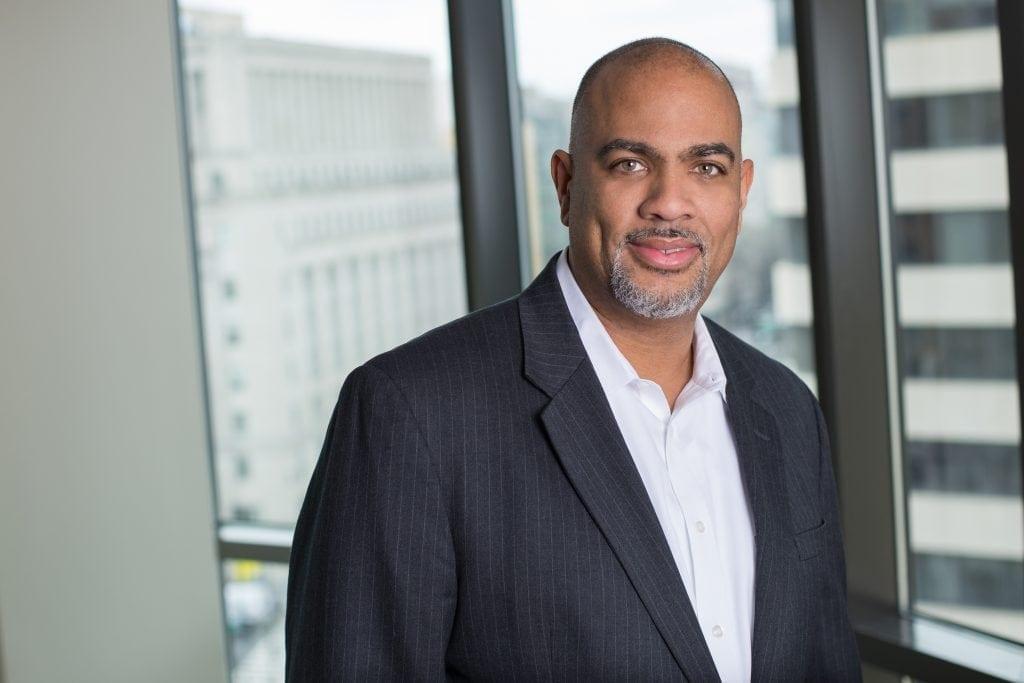
Ahmed J. Davis is an intellectual property (copyright) attorney with twenty years of experience serving clients who need hands-on, direct counsel to navigate complex patent disputes in highly technical industries such as chemicals, biotechnology, medical devices, and mechanical and electrical engineering.
Ahmed J. Davis is his firm’s primary litigation counsel in the United States District Court for the Eastern District of Virginia, and has served as lead trial counsel before numerous federal district courts, the International Trade Commission, and the United States Court of Federal Claims. He has outstanding experience before the United States Court of Appeals for the Federal Circuit, where he has argued more intellectual property cases before the Court than any other African-American private attorney.
Ahmed J. Davis is the managing partner and national chair of the Diversity Initiative at the law firm of Fish & Richardson PC (Washington, D.C.). He has been named an „IP Star“ multiple times by Managing Intellectual Property, and Savoy magazine named him the „Most Influential Black Lawyer of 2015.“ He was honoured as a „ Minority Power Broke “ by Law360 and named one of the „ Diversity Leaders “ for 2015 by Profiles in Diversity .
Ahmed J. Davis is a long-time instructor for the National Institute of Trial Advocacy. He has been a faculty member, guest lecturer, and speaker at Howard University Law School, Catholic University Columbus School of Law, Temple Law School, Fordham Law School, and at numerous seminars and conferences.
Translation: Susanne Berger (MA) and Dr Irmtrud Wojak