
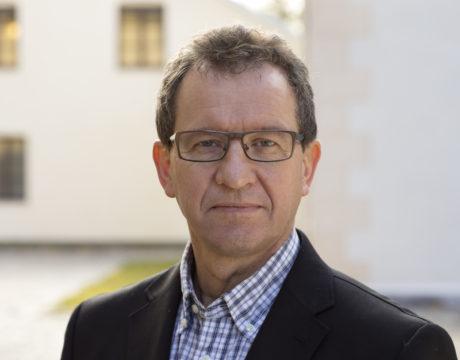
Autor/Autorin
Experience shows us that effective containment of epidemics goes hand in hand with transparent and inclusive regulation. We should learn from Taiwan rather than China.
Guest article by Gunnar M. Ekeløve-Slydal
Norwegian Helsinki Committee, Head of Policy
The protection of human rights is particularly important for vulnerable groups in society, including the elderly, children, people with disabilities, religious groups, LGBT people, refugees, prisoners, women and ethnic minorities. Such groups may be subject to unreasonable restrictions, discriminatory measures or stigmatisation.
Some of these groups, such as older people and people living with HIV/AIDS, may be at greater risk of developing more severe reactions to the coronavirus than the general population, as some health problems are more pronounced in these groups. LGBT people are vulnerable due to the discrimination they face within healthcare systems, and many lack the support mechanisms that families provide in times of crisis.
„Religious groups are affected in different ways by measures to contain the pandemic. Some of the measures restrict freedom of religion or belief. A legitimate question is how this right can be upheld if governments are convinced that they must restrict practices that can be considered essential for believers,“ says Ekeløve-Slydal.
While the question is important in itself, it may also have wider implications,“ says Ekeløve-Slydal. The way in which governments harmonise protective measures against the virus with international human rights can influence wider developments. Crisis measures and their implementation can respect democratic principles and human rights, or they can steer the state and society in authoritarian directions.
To understand why, we can look at the following example. A young Nigerian man stated in an interview with the Norwegian public broadcaster on 22 March that he could not accept any restrictions on his right to meet for public prayer in the mosque. He added that he was convinced that he was fully protected from the virus by God. He does not need the government to tell him what he should and should not do.
Such attitudes obviously pose a problem for governments. Experts agree that in addition to hand hygiene, social distancing is essential to contain the spread of the virus until treatment or vaccines are available. The ban on religious gatherings is already in force in many countries.
Even if such measures are underpinned by sound health arguments, the way they are presented is of great importance. There are temptations that governments should avoid.
Secular governments may be tempted to ban religious practices that they consider harmful without any consultation or effort to fully explain them to religious groups.
Religious governments may be tempted to ban practices of other religions while being overly tolerant of practices of their own religion.
Even governments that respect freedom of religion or belief may find that restrictions that apply to some religions do not apply equally to others. Measures can be perceived as discriminatory by parts of the population, even if they are not meant to be. The role of religious mass or prayer, for example, plays a different role in different religions. For Christian Protestants, praying in a small group, alone or even online may be a viable option, while for others praying may only take place as a ritual in large gatherings.
„A legitimate question is how this right can be upheld if governments are convinced that they must restrict practices that can be considered essential for believers?“
Gunnar Ekeløve-Slydal
There is no easy way to deal with problems arising from religious practices that conflict with government efforts to minimise the spread of Covid-19. But there are bad ways and better ways.
The World Health Organisation (WHO) guidelines for mass gatherings do not recommend a ban in all cases, but rather a thorough assessment of each individual case based on a set of criteria. Governments must define their own approach based on cultural, political, economic and health factors. For governments to be successful in multi-religious societies like Nigeria, it is essential to build trust with all groups. To do this, they must report objectively on the spread of the virus and the impact of measures to contain it. It is important that they take the time to talk to people from all groups and listen to their concerns.
Such conversations should also include religious leaders, whose followers can listen to their advice on secular matters, such as epidemic preparedness, as well as spiritual matters.
These are crucial features of any democratic approach to containing Covid-19, and dialogue with the people, explaining the reasons for the restrictions and seeking to work with an informed population are key to success.
Democratic countries in Asia, which have been hit harder by epidemics than Western democracies over the past 20 years, seem to have learnt this. The WHO has suggested that other countries should learn from China, praising China for „perhaps the most ambitious, agile and aggressive disease containment effort in history“.
However, some health experts disagree. They argue that Asian democracies such as Hong Kong, Taiwan, South Korea and Japan are better models for containing epidemics. They are also implementing far-reaching measures, but these are based on the understanding and consent of the population.
Moreover, the image of China’s success has its own problems. The Chinese PR machinery is working hard to create a positive narrative about the effectiveness of the Chinese model of governance in dealing with the crisis. The propaganda says that China has been able to contain the spread of the virus and has bought other countries time to prepare for other countries failing in their policies and that China is now assisting them with expertise and the necessary equipment.
„In reality, the authorities in China were extremely slow to respond to the threat of the new virus. It spread for 43 days before any serious response was initiated. News of the virus was censored, and doctors and nurses who warned about it were arrested. According to some researchers, this failed policy may have turned the epidemic into a pandemic,“ explains Gunnar Ekeløve-Slydal.
In addition, the official figures from China seem to distort the picture somewhat, as they omit important case categories. According to experts, there are numerous unreported cases as well as a large number of asymptomatic cases that the government excludes from the official statistics.
There are other reasons why countries are not copying the Chinese way. According to Chang Shan-chen, a leading Taiwanese infectious disease expert, „One of the most important factors in the success of our response has been transparency. … In [China’s] autocratic system, every citizen will stay at home if they are told. But this is something that is not easy to achieve in free and democratic countries,“ says the Taiwanese infectious disease expert.
The difference is that authoritarian systems aim to create obedient people, while democracies are based on people being responsible.
A vivid example of how people can be made responsible is the message from the Taiwan Central Epidemic Command Centre (CECC). On 25 March, it stated that it recommends „that indoor events attended by more than 100 people and outdoor gatherings attended by more than 500 people be suspended“. It sets out a series of six criteria that organisers of gatherings should apply to determine the risk of cluster infections. It emphasises that „if an assessment of the nature of the gathering identifies a high risk, the CECC recommends that the gathering be postponed or cancelled or held in a different way“.
The statement does not even ask people to take responsibility. It merely gives them an example of how they can be responsible.
Not all people in democracies act like responsible citizens. Sometimes recommendations are not enough. Nevertheless, government policy should aim for the consent of the people.
Asian countries have experience with recent epidemics (such as Sars), which have resulted in governments being better prepared to deal with the new coronavirus and people being receptive to government appeals for responsible behaviour, washing their hands frequently, keeping their distance and avoiding large gatherings.
People are accepting temporary restrictions on civil liberties because they know that these are necessary to combat the spread of the virus. And they trust that they will be lifted as soon as they are no longer necessary. This is not a matter of course in authoritarian states.
There is another important topic on the agenda. In the fight against Covid-19, governments are trying to extend their power. They argue that normal legislative procedures are too slow to deal effectively with a rapidly developing health crisis.

The corona virus. Photo: Trinity Care Foundation
In many countries, including fully-fledged democracies such as Denmark, Finland and Norway, parliaments have accepted to delegate such extraordinary powers to their governments. However, important conclusions can be drawn from the debates about the extent of these powers.
In Norway, the government’s proposal for a temporary Corona Act was heavily criticised by the opposition and legal experts. The proposal included the right for the government to take „robust and effective“ measures for a period of up to six months to „limit disruptions to normal social functions“. The measures could override ordinary legislation, but could not violate the constitution or human rights law.
Critics have pointed out that the draft was drawn up without public consultation and gives the government too much legislative power, thereby undermining the principles of separation of powers and the rule of law.
After discussing the draft and calling on individual experts, Norway’s national human rights institution as well as lawyers‘ and judges‘ associations, the parliament drafted a more balanced law that
The final law thus preserved the delicate balance between the powers of the state. It gives the government temporary powers to deal effectively with the crisis, while at the same time enshrining respect for constitutional provisions and human rights and ensuring scrutiny by parliament.
The process emphasises the crucial role of parliamentarians in ensuring the quality of laws and legislative procedures. Governments should not be given extraordinary powers to repeal laws without close consultation with parliament and civil society. The government should be scrutinised by courts even in extraordinary times and act within the limits set by the constitution.
„Although the Norwegian corona law is worthy of a democracy, it would certainly not satisfy authoritarian leaders who believe it takes away their power to act as they wish. The corona crisis could be a decisive factor in this way. Authoritarian leaders could use the pandemic to further undermine principles of democracy and the rule of law. Even in well-established democracies, there is a risk that democratic principles will be weakened,“ says Ekeløve-Slydal.
It is not surprising that Victor Órban, the authoritarian Prime Minister of Hungary, wants to drastically expand the power of his government. The Hungarian emergency law he has proposed gives him extraordinary powers to suspend laws and implement others by decree. It bypasses the parliamentary process and gives the government the means to exercise arbitrary and unlimited power. As long as the law is in force, no elections, including by-elections, local elections or referendums, can be held. It has no expiry clause (end date).
The Act also introduces two new offences: 1) publishing false or misrepresented facts that interfere with the „successful protection“ of the public and 2) interfering with the implementation of a quarantine or isolation order. The penalty is up to five years in prison or up to eight years if someone dies as a result.
A group of human rights organisations, including the Hungarian Helsinki Committee, strongly criticised the draft:
‚A carte blanche mandate for the Hungarian government without an expiry clause is not the panacea for the state of emergency caused by the Covid-19 virus in Hungary. We need strong constitutional safeguards and proportionate and necessary emergency measures, not unlimited government rule by decree that can last beyond the actual epidemic crisis.
The opposition succeeded in postponing the adoption of the law, but the Órban government has a supermajority in parliament, which passed the law on 30 March.
Russia has long restricted civil liberties and stamped out opposition in parliament. The government closed its borders with China early on, but has been slow to implement other strict measures such as the closure of educational institutions, restaurants and other meeting places.
The problem it faces in dealing with the crisis includes a widespread lack of trust among the population. The low number of confirmed cases (1534 by 30 March) and deaths (only nine by 30 March) has fuelled suspicions that the government is lying about the real situation and that the tests being carried out are not revealing early stages of the infection.
One dissenting voice was the mayor of Moscow, Sergei Sobyanin, who advised elderly people to stay in Moscow or leave Moscow. At a meeting with Putin on 24 March, he explained that the confirmed cases in Russia could be kept artificially low. „A serious situation … is developing. The number of people who have fallen ill [with the coronavirus] is actually much higher.“
„While the Norwegian coronavirus law is worthy of a democracy, it would certainly not satisfy authoritarian leaders who would think that it takes away their power to act as they wish. The corona crisis could be a defining factor in this way.“
Gunnar M. Ekeløve-Slydal
There could be a political reason for the official underreporting. A referendum on a package of constitutional amendments was due to take place on 22 April. Weeks after the draft amendments were announced in January, Putin signalled support for another amendment that would allow him to remain president until 2036 if necessary.
Although it is unclear whether he intends to remain at the helm of the Kremlin for that long, for most Kremlin researchers the acceptance of the 22 April vote by the Russian people was seen as decisive. The high number of confirmed cases of Covid-19 would have been a serious challenge for the organisation of the referendum.
The situation changed on 25 March, when President Putin announced in a televised speech that the referendum would have to be suspended. He added that everyone should take a one-week paid holiday from 28 March and stay at home. Russia had managed to „contain“ the spread of the virus by taking early precautions (such as closing the border with China on 31 January), but „we must understand that Russia cannot isolate itself from the threat simply because of its geographical location“.
There are many questions about the effectiveness of Russia’s strategy to contain the epidemic and whether the authorities in different parts of the vast country will stick to it. Critics claim that stricter measures are needed, both to contain the virus and to avoid economic collapse.
In addition to the impact at national level, political scientists predict that the coronavirus crisis could lead to a further deterioration of the liberal order at global level. This would entail a weakening of the role of international organisations and coordination between states, as well as a further undermining of Western influence in global affairs.
It is instructive to see how Chinese propaganda is making extensive efforts to rewrite the narrative about the start of the pandemic. China is also a driving force in promoting co-operation between states in dealing with the disease. In the absence of international leadership from the US under President Donald Trump, China is taking the lead.
On 26 March, a joint appeal for better international cooperation was made by German Chancellor Angela Merkel and Chinese President Xi Jinping. President Xi Jinping thanked Germany and the EU for their support in the early days of the epidemic and pledged to continue China’s support for European countries.
Chinese assistance is of course welcome and can significantly help European and other countries to better deal with the crisis. The same applies to Russia’s support for Italy, although the EU will play a much greater role in helping its member states in the long term.
However, there is a risk that the perception will spread that authoritarian states are generally seen as better at dealing with health crises than democratic states. This is not the case.
– It is true that European democracies and the US are struggling to deal with the crisis effectively. Italy, Spain, France, the UK, the US and other Western democracies are experiencing a rapid increase in the number of confirmed cases, while their capacity to test people and implement other effective measures is limited;
– However, this is not because these states are democracies that limit the power of their governments and depend more on the responsible behaviour of their citizens than just their obedience;
– The examples of Asian democracies such as Hong Kong, Taiwan, South Korea and Japan show that they are able to deal effectively with the epidemic, having learnt lessons from previous epidemics and updated their health services. They are now more effective than any other country in containing the spread of the virus;
– Their experience shows that transparency, co-operation and accountability between public institutions and between civil society and individual citizens is the best recipe for successful containment. They have also learnt to overcome political divides and base their actions on scientific advice;
– Suppressing information about the real situation is possible in authoritarian states – at least to a certain extent – but not in a fully-fledged democracy where the media report freely and freedom of speech is guaranteed. Without factual information, however, the fight against the spread of the virus is doomed to failure.
„When comparing democratic and authoritarian approaches to fighting Covid-19, it is also worth noting that democratic countries tend to cooperate more and are willing to invest in international institutions that are needed to deal with global crises such as the corona pandemic in a coordinated manner,“ explains Ekeløve-Slydal.
As former British Prime Minister Gordon Brown put it: „As I learnt in the 2008 crash, a global problem requires governments to work together. Today’s populist nationalism puts us all at risk“. Part of the problem is that the WHO is underfunded and that countries are not learning from each other.
When you combine the range of nationalist populist leaders currently in power in the US, UK, India, Brazil, Indonesia, Philippines etc. with the range of nationalist authoritarian leaders in Russia, China, Hungary etc., you have to conclude that the timing of the Corona pandemic was a worst-case scenario. Country after country have „retreated into their national silos“, as Brown puts it.
What’s more, these leaders are so fixated on maintaining their power, avoiding unpopular measures and blaming others for mistakes that they are reluctant to follow the best scientific advice – until it’s too late.
The Covid-19 pandemic is a threat to human health. Governments must take urgent action to contain its spread and provide medical care to those who need it. In doing so, they are defending the human rights to life and health. It is inevitable that some of the measures they impose will restrict human rights. Such restrictions should be compatible with legal safeguards. The impact of the measures on vulnerable groups should be carefully assessed.
„When comparing democratic and authoritarian approaches to fighting Covid-19, it is also worth noting that democratic countries tend to be more collaborative and willing to invest in international institutions needed to coordinate the handling of global crises such as the coronavirus pandemic.“
Gunnar Ekeløve-Slydal
In short, governments must ensure that human rights are represented on all sides of the table where they make decisions. The right to health must be represented, but also the rights of those who lose their jobs due to the lockdown or whose quarantine poses an increased risk of domestic violence. The rights of prisoners, migrant workers, asylum seekers and discriminated sections of the population must not be forgotten either.
What does this mean for the authorities who want to treat the young Nigerian man mentioned above with respect? He said he would only be guided by his own faith in God.
He should be told that he certainly has a right to exercise freedom of religion and belief. As this right is defined in Article 18 of the International Covenant on Civil and Political Rights, it includes „freedom, either individually or in community with others and in public or private, to manifest his religion or belief in worship, observance, practice and teaching“.
However, he should also be made aware that the „freedom to manifest one’s religion or belief“ may be subject to restrictions that are necessary to protect public health.
He should be made aware of the seriousness of the Covid-19 threat and asked to consider the criteria put forward by the Taiwanese Centers for Disease Control. The question he needs to answer as best he can is whether his mosque has the following:
– information about the participants in advance;
– ventilation and exchange;
– Safety distance between participants;
– Checking whether the participants are in a fixed position;
– a limit for the duration of the event;
– hand hygiene and surgical masks.
It is hoped that this conversation will be a first step in making him and his fellow believers responsible partners in the fight against the spread of Covid-19. He should be asked questions such as how he can help protect his parents and grandparents, who may be at greater risk than himself in the event of infection. How can they play a role in managing the crisis by behaving responsibly and finding new safe ways to practise their faith?
They should be reassured that the restrictions on their rights will be lifted as soon as it is safe again.
There is no easy way to deal with these issues. But democratic ways are better.
And more effective.