
Autor/Autorin

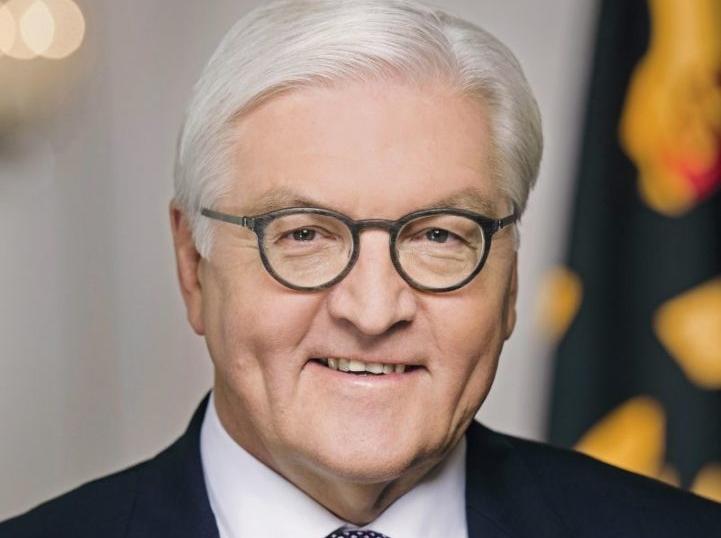
At a memorial ceremony in Frankfurt’s St Paul’s Church today, Federal President Frank-Walter Steinmeier commemorated the Hessian Attorney General Dr Fritz Bauer (1903-1968), who died 50 years ago of unexplained causes.
In his speech, the Federal President honoured the life and work of the eminent jurist with great empathy and very personal words. He began by recalling the autobiographical sketch, which we owe to Alexander Kluge and which reports on the funeral service for Bauer. At this ceremony, Frank-Walter Steinmeier quoted the writer Alexander Kluge, the small circle of companions had come together, family, friends and „the small government layer of the country that set out after 1945 to maintain an anti-fascist course.“
The Federal President recalled the desolation of Fritz Bauer’s friends, who were surprised by his death, and above all „that the deceased friend had experienced so little comfort in his own life that he had received little support and experienced little recognition in a country for which he had endeavoured and rendered outstanding services.“
In fact, Fritz Bauer, who rendered more services to our country, our history and, above all, the fight for the establishment of a new, humane legal order than probably anyone else in his time, never received an honour. In his speech, Frank-Walter Steinmeier described Fritz Bauer as „one of the key figures who paved the way for Germany’s return to the community of nations.“ But the country to which the lawyer and resistance fighter returned after fourteen years of exile in Scandinavia, the state for which he worked, mistrusted him. A state, of all things, according to the Federal President, to whose „political culture Bauer had probably contributed more than almost any other in the 1950s and 1960s.“
What did Fritz Bauer hope to achieve when he returned to Germany? The Federal President asked himself this question, and in doing so he addressed the actual significance of Bauer’s work and the Nazi trials. Right down to the „last ramifications“ of the chains of command, Bauer had made the Nazi state’s business distribution plan visible and, Frank-Walter Steinmeier concluded with Fritz Bauer: „Everyone should have recognised that guilt cannot be made unrecognisable by a division of labour.“ Everyone who held an office in the Nazi state had to recognise that they were „involved in an unprecedented crime against humanity.“
Frank-Walter Steinmeier links the fact that there can be no atonement or reparation for this crime, that justice can hardly be restored with the means of criminal law, with the reference to the actual task that Bauer sets himself and us, namely „to ensure with all available means that this does not happen again.“ The meaning of the Auschwitz trials for Fritz Bauer, Frank-Walter Steinmeier quotes the jurist, „lay in the inevitable realisation that conformity to an unjust state is injustice. If the state is criminal because it systematically violates human rights and freedoms, freedom of conscience, the right to one’s own faith, nation and race, the right to one’s own life, then participation is criminal.“ The Federal President added: „And therefore the impunity of the perpetrators is a mockery of the victims.“
Frank-Walter Steinmeier said that he was certain that Fritz Bauer would defend the democratic constitutional state, to which we had come very close in Bauer’s spirit, today. He is still doing this through his example. Nobody could replace him, his contemporaries already knew that, but what we need today, according to the Federal President, is the pugnacious spirit of Fritz Bauer, „who opposes the resurgence of nationalism and contempt for humanity.“ As little as Fritz Bauer had indulged in the illusion that „the struggle for and on behalf of democracy could be brought to a conclusion“, there should be no retreat today.
The current „new fascination with the authoritarian“, the „irrational“, a „language of rage“ and the „disparagement of political institutions“ would certainly have worried Fritz Bauer. Frank-Walter Steinmeier addresses this at the end of his speech and therefore concludes it with an appeal for an attitude: „Democracy demands vigilance. And it does not allow retreat, it wants interference for its own sake, not for the sake of outrage. Fritz Bauer would have wished for this attitude from us – no, he would have expected it!“