
Autor/Autorin
Today we commemorate the victims of one of the most serious crimes in the history of the Republic: the Solingen arson and murder attack of 29 May 1993, in which five young members of the Genç family lost their lives. Just three days before the racially motivated attack, a grand coalition of the CDU, FDP and SPD had dismantled the basic right to asylum following an irresponsible debate about the „flood of asylum seekers“ and „foreign infiltration“. „First the right dies – then people die“. The connection between these two events could hardly be formulated more clearly, as it was written on a wall along Untere Wernerstrasse near the site of the attack. I already drew attention to this connection in my speech on the occasion of the commemoration of the 20th anniversary here in Solingen five years ago. We are currently back in an extremely precarious phase in which a right-wing populist debate is taking place right into the centre of society – a debate about foreign infiltration, asylum abuse and criminal foreigners, about asylum and deportation centres and accelerated deportations – an ominous debate of fear that is being fuelled by politicians, in particular by CSU Homeland Security Minister Horst Seehofer and others, and which is likely to dangerously inflame the situation in this country.
Since 2015, in view of the hundreds of thousands of people who have fled to Germany, there has been a lot of talk of „we can do it“ and a „welcoming culture“, which can indeed be found in large parts of the country and which is appreciated by the vast majority of those affected. However, this largely civil society support work is increasingly being accompanied and thwarted – on the one hand by a further tightening of immigration and asylum laws according to the motto: ‚Close borders, choose safe countries of origin, deport more quickly en masse‘ ; on the other hand by everyday racist agitation, marginalisation and violence – a worrying development that is increasingly falling out of the public eye despite its bloody record compared to the Islamist terror threat, which is so effective in the media and is so much a source of fear.
However, terrorist attacks against migrants, asylum seekers and other refugees continue and the perpetrators are right in our midst. Refugee homes are burning again and again, racist attacks on refugees, volunteers and mosques continue unabated – and the attacks are increasingly coming from the centre of a society that is drifting to the right and is socially divided: in 2015, there were almost 1,500 relevant acts of violence, including over 1,000 attacks on refugee accommodation – five times more than in 2014. According to the German government, there were more than 3,500 attacks on refugee homes and refugees in 2016 – almost ten per day. In 2017, there were still over 1,500 attacks. This means that people seeking protection from persecution, exploitation and death have to fear for life and limb in this country.
In Germany alone, almost 200 people have been killed by racist and xenophobic perpetrators since 1990. The murder attack in Solingen was the „high point“ – or rather the low point – of a series of further xenophobic attacks: Hoyerswerda, Hünxe, Rostock, Quedlinburg, Cottbus, Lübeck and Mölln have become sad fanals for this violent, inhuman racism. After the NSU murders, we had to add ten more deaths and after the Munich rampage in July 2016, nine more. So we have to recognise this: After the arson attack in Solingen, there was no return to a state of reflection in this country; instead, many horrific things happened.
The fact that the NSU series of murders was not investigated for many years and that its racist background was ignored has drastically shown us that the Office for the Protection of the Constitution and the police have failed spectacularly in the area of right-wing extremism/neo-Nazism, which is particularly shocking in light of German history. These were not just mishaps and incompetence, as is often reported – no, there were ideological blinkers and structural racism at play, which led to ignorance and systematic trivialisation of the Nazi spectrum and thus to an unprecedented state failure – also favoured, incidentally, by a „security policy“ that for decades was one-sidedly directed against so-called left-wing extremism, foreigner extremism and Islamism. As is well known, all the stops are being pulled out that are available to the security authorities and which have been considerably tightened and expanded in the course of an excessive „fight against terrorism“, especially after 9/11.
Following a request from the organisers of this commemorative event, I would like to address a particularly explosive problem: It concerns the disastrous role of the domestic secret service „Verfassungsschutz“ and its V-Leute system, which has proven to be uncontrollable and a considerable potential threat to democracy, civil rights and the rule of law. Over the course of the 1990s, a veritable network of undercover agents, undercover investigators and informers has developed in neo-Nazi scenes and parties – which led the cabaret artist Jürgen Becker to make a wicked joke: at Nazi marches, he is often no longer quite so sure whether they are real Nazis or a „company outing of the Office for the Protection of the Constitution“. There is a kernel of truth in this cabaret exaggeration.
It is important to realise that V-people recruited in neo-Nazi scenes are not „agents“ of the democratic constitutional state, but state-funded Nazi activists – in other words, mostly merciless racists and violent criminals through whom the Office for the Protection of the Constitution is hopelessly involved in criminal activities. Arson, bodily harm, manslaughter, incitement to murder, arms trafficking, founding terrorist organisations – these are just some of the crimes that V-Leute commit in and to protect their cover.
One example is the undercover agent Lepzien, who worked as an explosives supplier for the Nazi scene in the 1980s and was convicted for this offence, although he was soon pardoned. In Solingen in particular, we should remember the informer Bernd Schmitt, whose martial arts club „Hak Pao“ was a meeting point and training centre for the militant neo-Nazi scene in Solingen; three of the young men who were convicted of the Solingen arson attack came from this circle. From today’s perspective, this martial arts school appears to be a joint project of the Office for the Protection of the Constitution and its V-man – a brown contact exchange under the eyes of the secret service, a training centre for the Nazi scene where violent neo-Nazis were trained in hand-to-hand combat together with young people seeking orientation. Social workers were trying to break young people out of the right-wing scene – and here a secret service was spending taxpayers‘ money on an undercover agent who was doing exactly the opposite.
In the case of the non-investigation scandal surrounding the NSU murder series, secret services with dozens of undercover agents – such as Tino Brandt, alias „Otto“ – were also active in the neo-Nazi rallying point „Thüringer Heimatschutz“, in which the later suspected murderers were organised and from which the NSU and its supporters were able to develop under the watchful eyes of the secret services. As we now know, the „Verfassungsschutz“, with many of its paid and highly criminal undercover agents, was very close to the later alleged murderers, their contacts and supporters; they murdered virtually under state supervision. Despite this – or should we say: because of this? – the domestic intelligence services want to have realised almost nothing, they have neither been able nor willing to prevent the NSU murder series over many years, nor have they been able to help uncover it. It has now become clear that this series of murders could have been prevented if the domestic intelligence services had passed on their criminal intelligence on the people in hiding and their supporters to the police in good time, as they were legally obliged to do .
In any case, there should be far more defendants in the dock of the Munich Higher Regional Court than Zschäpe, Wohlleben & Co.: the V-people involved, their V-man leaders and all those responsible for failures, omissions and cover-ups from the domestic secret service, police and security policy are missing here.
The most frightening thing I discovered during my research for my book „Geheime Informanten. V-Leute des Verfassungsschutzes: Neo-Nazis in the Service of the State“ is that the Office for the Protection of the Constitution literally covers up for its criminal V-people and systematically shields them from police and judicial investigations in order to protect them from exposure and to be able to continue siphoning them off – instead of shutting them down immediately. This was also the case with the NSU: here, too, he torpedoed search measures, destroyed files and evidence, revealed police surveillance to his brown undercover agents or warned contact persons about police wiretapping. This is criminal obstruction of justice in office, psychological support and aiding and abetting criminal offences – but those responsible have never been brought to justice, even if innocent bystanders were seriously harmed.
Since the NSU series of murders was uncovered, the „constitution protection authorities“ have been working with almost criminal energy to obscure and destroy the traces of their failures, their ideological blindness and their links to the NSU environment. The obstruction of the police investigation into the case of the V-man leader Andreas Temme, alias „Little Adolf“, who was present at the scene of an NSU murder, is also symptomatic of this systematic compartmentalisation.
To summarise, it can be said that the „Office for the Protection of the Constitution“ not only co-financed neo-Nazi scenes and parties in the NSU complex, but as a whole through its paid informers, shaped them in a racist manner, protected them against police investigations and strengthened them instead of weakening them. Through his criminal and uncontrollable system of informers, he is hopelessly entangled in the criminal and murderous machinations of the Nazi scenes. In this way, I conclude, he himself has become an integral part of the neo-Nazi problem, or at least he has hardly been able to contribute anything to solving or combating it. Despite the high number of undercover agents in the Nazi spectrum, the intelligence provided by the Office for the Protection of the Constitution has hardly increased; in any case, it has failed overall as the „early warning system“ that it is supposed to be, due to the system and ideology.
Yet it is precisely these scandalous and ultimately anti-democratic secret institutions that are receiving an undeserved boost in the course of the fight against terrorism. Instead of drawing serious consequences from their scandalous careers and disasters, the „Office for the Protection of the Constitution“ – oblivious to history – is being further upgraded and made more suitable for mass surveillance – instead of finally effectively protecting the population from its machinations. In fact, it is now even legally allowed to use criminal undercover agents and shield them from police investigations – a licence for criminal activity on a state mission that is contrary to the rule of law. As unbelievable as it may sound, previous scandals and illegal practices are practically being legalised – and with them the obscene involvement of the VS in violent Nazi scenes.
And all this despite the fact that secret services are already foreign bodies in a democracy. Why? Because these institutions, which are supposed to protect the constitution and democracy, contradict democratic principles of transparency and controllability. The regular parliamentary control of secret service work is itself secret, i.e. not very democratic; and court cases in which, for example, undercover agents play a role tend to become secret proceedings in which files are shredded, manipulated and blacked out and witnesses are completely or partially blocked. This system of obfuscation eats deep into the judiciary and parliaments, which are supposed to control the secret services – and usually fail. This is why secret services tend to become independent and abuse their power even in democracies, as their history impressively demonstrates. Anyone who continues to arm such secret services instead of effectively reining them in under the rule of law is damaging democracy, civil rights and the rule of law.
Ultimately, there will only be a fundamental change if the constitution protection authorities are disbanded as secret services and are fundamentally denied a licence to monitor attitudes, use informers and infiltrate political scenes and groups. This demand by renowned civil rights organisations is not contradicted by the Basic Law or the constitution of the federal states. This is because the constitution does not require the Office for the Protection of the Constitution to be a secret service.
Furthermore, we demand that all neo-Nazi crimes and all state involvement in violent neo-Nazi scenes be investigated without reservation and consistently prosecuted. We demand serious efforts against structural and institutional racism in the state and society, a humane asylum and migration policy, independent bodies to monitor the police, the strengthening of civil society projects against the right and better support for victims of right-wing violence and their families.
And last but not least: Even after the forthcoming judgement in the NSU trial at the Munich Higher Regional Court, there must be no end to the investigation and clarification of the NSU complex. Because there is still far too much in the dark.
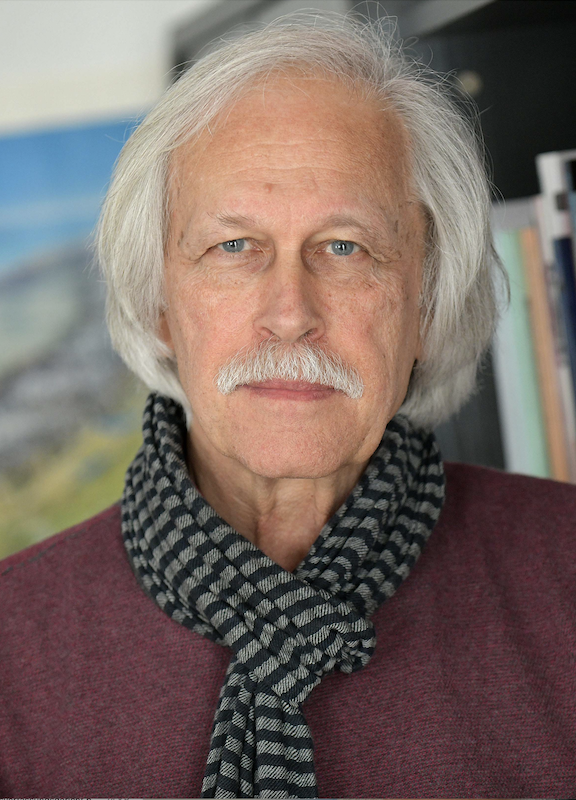
Speech by Rolf Gössner during the commemorative event on 23 May 2018 at the Solingen Theatre and Concert Hall, attended by over 300 people.
All speeches
Ali Dogan from the Turkish People’s Association
Dietmar Gaida from the Solingen Appeal
Ibrahim Arslan , victim and survivor of the racist arson attack in Mölln on 23 November 1992
Mitat Özdemir, businessman on Keupstraße, initiative „Keupstraße is everywhere“
Dr Rolf Gössner, lawyer, member of the board of trustees of the International League for Human Rights
Doğan Akhanlı, author
Representative of the Alevi community on the massacre in Sivas
Moderation and closing remarks: Berivan Aymaz, MdL NRW
Music: Uli Klan and Asli Dila Kaya