

Autor/Autorin
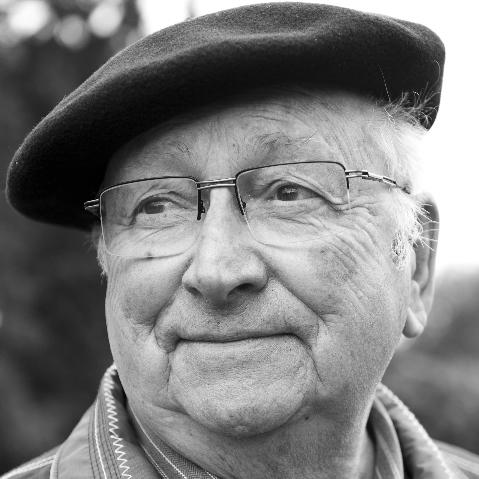
„A spiritual revolution of the Germans would be necessary; it is not just a matter for the lawyers. It was due in 1945, but failed to materialise. All that remains today is modest hard work.“ – Fritz Bauer
No country and no person should forget their roots. The roots of our country reach back into the blood-soaked swamp of National Socialism. No other regime has the majority of Germans felt as connected to as the Nazi regime. Like no other, it catered to the hatred of Jews, Marxists and intellectuals instilled by the state and the church.
Contrary to what some people make out, it was by no means only the German philistines who threw themselves hotly at Hitler, but also the reactionary elites in the judiciary, at universities and in business. This is why many found it so difficult to come to terms with the miserable end of this regime. They saw 8 May 1945 not as a day of liberation, but as a day of shame. It took 40 years before Federal President Richard von Weizsäcker said what no other Federal President had dared to say before him: „8 May was a day of liberation. It liberated us all from the inhuman system of National Socialist tyranny.“
By this time, those complicit in the Nazi crimes had long since crawled out of the mouseholes in which they had initially hidden. The conclusion drawn by the CDU in its 1947 Ahlen Programme had long since been forgotten: „The capitalist economic system has failed to do justice to the national and social interests of the German people. After the terrible political, economic and social collapse as a result of a criminal power politics, only a reorganisation from the ground up can take place. The content and goal of this social and economic reorganisation can no longer be the capitalist pursuit of profit and power, but only the well-being of our people.“
If someone like Kevin Kühnert calls for something similar today, he is shouted down by a polyphonic choir of hysterical defenders of the Christian West, led by the new CDU chairwoman Annegret Kramp-Karrenbauer. She was not above resorting to one of the killer arguments that the CDU used in its 1976 election campaign. „I would never have believed,“ she sneered, „that our old campaign slogan ‚Freedom instead of socialism‘ would become so relevant again in an election.“ The SPD was thus to be crushed and Helmut Schmidt driven out of the chancellery. The only thing missing now was the CDU election poster from 1953, borrowed from Nazi propaganda, with the slogan „All roads of Marxism lead to Moscow!“ This was directed against the SPD and not against the Communist Party of Germany, which was already under threat of being banned.
The fact that leading social democrats are among the critics of the chairman of the Young Socialists marks the decline of a party whose programme still states: „For us, democratic socialism remains the vision of a free and solidary society“. But this programme is like the Basic Law, whose 70th anniversary is being celebrated this month: it reads well and Kevin Kühnert can refer to it at any time. Under the keyword „socialisation“, Article 15 states: „Land, natural resources and means of production may be transferred to common ownership or other forms of common economy for the purpose of socialisation by a law regulating the nature and extent of compensation.“
There are many nice things in the Basic Law. Article 3, for example, states that „men and women shall have equal rights.“ It has said this for 70 years, but women in Germany still earn 21 per cent less than men, as calculated by the Federal Statistical Office in Wiesbaden. Article 5, which guarantees freedom of expression and freedom of the press, states: „There shall be no censorship.“ That could actually be deleted. There is such a thing as self-censorship, which works extremely well for most journalists, either because they are afraid of losing their jobs or because they have never learnt anything like attitude. The rest is taken care of by the Office for the Protection of the Constitution, whose employees are constantly snooping through the texts of critical authors in search of a sentence that they can use to frame the person concerned.
A commitment to the oath of Buchenwald, in which the liberated prisoners of the concentration camp pledge to eradicate fascism and its roots, is then interpreted as a sign of left-wing extremist sentiment and a hidden call to overthrow the free and democratic basic order. In the next constitution protection report, the person concerned or even an entire organisation is then pilloried. For 40 years, a lawyer from Bremen had to endure this surveillance because of his commitment to civil rights before the nails were cut from under the protection of the constitution. Not everyone has the necessary staying power. Kevin Kühnert will outlive his agitated critics. He has struck a nerve.