
Autor/Autorin
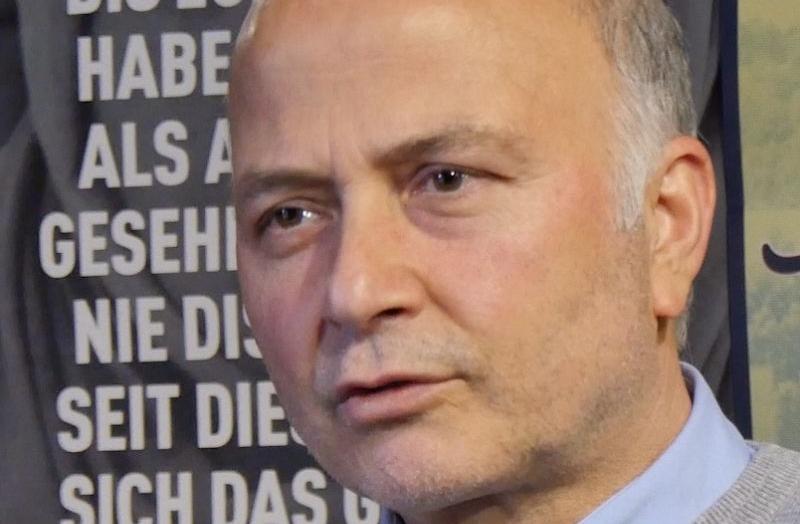
Arif Sagdic survived the terrorist attacks by the National Socialist Underground (NSU). There are only a few people, he says, who have spoken to the survivors of the NSU and listened to them.
Yet it is fifteen years since the attack in Cologne’s Keupstraße, which he survived, and not a day goes by without him thinking about it. Mainly because the racism that he experiences as the cause is covered up. Victims of racist violence were to be turned into perpetrators, a behaviour with which the state tried to evade responsibility despite statements to the contrary. Even after the end of the Munich NSU trial in summer 2018, more questions remain unanswered than answered. As always in such cases, the failure of the authorities is almost worse for the victims and survivors than the attack itself. Arif Sagdic is certain that there is a force behind the murders and their investigation that can only be defeated by working together. Despite the injuries and disappointments, he does not give up and calls on everyone not to remain silent in the face of racist violence, but to fight against it.
Daniela Collette, a doctor from Bochum, interviewed Arif Sagdic in Cologne for the Fritz Bauer Blog. We would like to thank the „Keupstraße ist überall“ initiative for supporting the interview.
DC: Hello, Arif, thank you very much for the interview. You were born in Turkey and you told me that your mother is Turkish and your father Kurdish. Can you tell us something about your youth and your journey to Germany?
AS: My father is of Kurdish descent, my mother is of Turkish descent, I myself am someone who abhors racism and I am generally positive towards people and have respect for all ethnicities, religions, languages and cultures. I came to Germany in 1993 and started working for my older brother. The days have just gone by. I thought Germany was a great country, where there was true democracy, human rights were respected, I was happy. Then I got married, we had children, I worked, everything was fine. (…) When I came, everything was very good, work was good, our business was good, everything was wonderful. I met new people (…) who came to our Keupstraße, whether Germans or Turks or people from other countries, our Keupstraße was full of life, no racist encounters or anything like that. Everything went very well, people had a positive attitude towards us, the work went better and better, we were constantly gaining new customers, that’s just how it went.
DC: Let’s take a leap in time: you came to Germany in 1993 and set up your business here, and then the terrible event happened. At 3:56 pm on 9 June 2004, an explosive device with a high explosive yield and 800-centimetre-long carpenter’s nails exploded in front of the hairdressing salon directly opposite your shop. At least 23 people were injured, some of them seriously: How did you experience the day?
AS: Well, we were just sitting outside, we were three friends, there were customers there, the weather was nice, it was about a month before people were all going on holiday. Immediately after we walked into the shop, thirty to 35 seconds later, the bomb went off. I immediately lay down on the floor, the others were on the other side in the checkout area. I wanted to get up, of course, but because I was afraid that a second bomb might explode, I stayed lying down. My friends were all scared too and were lying on the floor. I heard voices shouting „Help!“. When I lifted my head, I saw that the window had completely shattered. After two minutes I got up, but I couldn’t hear anything in my left ear for ten to fifteen seconds because of the enormous noise the bomb made – I could feel it in my body. We got up after about two minutes, the shop window, which was quite thick, had shattered. The screaming outside, the blood everywhere, was a very painful sight. When I saw the people, I felt very strange, everything was covered in blood, people were screaming, calling for help. And of course we couldn’t go out either because we were afraid that another bomb might explode, we couldn’t rush to help, we were scared. After eighteen to twenty minutes, ambulances and fire engines arrived and intervened. We were still inside the shop.
In the first four to five minutes after the bomb exploded, I found the nails in the shop, about five or six of them. After the bombing, they let us back into the shop after two or three days of investigation. After I had cleaned up inside, I found about ten nails and I also found some outside the shop, in total I found about fifty nails. Each one was about ten centimetres long, some were bent, some looked like they had been burnt off.
DC: Although many people recognised that the Keupstraße attack was obviously motivated by racism, the police investigated migrants until the NSU unmasked itself in 2011. Just one day after the attack, the then Minister of the Interior, Mr Schily, ruled out a terrorist background and spoke of a criminal milieu in the Keupstraße. What did this, this suspicion, trigger in you and the other victims? How did you experience these years of suspicion?
AS: With Schily’s statements, we were clearly the suspects. These statements were really unexpected. Can you imagine, the entire small business community in the Keupstraße was accused. By saying that it wasn’t a racially motivated attack directed against foreigners, he destroyed us. The entire blame was placed on us. We didn’t deserve that. The fact that the German Minister of the Interior at the time said something like that destroyed us. We almost started to suspect each other. The fact that the German interior minister said something like that was really dramatic. We hadn’t expected that. It made us very sad. I asked my wife every day when she came home from work whether the perpetrators had been found yet. My wife checked on her PC at work, of course we couldn’t follow the news at work. When I came home for dinner in the evening, I asked my wife if he had been found. „No, he hasn’t been found,“ she always said. It has to be said, I don’t want to blame the whole of German society and the whole of the German people, but they knew who it was, but it was kept secret. The fact that we were blamed all those years from 2004 to 2011 is something the state is very much to blame for. We were devastated by the words of the Minister of the Interior.
AS: I would like to add to that: Back then, between 2004 and 2011, during the entire period in which the perpetrators were not traced, we were always accused and therefore almost mistrusted each other. „Who could have done it?“ we asked ourselves. However, I can openly say that on the day the bomb exploded, I knew who it was the very hour I lay down on the floor. But of course you don’t dare say it openly. I was interrogated three times by the police, I couldn’t say it openly the first two times, I was afraid of the police, of the civilian police. You just don’t dare. The more the days went by, we asked each other if it was one of us, we knew, but we couldn’t say it. It was very painful, we suffered a lot from not being able to find the perpetrators. If the perpetrators had been foreigners, I’m sure they would have been caught within two or three days. They artificially dragged it out, I repeat once again, I don’t want to blame the entire German people, but because it was a German who did all this, he was not caught. There is a dark dodgy power in Germany that didn’t want them to be caught, be it members of parliament, racist media, newspapers. There were people who simply didn’t want them to be caught. The German secret service is very strong in this respect, but because it was one of their own people, they unfortunately dragged it out so artificially.
DC: How did you experience the police investigations and the press coverage when there was talk of „kebab murders“ in connection with the attacks, when it wasn’t even known that there was a connection between the Keupstraße attack?
AS: Before the bomb attack, we had of course heard about the previous attacks on kebab sellers and flower sellers, so I was also suspicious. Sometimes I asked myself: could something like that happen to us? I paid extra attention, the perpetrators were eight, of course I didn’t know exactly how many people they had killed before our attack in 2004, but I was suspicious. I also told myself that it probably wouldn’t happen here in Keupstraße because we have a lot of Turkish shops right next to each other. The people who were killed were always in small kebab or flower shops that were the only ones in their streets, so people dared to do it. I never thought that people would dare to do the same in our Keupstraße, that people would be killed there, that everything would suddenly be reduced to rubble. Because our shops are so close together, I imagined that they couldn’t do it, that it was impossible. But I also had a certain fear inside me as to whether it wouldn’t be done to us. The media reported it, of course, but I say the real media that were against these people, I say with certainty, they knew who it was, but the racist media always said it was one of us. If we are completely honest, they knew everything, but of course they didn’t report it.
DC: After the NSU exposed itself, were there any apologies or words of regret from the public side, for example from the Ministry of the Interior?
AS: I personally did not receive an apology, but some friends of mine were invited by the Office of the Federal President, but I was not. I don’t know if they were apologised to, but no state representative came to Keupstraße to apologise to us.
DC: Let’s take another leap in time: the trial against Beate Zschäpe and the NSU supporters Ralf Wohlleben, Carsten Schulze, Holger Gerlach and André Eminger began in May 2013. You were there from the beginning as a joint plaintiff, together with Ms S., and you were jointly represented by the lawyer Alexander Hoffmann. But the court didn’t want to admit you and Mrs S. as co-plaintiffs and you didn’t appear in the indictment either, you had to fight your way into the trial. Where did you find the will and the strength to continue fighting at this point?
AS: I would like to say that what we experienced between 2004 and 2011 built up inside us. I could talk for days about everything we had to endure. That gave us a certain strength. Of course, the establishment of the Keupstraße Initiative also contributed a lot, and I would like to take this opportunity to thank each and every one of them. If the initiative had been there when the lawyers recruited us, it would certainly have been even better. We didn’t know what to do at the time. Then the trial started at some point. The fact that they only saw us as co-plaintiffs hurt us, we were the people who had experienced the attack ourselves, the suffering we had to endure, how the police treated us, the persecution, how the police told me to keep quiet when I said it was neo-Nazis, that I was followed to my front door for four to five months, the psychological stress, the disruption to my social life, it all built up. Together with the initiative, we became stronger. If it hadn’t been for them, we really would have been on our own. My lawyer, Alexander Hoffmann, who was my second lawyer and showed great courage in joining in, especially Selda and Julian from the Initiative, and Fabian after Julian left, they all helped us a lot and encouraged us. The fact that they were always with us when we travelled to Munich gave us a lot of strength. It was the only way we could keep going. I would like to thank these people very much.
DC: Did you observe any willingness to clarify during the trial? How did you experience the trial?
AS: I did everything I could with all my resources to inform the German public, the media, the German people about everything we had experienced. I wanted them to know about it. I wanted the whole of Germany to know about it, that’s why I wanted to testify in court, to defend myself. I wanted to tell everyone about it, all the people who didn’t just see us as foreigners and wanted to report honestly about our experiences. I did everything I could to provide information about the people who died, about the suffering of those affected. That’s why I tried to take part in all kinds of events in this regard. I also wanted people outside Germany to know about it, and to this day I still do everything in my power to spread the word. Everyone needs to know about what happened, especially the German public. I want the entire German parliament to hear my voice. I would also have liked at least ten to fifteen members of parliament to have taken part in the negotiations, but unfortunately that didn’t happen.
AS: When I entered the courtroom for the first time and felt the atmosphere there, I felt uncomfortable, the police officers there, the judges, the prosecutors. The atmosphere in there, that this woman was sitting right opposite me, I already sensed that day that the trial would not end in our favour. That there were police officers in there, those looks from the judges towards us, the media outside. I knew it. I knew that apart from the people who had come with us, who supported us, nobody really wanted the case to be fully resolved.
DC: The trial lasted five years and two months, that’s a long time, the son of the murder victim Enver Simsek described the trial period as a lost lifetime, would you agree? And who supported you during the trial?
AS: We as the victims of the NSU and especially the families of those murdered, of course their suffering is much more serious than ours, I would like to say that from the day of the attack in 2004 until the end of the trial we no longer had a real life. We suffered every day. From 2004 to 2011 and then the five years, those are all lost years from my life. We didn’t have a real life in those years, just fear, worry, pressure, that’s what we experienced. Not just the five years, but from 2004 until the end of the trial I suffered.
I saw the court as a kind of theatre game, to be honest: You go there, you go there. All the lawyers, the media representatives, the spectators upstairs, five to seven judges, us victims, the murdered, the translators. I’ll be honest, I really saw the trial as a theatre, as a prepared scenario that was being played out, the outcome of which was already clear, we already knew the result.
AS: Before we started the process, the Initiative (Keupstraße, editor’s note) helped us a lot in the run-up, they organised us, our journeys there and back, for example, I felt their support completely, but not the support of the German state. We didn’t receive any support from the state at all. We only got strength from the civil society organisations, from the initiative. We couldn’t have achieved anything on our own. All these events that they organised, that they stood behind us, that they took part in the trial sessions, I really looked over to them from time to time and then I felt strong. Other than that, I didn’t draw strength from anyone. Except from my second lawyer. Those looks from the judges and the police officers opposite us, all those officers there, we didn’t get any support at all. I went into the courtroom scared every time. I felt the pressure on me. (…) 
And what’s more: the tolerance shown to this woman (the main defendant Beate Zschäpe, the ed.), her composure, that didn’t exist for us victims. For God’s sake, I would like to ask: she is completely calm, we are completely frightened – why? She is the perpetrator, we are the victims. We weren’t given the freedom she was given. She is completely at ease, a laptop in front of her, a drink, and we have always entered the courtroom full of fear and under pressure. Is that supposed to be justice for God’s sake?
DC: What was it like with your wife and your close family or close friends? Didn’t they say at some point: Come on, Arif, let it go, we can’t take any more. Or did they stand side by side with you the whole time?
AS: Let me put it this way, for example, when the bomb exploded, my son was three years old, my wife was working, I was working, but our days were very bleak. I couldn’t even look after my child, the worst period for me was the first six months after the attack, I suffered a lot. For example, I often got up at three in the morning and walked around for 45 to sixty minutes because I couldn’t sleep. Of course I didn’t tell my wife, she didn’t know about it at first, but then she realised at some point and wanted to come with me. I’ll come with you, she said. But my wife always had to get up early, she was always at work at 6.30am and I didn’t want to disturb her. I also didn’t tell my wife that I was being followed for four to five months. I only told her three and a half years later. I didn’t want to tell her so that her psyche wouldn’t be affected. My son was three years old and I couldn’t look after him. I came home, my child wanted to hug me, wanted my attention, but I couldn’t give it to him. Sometimes I cried too, all because of the consequences of the attack. Those were very painful days, we suffered a lot. I couldn’t tell my wife. But I also received a lot of support from my wife, she was a great support to me. She always told me to go to the doctor about the ear thing, but I didn’t want to. Go to a psychiatrist, she said, but I didn’t go. We were scared, of course. Again, I don’t want to be misunderstood, but wherever we went that had to do with state institutions, I suspected the people there of being one of them. I had reached that point. Is he one of them too? Is the doctor perhaps also one of them?“ I then asked myself. I suspected everyone I saw. I was full of fear. My family suffered a lot because of me. For the first fifteen to twenty days, I really wanted to get a ticket and leave my wife and child behind and go to Turkey. My condition was that dramatic. I only told my wife later. I wanted to leave everything behind and go. I almost went to the airport to get a ticket and then just left. That was my condition. My wife didn’t know anything about it, I got myself into it and asked myself whether I should go or not. Then I said to myself: you have a child, you have a son, you can’t just leave him behind. I experienced all of that.
In 2011, when the whole thing came to light, we naturally felt a sense of relief, I have to say. The pressure I felt was a little lighter, but I still had no trust in the state.
AS: When I went to the trial for the first time, not to make a statement but to support my friends, I immediately sensed that nothing good would come out of the trial. I already had this feeling on the first day. Then I testified and kept going back after my testimony to support my friends, to give another speech. The judge didn’t show me the same tolerance that he showed the defendants. So I felt one hundred per cent inside that the state supports these people, I’m not saying that everyone does, but there is definitely a force that supports these people. Believe me, even the judges knew how the judgement would turn out in the end. I could see that in their eyes. They knew that it wouldn’t end up in our favour, but in their favour. The German media knew that too, almost everyone knew that. Believe me, whoever I would have asked on the street would have known that this matter would be dropped in the end, that these people would get light sentences and that we would be sad in the end, the German people knew that too, I’m sure of it. I predicted all this at the beginning of the trial; in the end nothing will come of it, we will only be sad.
But I persevered to the end anyway, I took part in everything, supported friends, made my defence, gave speeches, and when I had prepared a speech, the judge once said: „You can’t talk about the defendants in this way. So I knew the outcome of the trial right from the start.
DC: In addition to the trial, there were also parliamentary committees of enquiry, for example the NSU committee of enquiry in North Rhine-Westphalia, where you also testified. Did you receive more support there, rather the hope that there was a willingness to clarify things?
AS: When they invited us to the parliamentary committee of enquiry, I actually saw a kind of small light. When the parliamentary committee of enquiry in Düsseldorf invited us, I thought to myself that these people were not members of parliament from Berlin, but from our federal state and that they would therefore take better care of us. We went there, they listened to us, they looked after us. But afterwards, when they wanted to go into more detail, because left-wing politicians in particular are represented here, they demanded more strongly that the matter be cleared up. But then, of course, they were confronted by the state; the Office for the Protection of the Constitution, for example, did not hand over the relevant files to them. We really trusted them, I really saw the light, but of course they were confronted by the Office for the Protection of the Constitution, the state. Now we still don’t have a result and I don’t know how it will turn out, but we trusted them, I can say that, but we still don’t have a result.
DC: Let’s come back to the trial; on 11 July 2018, presiding judge Götzel handed down the sentence of life imprisonment for Beate Zschäpe with a finding of particularly serious guilt, which was not surprising, but lenient sentences for the supporting neo-Nazis Carsten S., Holger G., Ralf Wohlleben and André Eminger, some of whom were able to leave the court as free men – to the cheers of the neo-Nazis present there. What does such a situation trigger in those affected? The cheering neo-Nazis and the flippant judge – NSU-Watch portrayed him as very flippant.
AS: Well, let me put it this way, I had already sensed that they weren’t going to impose harsh sentences in the end. Because in Germany, life imprisonment means fifteen years or so anyway, so there’s no real life sentence here. Then they also took into account the years she had already served. I think she’s been in prison since 2011, they’ve taken these years into account, then given her fifteen years, and if there are also mitigating circumstances, I don’t know how many years she’ll actually have to spend in prison in the end. But we had definitely already foreseen this outcome, that she would not be given twenty to thirty years. The sentence was far too short. Personally, I find it very abnormal that people who have committed such an offence, murdered so many people, carried out bomb attacks, robbed banks, can leave the courtroom free and quite relaxed in the end. The state protected these people, I can say that openly. The sentences handed down were far too light. I was really devastated afterwards.
DC: I also imagine the situation to be very oppressive or unbearable, that they are sitting in the room with you at all, people who are trying to take your life or support such people, that they are in the same room with me, I imagine that to be unbearable.
AS: I experienced that every time I was in the courtroom. She sat directly opposite me every time, can you imagine that, she murdered ten people, the bombings, the victims, she sat there very casually, very smartly dressed. We were crushed, she was very cool, because she knew, because she felt that there was a great force behind her. Otherwise it wouldn’t have been possible. I, for example, didn’t feel this force behind me at all, I can say that openly. Especially the fact that she got such a light sentence, that really destroyed us, that she sat there so casually, that she always did her hair like that when she entered the hall, for example, that really hurt us, I can say that openly, this casual manner, I’ve never experienced that in any country, that such a perpetrator can sit there so casually. Ten people were murdered, so many people affected, the families of those murdered, for example, who came to the trial, and then her behaviour, that really hurts. The fact that she received such a light sentence shows me that there are great forces behind her. That’s another reason why she acted so confidently. We, on the other hand, couldn’t draw any confidence from anywhere.
I can’t remember exactly when, but I had once prepared a script that I read out, in which I began with ‚Good morning to everyone except this murderer and her supporters‘, and the judge said to me: ‚Watch out, she’s not a murderer yet. At that moment I realised that both the state and the judge were protecting these people.
DC: Now that the trial is over, there are more questions unanswered than answered, many motions for evidence brought by the joint plaintiff have been shot down, the role of the domestic secret service and the extent of the right-wing support network have not been clarified, files have been destroyed or blocked for 120 years, the failures of the investigating authorities have not been dealt with, now Ms Zschäpe’s defence is appealing, there was also talk of a second NSU trial, do you believe that further trials will lead to more clarification? Or is a strong civil society more in demand here?
AS: The press has a certain responsibility here, and the journalists, the media and the members of parliament who are against such offences. The problem is that the TV stations don’t report on it, don’t inform people about it. When we went to Bochum, for example, I was very saddened to hear an elderly gentleman there say: „This is the first time I’ve heard a victim speak here.“ I said to him: „It’s not your fault, it’s the state’s fault. The media doesn’t report on it, the newspapers don’t report on it either, nobody makes sure that it’s explained, so you have absolutely no idea about the racist events that are taking place in Germany.“ The media has a huge responsibility here, the decent media representatives who are against racists have to report on the suffering we have to endure, how xenophobia has increased in Germany. For me, there are two forms of racism in Germany: institutional racism and racism on the streets. The public and civil society organisations have a great responsibility to raise awareness of this. They must constantly report on it. As long as they fail to do so, the racist parties will gain more and more support.
On the one hand, institutionalised racism prevents people from getting a job, there is the problem that migrants do not get jobs, although a migrant is highly qualified, for example, preference is given to those from their „own“ people, the „foreigner“ is left out, although he may even have the better grade. Racism within society, racism on the street, on the other hand, leads to violence and chaos. But all this is only talked about in passing, if they would report on it honestly and educate people about it, then society would react to it. But the media and newspapers simply don’t report on it.
DC: What are your plans for the future? Will you continue to fight? And how can people support you?
AS: The general rule in Germany is: don’t get too involved in this thing. If you don’t concern yourself with this issue, then they’ll like you, then the state will like you, they’ll think: Oh, they won’t fight back anyway, let’s just carry on like this. The more people we are, the more we raise our voices together with civil society organisations, the less the state will like it. They’ll think to themselves: they’re doing everything they can to raise awareness. So that’s exactly what we have to do. We have to take part in every meeting, every event in this regard. For our voice to be heard, we need to be one, we need to be more people, we need sincere people, we need all the people who want to clarify this matter. In Turkish they say something like this: „One hand alone cannot make a sound, but two hands can.“ The state doesn’t want us to raise our voices. But we have to raise our voices, we have to act.
AS: I would also like to say that what I expect from you is that you stand by us. We are also citizens of this country, we pay taxes here, my wife and I, we both work, my son was born here, we are now also part of this country. We see Germany as a second home. We expect civil society organisations to stand by us, to support us. I try to take part in all kinds of events that deal with racism as far as I can, because I work, unfortunately I can’t always attend events that take place further away, for example there was an event in Frankfurt recently that I couldn’t attend because of my work. But I do my best to attend as many as possible. I can always assure you of my full support in this regard, whether it’s giving a speech or something else, I will always help you and expect your help in return.
DC: There were two attacks in Cologne, the attack in Probsteigasse with the booby trap in the Christmas tin can and the nail bomb attack here in Keupstraße. Are there plans for a central memorial in Cologne, where there were two attacks?
AS: Those of us affected were involved in the tendering process from the very beginning, artists came, sculptors came and presented their works to us. We then decided on a work together. We like the idea of erecting a memorial. People who come to Keupstraße should be informed about the bomb attacks and generally about what racism leads to. I think the memorial should be erected somewhere near Keupstraße. I hope it works out. We had actually wanted the memorial to be erected directly in Keupstraße. But the city council wants to talk us out of it and I don’t think a final location has been decided yet. A memorial is a symbol, it is meant for the people who walk past it. Whether there is a memorial there or not, I relive the bomb attack every day anyway when I walk down Keupstraße in the morning. I think about it 24 hours a day as long as I live in Keupstraße, I don’t need to be reminded of it.
AS: Then there’s also the fact that this is Keupstraße, where many migrants live and work. I’m sure that if it were a different issue, the memorial would have been erected long ago. If it had been a more German-inhabited street, then the memorial would have already been erected. Because this is a heavily Turkish street, there are always problems in the memorial erection process. As if Keupstraße didn’t belong to Cologne. Keupstraße is very much a part of Cologne, a part of Germany, why can’t we get a place for our memorial? Because it’s a street predominantly inhabited by migrants, they don’t want to erect a memorial here, that’s clear. This is where racism comes to the fore.
DC: If there was this memorial and official representatives of the federal government came and laid wreaths or publicly apologised, so many years later, would that still help those affected? Or is it all the same now?
AS: The erection of a memorial would not make much difference to us traders in Keupstraße, but it is important for the people who will come to Keupstraße in the future. They will ask themselves why this memorial is here, and so the attack will not be forgotten. (…) The Keupstraße with its restaurants etc. is a well-known place in Cologne, it is a cosmopolitan place, tourists also come here. When people come here, see this memorial and then ask themselves what it’s supposed to be, they automatically report on this xenophobic attack. But for us, for me, a memorial like this doesn’t mean much, I can say that openly, it’s only important for the people coming here.
If high-ranking people who really mean business want to come here, then they should come. But if they only want to come for symbolic reasons, then they should leave it alone. We don’t need someone who is actually racist coming here just to look good. We really only want people to come who genuinely share our suffering, not those who are just pretending and want to exploit the whole thing for their own ends. What’s that supposed to do for us? It means nothing to us. It’s important that only MPs who genuinely share this suffering come.
If a memorial really is erected, then of course we would like to see a ceremonial opening attended by MPs, with television present, in which it is explained exactly why this memorial is being erected here. It all needs to be told. Of course we would like that.
DC: Thank you very much for the interview. We will of course also link to the book you co-wrote and where your plea is published, Kein Schlussstrich , in the Fritz Bauer Library. Is there anything else you would like to say, anything else on your mind?
AS: No, as I said, I’m involved wherever this topic is raised. I would also like to thank you for doing this with me. Always stand by our side. We will also support you. We must endeavour to reduce racism in Germany to such an extent that it virtually no longer exists. Thank you all as well.
The interview was translated from Turkish.
Photos and film : Jakob Gatzka (BUXUS FILMS)
Proofreading: Dr Irmtrud Wojak
Listen now
Discover the podcast series of the Fritz Bauer Forum
Here, experts talk about justice, human rights and social change. They provide in-depth insights and develop diverse perspectives on current issues that affect our society.

