
Autor/Autorin
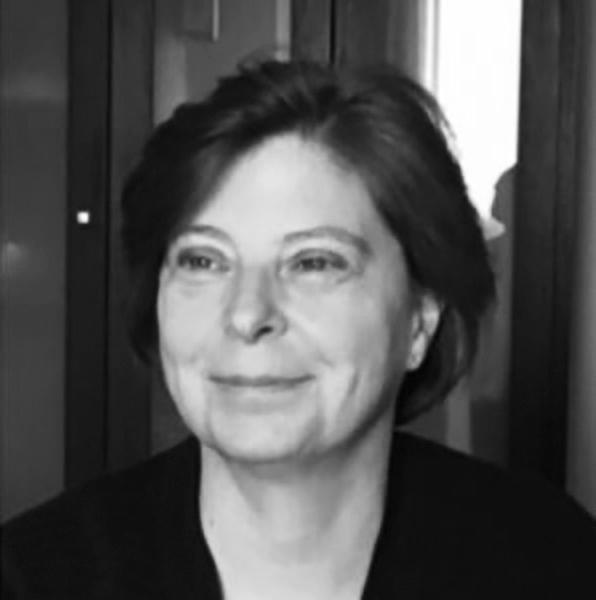
Betlehem Isaak is the daughter of the Swedish-Eritrean journalist and author Dawit Isaak . She spent the first seven years of her life in Asmara, surrounded by her family, her grandfather’s Italian delicatessen and her father’s books. But political tensions in Eritrea were rising and the family considered moving to Gothenburg (Sweden). Dawit Isaak had already found refuge there at the end of the 1980s. He has had Swedish citizenship since 1992, but was drawn back to Eritrea. He wanted to participate in the democratic development of his country. Dawit Isaak returned home in 1993. He marries and he and his wife become parents to twins Betlehem and Yorun and their younger daughter Danait. Dawit works as a journalist and becomes co-founder of the daily newspaper Setit . Bethlehem is eight years old when her father is arrested in Eritrea in 2001 and disappears without a trace. Her mother returned to Sweden with her three children in 2002. Even as a teenager, Bethlehem became publicly involved in the fight for her father. She says she wants to be her father’s voice. Together with Esayas Isaak, Dawit’s brother, and other Swedish activists, she has taken part in countless panel discussions and protest actions. She also appears regularly on Swedish television and radio.
In her first book, Mitt liv utan dig ( My life without you. Brombergs, 2020), which has just been published in Sweden, she describes her „double life“ as a young immigrant in Sweden and as an activist fighting for her father and the liberation of Eritrea.
Mitt liv utan dig (My life without you). Brombergs , 2020, ISBN 9789178091133.
Excerpt in Swedish: https://www.expressen.se/kultur/qs/varfor-har-de-bundit-fast-hans-hander/
A few weeks ago, a theatre play based on Bethlehem Isaac’s book premiered (review in Swedish ).
Interview with Betlehem Isaac
SB: Your first book will be published in March 2020. It’s called My Life Without You . In it, you describe growing up without your father, Dawit Isaac. What do you specifically want to convey with your book?
BI: I wanted to write a book about the life of an immigrant in Sweden, from the perspective of a child. The book follows me from the age of four until today. I am now 26 years old. And I wanted to tell my story from both an Eritrean and a Swedish perspective. I write about racism, what it’s like to grow up as a young black woman in a huge white, Nordic society. And of course I write about my father and the influence he has and has always had on my life. The message of my book is simple, we all have a lot in common, many people in the world were once immigrants and we know very well the difficulties that come with that. But this is a book written from the perspective of a young person. I hope it leads to the realisation that despite all our individual differences, we are all ultimately the same.
SB: Your father has now been in prison for 18 years. You say you still have hope. Where do you get this hope from?
BI: My hope simply comes from myself. I have this faith in humanity and the strength we have together. My friends, the books I read, and of course my parents, even though one of them is not here. I carry the memory of my father with me all the time.
SB: You say you don’t hate anyone. You want people to talk to each other. But at the same time you say „Do something!“ So you have the feeling that there needs to be more commitment, that there is a lack of determination to act, not only from the official side, but also from individuals and from human rights organisations and NGOs. How exactly should they get involved? What do you think is lacking?
BI: I want people to try to understand Eritrea and the Eritrean government. I want us to have diplomatic relations. I want people to somehow build a relationship with the Eritrean government, with Eritreans and with the diaspora. We as Eritreans need to talk to each other. And other people need to stop talking about us and start talking to us. Whether in Eritrea or here. So I always encourage people to travel to Eritrea and see what we can do. Can we talk about it? Even if it’s very difficult and people have been through a lot, can we talk about it? And that’s how it is everywhere here in Sweden where I’m involved. I try to say to people: „We need to talk about racism. Can we meet here somewhere and just talk about it?“ Because if we stand here and they stay there, then we just shout at each other. Then they can’t hear us and we can’t hear them.
SB : So you think that if you talk to supporters of the regime, make contact with them, they might change their behaviour.
BI: Yes, hopefully, and of course I won’t do it alone. Other Eritreans have to do this together with me and the international community has to get involved in the same way.
SB: How are you tackling this in concrete terms, in your life and with your book? Do you organise workshops or how do you exchange ideas with other Eritreans?
BI: I travel a lot to meet other Eritreans and also politicians to talk to them about the need to establish a dialogue because the sanctions [against Eritrea] have not worked. Everything else has not worked. We have to try something that we have never tried before.
SB: And what do you say to critics who say that you are propping up the regime?
BI: OK, then please let them tell me if they can do better. Just give me a call, get in touch.
SB: To talk to each other?
BI: Yeah, because I think people just say that out of anger as well, but I should be the angriest one. I haven’t seen my father for eighteen years.
Listen now
Discover the podcast series of the Fritz Bauer Forum
Here, experts talk about justice, human rights and social change. They provide in-depth insights and develop diverse perspectives on current issues that affect our society.

