
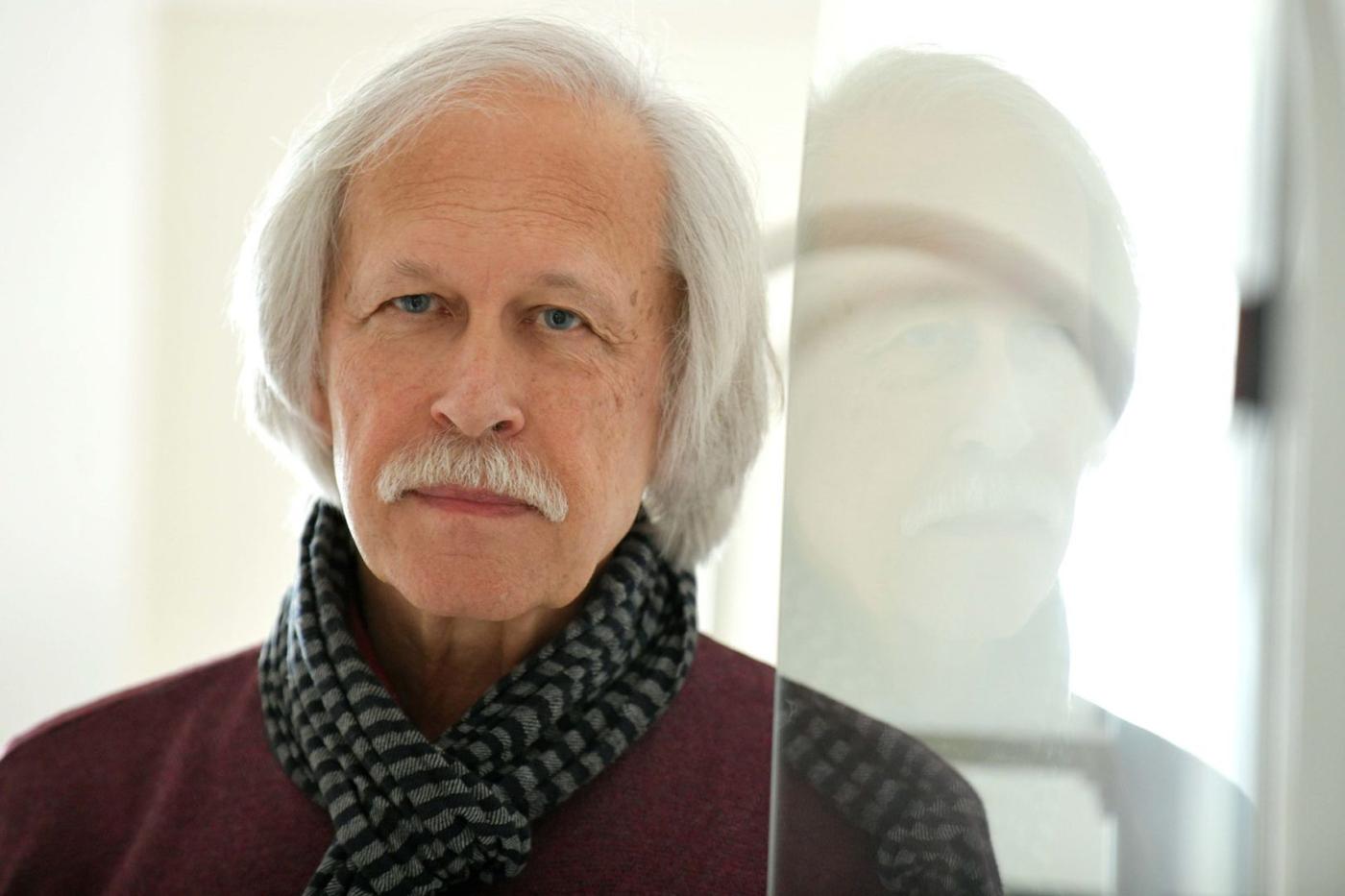
Autor/Autorin

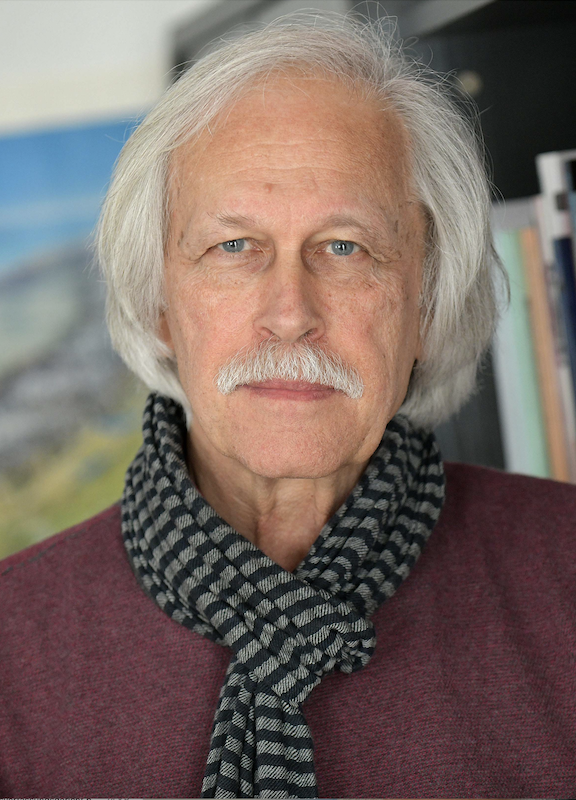
The lawyer, publicist and civil rights activist in conversation with historian Dr Irmtrud Wojak
The lawyer and publicist Rolf Gössner has been under surveillance and investigation by the Federal Office for the Protection of the Constitution for four decades since 1970. After more than twelve years of proceedings, the oral hearing will take place on 13 March 2018 at 11 a.m. at the Higher Administrative Court of North Rhine-Westphalia . The case concerns the federal government’s appeal against the first-instance judgement of the Cologne Administrative Court, which declared the almost forty years of continuous surveillance and research to be disproportionate and in breach of fundamental rights. – The editorial team
RG: …doing politics as a student, as I later realised, I didn’t get credit for that.
IW: That’s putting it very cautiously. How did it come about? Well, I mean, what happened?
RG: I don’t know what happened, it’s a reconstruction, so to speak. If I should now go into what is practically the core of our story, namely the problem with the Office for the Protection of the Constitution, then I can only say that I only found out after twenty-five years that the Office for the Protection of the Constitution had me under constant observation for a quarter of a century. In 1996, I applied to the Office for the Protection of the Constitution for information about the data stored about me. There was a reason for this: I had been the editor of a magazine called Geheim since the end of the 1980s. Or rather, we later no longer called it Geheim .
And this magazine uncovered the machinations and practices of secret services all over the world, and I was a member of the editorial team at the time. One day, this magazine was categorised as left-wing extremist by the Office for the Protection of the Constitution. I then asked the Federal Office for the Protection of the Constitution whether I now had to be labelled an officially certified „left-wing extremist“ and what this was actually based on. After my request for information about the data stored on my person, I received a long dossier about six months later. It contained information about my lectures, about my articles, where they had been published, especially in newspapers and magazines, as well as with organisers of events that were themselves under observation by the Office for the Protection of the Constitution, i.e. which were considered to be influenced by „left-wing extremism“. For example, the VVN, the Association of Persecutees of the Nazi Regime, or the DKP or other groups or parties. And in the case of the magazines, it was precisely those from the left-wing spectrum. And in this way, I and my journalistic activities were also registered. And this dossier was endless and spanned twenty-five years. Twenty-five years under constant observation, in other words, without a gap – in fact, I had already noticed at times that something was wrong. For example: open surveillance, full-face photography, on the road, somewhere, and someone from Cologne suddenly turned up at my neighbours‘ house and asked about my habits, my visits and other anomalies, and I was told about it. A neighbour told me about it. Her son is in the criminal investigation department and the person from Cologne had asked for a little administrative assistance. It was like: „Can you tell me what he’s up to?“
The whole thing also had a back story and it goes back to the end of the 1960s. I had a girlfriend in Poland. I had met her in Bulgaria and this East/West love apparently kept the secret services in East and West busy. We noticed this in our letters, which were opened and taped up again, some of which reached us censored, i.e. parts torn out. I was only able to travel to Poland to visit them from 1970 onwards, however, and only after the German-Polish Basic Treaty, which Willy Brandt brought about with the new Ostpolitik. That’s when it became clear how the political practically extended into the private sphere. That was very interesting for me. But obviously also for the Office for the Protection of the Constitution. My family was also involved at times. One day, at the end of the 1960s, the Office for the Protection of the Constitution turned up and told me that I was at risk (of being investigated or tapped into by Eastern intelligence services). I’d better not go to the (communist) East. I travelled anyway, it was 1968, to Prague. In the footsteps of Johannes Kepler.
IW: Where is your home town?
RG: Weil der Stadt, about thirty kilometres west of Stuttgart, towards the Black Forest. That’s the Kepler city, where the astronomer Johannes Kepler was born.
IW: So the Office for the Protection of the Constitution contacted your relatives?
RG: Yes, exactly.
IW: You can’t really imagine what that actually means if you haven’t experienced it. How exactly does it work when a dossier like this is created and you read it, after all, someone must always have been there?
RG: No, this story didn’t appear in the dossier at all. It’s only been kept since 1970, so it’s possible that the old stories have been deleted or, I assume, that it was the Baden-Württemberg Office for the Protection of the Constitution and not the Federal Office for the Protection of the Constitution. After all, I sent my enquiry to the Federal Office for the Protection of the Constitution.
IW: After Cologne.
RG: That’s right. And in this respect, the observations from the federal states may not apply – there are also other states in which I was observed, in North Rhine-Westphalia and Rhineland-Palatinate, for example, where there was stored data and files about me. I also took legal action against North Rhine-Westphalia before the Düsseldorf Administrative Court – and won, with final and binding effect.
IW: And there was also a file there?
RG: There was also personal data and a file. Back to the Federal Office for the Protection of the Constitution: After my first enquiry, I asked them every other year what new sins had been committed, and there was always something new to report. This went on for almost ten years, until 2005, when at some point I got fed up. I thought that it was unacceptable for me to be under constant surveillance. That’s why I took legal action. In other words, I filed a lawsuit against the Federal Office for the Protection of the Constitution at the Cologne Administrative Court, which is responsible for this, with the aim of declaring this long-term observation, which is already a record, illegal and to gain full access to my personal file. Those were the claims. The proceedings before the Cologne Administrative Court then lasted a total of five years. And a lot happened during this time. During this time, I was elected deputy judge at the State Court of the Free Hanseatic City of Bremen, which means I was at the highest constitutional court in the country, even though I was still being watched by the Office for the Protection of the Constitution. The Cologne Administrative Court therefore asked the Federal Office whether a different situation had now arisen! The Federal Office for the Protection of the Constitution wrote back unmoved: No, they could also observe judges if the conditions were met. And that was the case with me. However, he didn’t keep this up for too long, only about a year and a half. Then, shortly before the first hearing, I was informed that, following an agreement with the Federal Ministry of the Interior, they had come to the conclusion that I no longer needed to be under observation. One of the reasons given was that the situation had changed in the meantime, there were obviously more important things to observe and the scarce resources had to be used elsewhere. That is quite astonishing.
IW: You said earlier that the „register of sins“ that you always asked about, what were some of the „sins“ that were repeatedly listed?
RG: It was always the same trick. First of all, it became clear that I had been under observation for practically my entire working life. That means from 1970 as a student, as a student politician, then as a trainee lawyer, then as an independent lawyer, as a publicist, as a parliamentary advisor, later as President of the International League for Human Rights and, as I said, also for a time as a deputy judge at the State Court in Bremen. It has to be clearly stated once again that this has an impact on professional activity. In particular, because we are talking about professions that have to protect professional secrecy, i.e. client confidentiality as a lawyer and whistleblower protection in journalistic activities. And that could no longer be guaranteed under observation conditions. I had to inform my clients if they hadn’t already learnt about it from the press, and some of them became very reticent. Others may not have come to me at all. So of course this had consequences: professional secrecy could no longer be guaranteed under these conditions, my professional activity as a lawyer was restricted. And my informants were at risk, for example in my investigative research for my „investigative books“ about the Office for the Protection of the Constitution, police developments, political justice and the like. In other words, I was naturally reliant on informants as sources, for example from the police apparatus, from the secret service authorities, and of course they could no longer really be protected. We often had to make incredible efforts to get away with it to some extent in order not to present the informants straight away. It was time-consuming, it was also financially costly to ensure this, and thank God it never came out which informants I was working with. But as I said, it was only because of the additional expense.
IW: And how should we understand these observations? Is it like this, is mail being opened, what exactly is happening? Are there people at events who are sent there and you have to reckon with someone sitting there and taking notes in order to deliver this later? How exactly does it work?
RG: Well, what can be reconstructed from the dossiers that I received as a result of my enquiries – that’s not access to files – it was quite filtered information, not too much was clear from it, apart from where I appeared when, as a speaker, although I did actually find out at some point, oh, I was there too? I didn’t even remember that! Did I even get a fee for that? Could I claim it back? No sooner said than done.
Just as an aside. As I said, there were events with the „wrong“ organisers, there were articles and interviews with the „wrong“ press organs, i.e. with those who were suspicious, who were under observation, who were considered „left-wing extremist“ or influenced in this way, all of this was registered. I like to call that contact guilt. In other words, who are you in contact with and how are you judged? The Office for the Protection of the Constitution later said this in court: as a „prominent lawyer“, I would have made the organisations in question more or less socially acceptable with this journalistic and speaker work and with these contacts and thus „emphatically supported“ them. That would be worth observing. The court proceedings were then followed up. They then realised that this could not really justify almost forty years of observation, so they added more after calling in an expensive law firm. After that, the content of my writings was discredited. It was then said that what he wrote, for example about the development of the security services, about crime and society, sounded quite democratic, but with his call for fundamental economic and social change he meant something completely different, namely revolution. That’s what it says in the GDR’s political dictionary, which I didn’t even know myself, but which they obviously had in their evidence room – and „revolution“ wouldn’t be compatible with the constitution. Such insinuations. That’s really harsh…
IW: You can twist anything.
RG: You can twist everything however you want. But my content in articles and interviews was not originally the reason for the observation by the Office for the Protection of the Constitution, they only ever mentioned the contacts and now also the content-related stories. And it’s really bad when this is placed under the power of definition of the Office for the Protection of the Constitution, a secret service that can hardly be democratically controlled: What I say as a journalist, what I say as a lawyer, what I say as a human rights activist or whatever. In my opinion, this goes far beyond what the Office for the Protection of the Constitution should or may do. But it is also the case that the Office for the Protection of the Constitution, as a domestic secret service, practically always snoops on people’s opinions well in advance and therefore ultimately also controls their opinions.
IW: How did this always become public knowledge? I mean, you learnt that you were under surveillance, that it affected your entire professional existence. How did the press, which is actually involved, report on this? Objective investigative journalism should be able to uncover this.
RG: Yes, that’s right. That doesn’t just affect me as an individual, but also other lawyers, or other lawyers and journalists. Because it has become clear that people with professional secrets can be under surveillance, and possibly for decades, that is a threatening matter. And nothing can really justify it. And the Administrative Court made that quite clear in its judgement in 2011. In other words, the entire surveillance was disproportionate and unlawful from the outset. The court certified this to the Federal Office for the Protection of the Constitution at first instance. Incidentally, in the course of the proceedings, the file also had to be submitted, i.e. the court had insisted that the Federal Office for the Protection of the Constitution submit my entire personal file. It took a long time for the Federal Office for the Protection of the Constitution to actually produce it, I think three quarters of a year. And then it also became clear why it took so long. Because the Federal Ministry of the Interior had issued a blocking order on my file, which meant that it could not be presented in full, but only in a very limited way. Pages were taken out, pages were blacked out, some were blacked out, so that about eighty per cent of the files were not readable, and not only not readable for me, but also for the administrative court that had to judge this story.
IW: And it stayed that way?
RG: Yes, it stayed that way. I can show you what it looked like in detail, such a blocking declaration, it lists every single page that had to be manipulated in some way and it goes on for many pages. And this is what the redacted pages look like, you can only see my name, place of birth, place of residence and date.
IW: What a tremendous effort.
RG: Parts of the file were removed in accordance with the declaration of closure, so you wonder why there’s still a page in there with just the name and date on it. It’s obviously blacked out by hand, and there were very different characters at work – sometimes meticulously, then again with a light hand. In this respect, the graphics are quite interesting…
IW: We’ll have to record that separately. So page by page.
RG: Out of over two thousand pages, around eighty per cent are not readable. It’s mostly my own articles and interviews that can still be read, but the marginal notes there are all blacked out and, above all, all the informants and agents at the Office for the Protection of the Constitution. Informants at my events, for example, i.e. informants or undercover agents who apparently observe what is said, what I say, what discussions I have and so on, and then pass this on to the Office for the Protection of the Constitution. And apart from that, it was a lot of hard work for the Office for the Protection of the Constitution to always and everywhere register, file and comment on what and where I publish, speak or what is reported about me.
IW: And how did the Federal Ministry of the Interior, I mean, that’s the responsible authority, why did it end up there and why did it exert such a strong influence? So that the file could not be presented in court?
RG: That’s because the Federal Ministry of the Interior is the supervisory authority of the Federal Office for the Protection of the Constitution. And since the Federal Office is a federal intelligence service, i.e. the federal domestic intelligence service, certain things inevitably have to be kept secret. This is achieved by means of declarations of non-disclosure issued by the Federal Ministry of the Interior, which is responsible for this. One of the reasons for secrecy is the so-called risk of being spied on, so if I could read all this, I could find out how the domestic intelligence service works. I’ve written entire books about the Office for the Protection of the Constitution and its links to the neo-Nazi scene, for example, so I know my way around, including secret things that I’ve uncovered – but apparently the Office for the Protection of the Constitution didn’t want to give me any more material for free. In a way, that’s understandable. The second possibility for withholding files or documents, or not disclosing them: the so-called welfare of the state could be jeopardised. If it actually came out what was in there, then the welfare of the state might actually be jeopardised, for example if it came out what nonsense they were collecting and storing. That would then be a case for the Federal Audit Office. The third reason for keeping something secret, and this is also the essential point, is the so-called protection of sources, i.e. if any sources, such as undercover agents, undercover investigators, informants are involved, they must not be named because otherwise they would be exposed, and then, it is literally said, their life and limb would be endangered. (…) Then I could possibly find out or infer who was active in my case or possibly reported from my environment to the Office for the Protection of the Constitution.
IW: So you really have to imagine your immediate personal environment.
RG: In case of doubt, yes. I can’t say because I don’t know…
IW: How do you live with it?
RG: I’m always very careful and cautious so as not to give rise to any suspicions. You quickly fall into paranoid patterns of thought and behaviour. I’ve met colleagues who also practised investigative journalism and uncovered things that were previously unknown, but then one day they stopped. They kept turning round, checking the car wheel bolts and felt they were being watched. They then changed their profession or simply changed the subject matter, for example writing travel books or whatever. I think you have to have the right nerves and definitely not allow yourself to be pushed into paranoia. In this respect, I managed to cope with it reasonably well, also by stabilising myself through my direct social environment, and I’ve got through it to this day.
RG: Let me come back to my personal file. Of course I wanted to be able to see everything that had been collected about me on over 2,000 pages over decades. That’s why I brought parallel proceedings before the Federal Administrative Court, which is responsible for this. I only applied to the court for full access to the file in order to have it released. This is a so-called „in-camera procedure“. In other words, an „in-camera procedure“ is practically a secret procedure that is highly problematic in terms of the rule of law, over which I as the plaintiff no longer have any influence, but instead the court, the responsible senate, is carted off to a bug-proof room and there the judges can inspect the file in full and unredacted – albeit always with „whispers“ from the Federal Office or the Federal Ministry of the Interior explaining why this or that page should be kept secret. In any case, I have no influence because I’m not allowed to have a look. And the judgement of the Federal Administrative Court was the same in the end: Everything secret must remain secret as it is, which means that the redactions remain in full force. And the administrative court in Cologne, which had to rule on the legality of the surveillance, only had the redacted file available and could therefore only make its judgement on this limited basis of evidence. This is highly problematic in terms of the rule of law. On the one hand, secret proceedings are highly problematic, but they are an inevitability, if you keep secret services, then this has restrictive effects on the control of these secret services. On parliamentary control and on judicial control. As far as parliamentary scrutiny is concerned, it is well known that scrutiny also takes place in secret, i.e. not very democratically; in other words, the members of parliament who have to scrutinise the Office for the Protection of the Constitution cannot make public what they find out in most cases. And the courts are often confronted with manipulated files, see this one, with restricted testimony, i.e. undercover agents are not authorised to testify or only to a limited extent, or witnesses are brought in on hearsay, i.e. the undercover agent’s leader then reports to the court what he claims to have heard from his undercover agent. All of this violates the principles of court proceedings: the immediacy and orality of the proceedings are not guaranteed, which means that a fair trial is no longer guaranteed. Nevertheless, this is how it works. In terms of the rule of law, as I said, highly problematic.
IW: And how do you imagine these courts are composed? Like a „secret court“? How does it come about, where does the court sit, who chooses the judges?
RG: It’s not a secret court, but the court proceedings are practically secret.
IW: You said it meets in a bug-proof room?
RG: Yes, it usually is for such stories, and it’s often no different with parliamentary scrutiny.
IW: And who chooses the judges?
RG: The judges are the regular judges. It’s not a special court, they are regular judges who have a certain amount of jurisdiction. This also applies to cases where the issue of secrecy is involved.
IW: And the file is then presented to them with the approval of the Ministry of the Interior and the Office for the Protection of the Constitution, so the judges can’t say we want to see the whole file?
RG: Yes, especially at the Federal Administrative Court, in such „in-camera proceedings“, where secrecy is scrutinised, the entire file is presented in fair copy.
IW: The judges have seen it?
RG: They’ve seen it in full, if they’ve looked at all 2,000 pages. And then they probably scrutinised the individual pages that were manipulated, i.e. completely or partially blacked out or removed, in certain cases possibly questioning: Does this really have to be kept secret? And why? They then probably checked with the Office for the Protection of the Constitution. As I said, it usually has to be kept secret for the three reasons already mentioned: Danger of investigation, public interest and protection of sources. And the court was obviously fully convinced of this. And since I and my lawyer were unable to make a counter-argument, they were only briefed on one side.
IW: So you still couldn’t see the file in the proceedings before the Cologne Administrative Court.
RG: That’s right. Since the Federal Administrative Court came to the conclusion that everything had to remain secret as ordered by the Federal Office and the Federal Ministry of the Interior, I as the plaintiff can still only see about 20 per cent of the file and I will probably never get to see it again because the ruling of the „in camera proceedings“ cannot be appealed and is legally binding.
Incidentally, the Cologne Administrative Court also had to make its judgement on the basis of this personal file, which could only be viewed to a limited extent. Nevertheless, in its judgement in 2011, it came to the conclusion at first instance that my entire surveillance by the Federal Office was disproportionate and in breach of fundamental rights from the outset.
However, the Federal Government, represented by the Federal Office for the Protection of the Constitution, applied for leave to appeal against this judgement. And the Higher Administrative Court (OVG) in Münster, North Rhine-Westphalia, as the next instance to rule on the matter, took almost another five years to allow the appeal. This means that the appeal has been authorised since the end of 2015. After almost ten years of proceedings. The oral hearing before the OVG will take place on 13 March 2018. It is not yet possible to predict when the 2nd instance judgement will be handed down
Depending on the outcome of the judgement, the case will be appealed to the Federal Administrative Court. If I do not agree with this judgement, I can then appeal to the Federal Constitutional Court and then, if necessary, to the European Court of Human Rights. That could then take another 15 years or more. So it’s a never-ending story after all…
IW: It’s crazy, but I wonder, now that a judgement has actually been made that the surveillance was unconstitutional – why is an appeal being lodged?
RG: Not on appeal, but on appeal.
RG: So the second instance, and I can well imagine why they appealed. They didn’t want to put up with the fact that they had spent four decades making such an effort against an unorganised individual in violation of fundamental rights. That’s quite something. I don’t know of any other documented case like this. That’s a tough one. And secondly: If the judgement of the court of first instance were to become legally binding, it would mean that the surveillance activities of the Office for the Protection of the Constitution would also have to change and be significantly restricted. This would have an impact on other cases and on the entire work of the Office for the Protection of the Constitution.
IW: It would have consequences.
RG: Just as the whole story would of course have consequences. Structural and also legal consequences.
IW: And can you imagine – you say it’s quite unique, what you experienced – but I can’t imagine, for example, when we talk about the VVN or other organisations where „left-wing extremist“ activities are alleged, how many people this actually affects?
RG: Well, my observation is not an isolated case. Of course, many people are involved in such observations, especially people who are organised in any „suspicious“ associations or in parties that are under observation. Of course, they can work out that they are also under observation, are usually aware of this, but then don’t want to know for sure and, above all, don’t want to go through the strenuous and costly procedure of going through the courts. So I’m one of the not too many people who have got to the bottom of the matter.
IW: I was just thinking the same thing, do you actually want to know…?
RG: Yes, that’s the question: firstly, do you want to know about it and do you want to defend yourself against it, and then go to all this trouble, especially if the procedure takes decades and is not exactly free of charge.
IW: I wonder how many people this affects.
RG: But we don’t know. We don’t know how many are under observation, from whatever political spectrum, and we don’t know how many V-people are out and about, for example. It’s interesting, and of course I was particularly horrified to learn how long I was under surveillance and how much effort and perseverance the Verfassungsschutz put into following me, while on the other side the neo-Nazis and NSU were able to blaze their bloody trail through Germany without anything happening, even though – or perhaps because – the Verfassungsschutz was so close by with its criminal neo-Nazi V-people. I have analysed this story in detail, even before the NSU was known. The involvement of the Office for the Protection of the Constitution with the neo-Nazi scene and neo-Nazi parties. It was horrific to delve deeper into this and, let’s say, to look at documents that had previously been kept secret. Even court judgements were sometimes kept under lock and key; getting hold of them is of course particularly difficult. But it is important to realise that the Verfassungsschutz ultimately stabilised the neo-Nazi scene with its undercover agents, especially as they were active in the scenes themselves. And they may also have promoted them – for example, with the funding they received from the domestic intelligence service for their spying work; some of their fees flowed into these structures. And the undercover agents who had become criminals were repeatedly shielded from police investigations by the Office for the Protection of the Constitution; in some cases, police actions against undercover agents who had committed offences or become criminals were also betrayed – such as surveillance or house searches. And evidence was taken away. I was able to prove all of this in my book Geheime Informanten – V-Leute des Verfassungsschutzes – Neonazis im Dienste des Staates (Secret Informants – V-Leute des Verfassungsschutzes – Neo-Nazis in the Service of the State ), the title of which was published in 2003. A horrendous story that can no longer be justified under the rule of law. All of this was also confirmed in connection with the NSU, where the domestic secret service shielded its informants from police investigations in order to be able to continue siphoning them off instead of immediately shutting them down.
IW: Yes, I think that’s why it seems to be so difficult to get out again. And why is the trial against Zschäpe & Co. in Munich dragging on for so long? It’s been going on for years.
RG: Perhaps a judgement can be expected in the foreseeable future, but in my opinion there should be far more defendants in the dock anyway than just Zschäpe, Wohlleben and co. So many an informant would be due and many an informant leader. And also those professionally and politically responsible, including those responsible for the cover-ups that took place – keyword: shredding of files etc.
IW: The entire domestic intelligence service is involved in this story?
RG: Hm, yes, involved, if you can’t prove it, you can only claim it, it would still have to be proven how it was involved. Indirectly, yes.
IW: Through the V-people…
RG: …through the V-people, yes. Indirectly, yes. But he can always sign himself free if it’s claimed that the V-man or the V-man got out of hand, somehow took on a life of his own or whatever. So we’ve seen all sorts of excuses. But I would go so far as to say that the Office for the Protection of the Constitution has ultimately become part of the neo-Nazi problem through its involvement with undercover agents. And it has contributed very little to solving this problem, but rather to exacerbating it.
IW: Yes, that is also a development, if you follow the public debate about this „new“ problem of neo-Nazism, nationalism and right-wing extremism, it seems to have strong historical roots. So when I listen to your story, it is predetermined by history.
RG: Well, there was of course an imprint in the security organs, through the old anti-communist basic consensus and through the early reintegration of former Nazis into the state apparatus. There were early and long-lasting influences. The extent to which these still have an impact today is difficult to prove. Perhaps, but in the meantime a new generation of civil servants has been at work. But the basic anti-communist consensus still seems to be virulent, even after the end of the Cold War. The sensitivity towards developments in the right-wing extremist neo-Nazi sector was apparently not so great, which may have changed a little after the NSU and its series of murders were uncovered, when people really realised what had been messed up and missed. The fact that the structural development was not recognised, that racist violence was ignored and at best there was only talk of individual perpetrators, etc., that has a certain systematic nature, and we now have to pay close attention to how the security agencies deal with this, whether they have really learned from this disaster, in connection with the NSU and in view of the mistakes, mishaps and scandals of the Office for the Protection of the Constitution. We now have the impression from the civil rights side that the Office for the Protection of the Constitution has emerged stronger from this whole disaster. In other words, the legal reforms at federal and state level have not drawn the really necessary conclusions, its powers are not being restricted and tamed in accordance with the rule of law, but the Office for the Protection of the Constitution is being further upgraded and given even more precarious powers – so it is actually emerging stronger from this misery.
IW: Isn’t that absurd?
RG: Yes, that’s absurd, but it’s by no means unusual. The Office for the Protection of the Constitution has been given more powers, more opportunities to exchange data with the police and other intelligence services, and what’s more, the ultimately uncontrollable V-Leute system now has a legal basis. Previously, it was more of a grey and dark area and now there is a legal possibility to recruit, deploy and siphon off even previously convicted and criminal V-Leute. This means that they are not allowed to do everything, they are not allowed to be active in leading positions in parties or extremist organisations, but they can be members, for example, they can even be members of terrorist organisations – and that is a crime after all.
IW: What do you mean by criminal informers?
RG: For example, V-people who have a criminal record or who become criminals during their work for the Office for the Protection of the Constitution and commit violent offences …
IW: …so they are already working as informers and then become criminals?
RG: Both: people with a criminal record can be recruited as informers or they can become criminals during their time as informers. You have to realise that undercover agents are people who have already been active in the scene under observation. In other words, they are merciless neo-Nazis and racists in the right-wing extremist area, and often also violent offenders in these violence-orientated scenes. And as soon as they have been recruited by the Office for the Protection of the Constitution to report from the scene, they have not become people turned to the rule of law, not „agents of the rule of law“, but they are still neo-Nazis, racists, perpetrators of violence. They are still active, they have to be, otherwise they might attract attention as informers in the scene. And then they quickly become criminals, if they weren’t already. And in these cases, the Office for the Protection of the Constitution now largely has the legal option of continuing to siphon off such people, keeping them in the scene, and not immediately eliminating them, which would be the right thing to do. It is only when it comes to serious offences, murder and manslaughter, that things look different.
IW: How do you shut them down?
RG: By taking them off duty.
IW: I mean, do they then get a sum of money?
RG: Possibly, yes. A kind of severance payment.
IW: A severance payment?
RG: There is such a thing, it’s called a cut-off bonus. As I said, the issue is now regulated by law at federal level and in some federal states. They are allowed to commit simple offences, they are even allowed to commit crimes, namely the crime of being a member of a terrorist organisation. This is punishable by at least one year in prison.
IW: Are they allowed to do that now?
RG: Because they say, yes, if we want to have insight into such organisations or terrorist groups, then we have to be able to place V-people there or siphon them off. And they automatically make themselves liable to prosecution.
IW: Isn’t that a dangerous thing if the legislator makes something like that possible, structurally speaking?
RG: Yes, of course. But we already had this problem extensively in practice before, and now it is somewhat contained to a certain extent, but also legalised at the same time.
IW: Yes, positivised. That’s what often happens when something like this happens, that the legislator is called in and exactly what you actually want to prevent is made positive.
RG: Ultimately, this means that the scandal is legalised.
IW: Yes.
RG: That’s one way of putting it.
IW: Dangerous, I have to think of what you said about your texts, that you were accused of calling for a „revolution“?
RG: By calling for fundamental social change, I would ultimately mean „revolution“ and that this demand is not constitutional.
IW: I mean, yesterday I gave a lecture on Fritz Bauer, who said – not literally – that resistance, i.e. revolution, does not mean overthrow, but the restoration of a right that has always existed. That’s what this term is actually about.
RG: That is understood in different ways.
IW: It’s understood differently?
RG: Yes, I think so, there are very different views on that. But what’s interesting is that the Office for the Protection of the Constitution accuses me of wanting to render the German security organs, the police, the Office for the Protection of the Constitution, but also the Federal Constitutional Court, defenceless against the internal and external enemies of the Federal Republic with my criticism of the prevailing security policy, the KPD ban and the occupational bans.
IW: They give you a lot of power?
RG: It’s really interesting and quite astonishing what is assumed and apparently attributed to me.
IW: You say that it also influences your professional activities. Does it also influence your work for the International League for Human Rights?
RG: It did, of course, during the time when I was under observation. Now I am supposedly no longer under observation. Since 2008, which in turn can change quickly or may have changed.
IW: Are you still asking questions?
RG: No. I’m not asking any more at the moment, as long as the process is ongoing, I assume that they are still complying with it. What else was it?
IW: Whether it affected your work in the league?
RG: Yes, yes, I was president of the International League for Human Rights for about five years during the surveillance and our human rights work, which is highly sensitive in many respects, may of course have been under observation. I can’t verify this because of the redacted passages, but the League is also mentioned on some open pages. All of this is poison for independent human rights work.
IW: How did you come to join the league?
RG: The International League for Human Rights asked me if I would like to become its president. It probably had something to do with what I had done before. Namely civil rights and human rights work. I was a parliamentary advisor for a long time, and also an expert in legislative procedures in the Bundestag and state parliaments, especially when it came to security laws, which always affect civil rights. I have also worked internationally at times, in connection with court proceedings, observations of political court proceedings, for example in Spain, before the European Court of Human Rights in Strasbourg, for example in the criminal proceedings against Abdullah Öcalan, or was myself active as a joint plaintiff’s representative or as a defence lawyer, for example for Abdullah Öcalan’s deputy in Europe. I represented him before the Higher Regional Court in Celle in a so-called terrorism trial. And the parents and siblings of the Kurdish teenager Halim Dener as joint plaintiffs against an SEK policeman who caught Halim Dener in Hanover in the mid-1990s while he was sticking up PKK posters and shot him in the back while he was fleeing. However, the policeman was then acquitted – because in the hustle and bustle of the incident, the pistol fell out of his holster and the shot went off when he picked it up again. I also represented Oliver Neß, a TV journalist in Hamburg who is critical of the police and who was working as a TV journalist at a demonstration. He had already uncovered many a police scandal. During the demonstration, he was suddenly surrounded by police officers, choked and brought to the ground. He is lying on his back and one policeman is kneeling on his chest and another is tampering with his feet, taking off his shoes, twisting his foot back and forth until the tendons snap through his whole body and he is left lying there injured. One of the best-documented cases of police abuse. His colleagues on television had filmed it. The story went around the world. I then represented him in his claim for damages against the Hamburg Senate, we negotiated out of court and got damages and compensation for pain and suffering running into hundreds of thousands. And in the criminal proceedings against the police officers involved, I represented him as a joint plaintiff, together with other colleagues. At first instance, the two police officers, the one who knelt on his chest and the other who tampered with his feet, were both sentenced to a small fine for negligent assault. Negligent, why? Because the person who used this lever grip, which is in principle permissible in order to turn a delinquent from his stomach to his back or vice versa by applying pain in measured doses, this police officer had not taken into account that his colleague was kneeling on his chest, so that Oliver Neß could not be turned over, but that it all went into the ankle – that was negligence. In the next instance, both went on appeal to the Federal Court of Justice – which acquitted the two police officers. Because in the hustle and bustle, with lots of demonstrators and blah blah blah, it was too high a demand on the police officers‘ duty of care to pay attention to something like that.
So stories like that certainly play a role alongside my civil rights publications and presentations as well as my parliamentary work. That’s probably why the League came up with the idea of electing me as its president.
IW: How long have you been working there?
RG: Since 2003, so about fifteen years now.
IW: What does the work of the League for Human Rights mainly consist of?
RG: The League is very networked, both nationally and internationally. There is the FIDH, Fédération Internationale des Ligues des Droits des l’Hommes, which unites, summarises and coordinates leagues in a total of fifty countries. There is also a European umbrella organisation, the AIDH, to which we belong, so that we are naturally positioned internationally through this international network. We have a focus in Germany, which means that we are sweeping our own front door; we also have other focal points: Iran, Israel/Palestine and Turkey/Kurdistan.
IW: In other words, the focus is on the extent to which human rights violations are uncovered and…
RG: …yes, and then publicising them here. In other words, public relations and educational work and, if necessary, calling on political and international bodies to exert their influence where possible.
IW: Does that also mean standing up for certain people?
RG: No, not necessarily. In general, we are concerned with structural stories, individual cases in exceptional situations, if it does not exceed the capacities of a group working on a voluntary basis. Example: The observation of the criminal proceedings against two police officers for the burning death of Oury Jalloh, an asylum seeker, in police custody in Dessau. However, there is one thing we cannot do, let’s say some kind of individual case counselling or legal advice. Our statutes don’t allow for that. So we work in the spirit of Carl von Ossietzky, that is our reference. In our predecessor organisation in the Weimar Republic, Carl von Ossietzky was active on the board and we refer to this continuity. And so every two years we honour people or groups with the Carl von Ossietzky Medal who have made a special commitment to human rights and peace – something that always attracts a lot of media attention throughout Germany. Most recently, we honoured SOS Mediterranée, the aid organisation in the Mediterranean that rescues refugees in distress in the Mediterranean. And the documentary photographer Kai Wiedenhöfer for his educational work on the Syrian war, refugees and walls in the world. And two years ago, in 2014, we honoured the whistleblower Edward Snowden, the filmmaker Laura Poitras and the journalist Glenn Greenwald with the Carl von Ossietzky Medal. Laura Poitras also received the Oscar for her documentary film Citizenfour ; incidentally, she was able to collect the medal in person during the award ceremony. Eduard Snowden is still stuck in Moscow, but we had organised everything to have him there in person in Berlin. And we actually managed to have him there live on the big screen in front of a large audience via Skype. That was a really great thing.
IW: Thank you very much for the interview, Mr Gössner.
Listen now
Discover the podcast series of the Fritz Bauer Forum
Here, experts talk about justice, human rights and social change. They provide in-depth insights and develop diverse perspectives on current issues that affect our society.

