
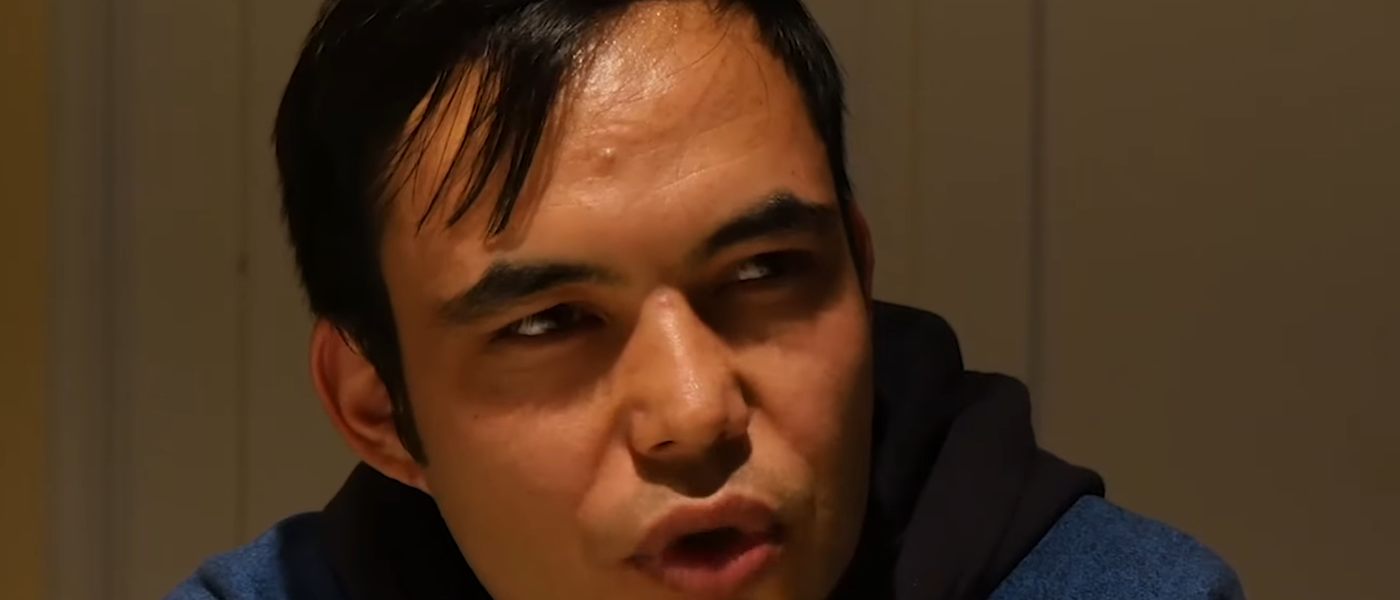
Autor/Autorin

Mahdi Ahmadi is a brave young man. The Taliban recently destroyed the mobile phone antennas in his province and he can no longer reach his family. He knows from past experience that this destruction is followed by attacks and violent offences and is afraid for his loved ones.
He is under a lot of pressure with regard to his education and also has health problems. The uncertainty about his prospects of remaining in the country is weighing heavily on him. As the BAMF rejected his asylum application, Mahdi appealed against this decision to the administrative court in January 2017. His greatest fear is that he will have to return to Afghanistan, where two of his brothers have already fallen victim to the Taliban and he only just escaped with his life after a death threat.
Mahdi Ahmadi is now 26 years old and comes from a small village in the province of Maidan (Wardak) in central Afghanistan. He went to school there and later in Kabul, learnt English, studied pharmacy in Kabul, gave English lessons and worked as a pharmacist for a short time. Even there, in the capital Kabul, he had to fear for his life every day and could never be sure of returning home alive in the evening. While he was studying, two of his brothers were killed by the Taliban, who are strong in the region. The family, who want to protect him and not burden him any more, only tell Mahdi about it later, when he has finished his studies.
Mahdi’s goal was to open a pharmacy in his village in order to improve healthcare in the remote region and help his people. He belongs to the persecuted Hazara ethnic group, who speak Persian and, unlike the majority of Sunnis, follow Shia Islam. Many of them fled to Pakistan before Abdur Rahman Khan’s genocide in the 1890s. During the Afghan civil war, the Taliban carried out targeted massacres of the Hazara population in Kabul, with the worst massacres occurring in 1997 during the recapture of Mazār-i-Sharif and in 2001 in Hazarajat, the region where Mahdi’s family lives. During his studies, Mahdi became a member of a party that campaigns against the Taliban and in favour of women’s access to education in Afghanistan. Of his six sisters, three have married and three have studied.
Mahdi Ahmadi was captured by the Taliban while travelling by bus from his home village to Kabul, where he had gone to buy medicine. His uncle credibly assured the Taliban that he was not working with the Americans, despite his English diplomas. Above all, however, he paid money so that Mahdi was released. However, the Taliban warned him that if they caught him again, they would kill him.
With his own pharmacy, it was clear that Mahdi would have to travel to Kabul once a week, as he would have to collect the medication and pack it appropriately. However, after the experience of his capture, this had become an impossibility. The only possible outcome was that he would have to leave Afghanistan. Mahdi’s parents supported and even encouraged him in this decision, as they did not want to lose a third son.
Mahdi’s journey was organised in three weeks, the exact destination unknown. His brother exchanged Afghan money for dollars in Kabul and hired a smuggler. After travelling through Pakistan, Iran, Turkey and Greece, Mahdi arrived in Germany within three months via the so-called Balkan route in 2015. The worst stages of his escape from the Taliban were Pakistan and Iran. The refugees travelled a lot on foot there, often walking for two to three days, they were hungry and thirsty, and they were in constant fear of the police, who would send them back and the smugglers would be the first to flee when they turned up. Some of their fellow refugees died before Mahdi’s eyes. The traffickers earned Mahdi almost 4,000 dollars for the journey from Afghanistan to Greece.
After a week in Germany, Mahdi Ahmadi travelled from Munich to Miesbach, where he stayed for a month and a half before being taken to Feldafing on Lake Starnberg. Today he lives in Pöcking.
After three months, Mahdi was summoned to the Federal Office for Migration and Refugees (BAMF) for a hearing. Here he was asked to prove his identity. As he had left all his certificates and his original Tazkira in his village, he asked his brother to send these documents to him. His brother also sent the documents there, and the proof of posting is available. And Mahdi was told by the BAMF that Tazkira and the certificates had arrived and had been forwarded to the relevant district office. However, they never arrived there. Mahdi Ahmadi’s tazkira and certificates have therefore been lost in Germany.
After six months, Mahdi had another, similar „interview“ at the BAMF. They confirmed to him that the certificates had not been lost. At his last interview at the BAMF in October 2016, he was also told that his original documents were available. In November 2017, however, Mahdi had already been waiting for a year and a half and the certificates had not been returned to him. An incredibly negligent process. Especially as Mahdi’s asylum application was rejected two months after the last hearing, and his story was deemed implausible.
This always raises the same question: why should a young man like Mahdi, who at least lacked nothing economically in his home country, have left this home and, above all, his family and friends to start from scratch or less in Germany if he didn’t have good reason to do so? Who flees from home without the greatest need?
In the two years since his arrival in Germany, Mahdi has learnt German well and recently obtained the B1 certificate from the Goethe-Institut. He is happy to be safe here and feels well supported by many people. He finds the Germans friendly and helpful. He is seen as a person, not as a member of a religious or ethnic group. He doesn’t want to be a burden on the state, but wants to work and earn money.
He has already completed an internship at one company, then an introductory qualification and in September 2017 he started an apprenticeship as a chemical laboratory technician at Roche. When Mahdi reads his rejection letter, he realises that a lot of things don’t match the information he provided at the interview. Naturally, he is worried about his family back home in Afghanistan. There could be an explosion or an attack by the Taliban at any time. Here in Germany, we only hear about the big explosions with around a hundred fatalities, if at all, but we don’t hear about the smaller everyday attacks. Afghanistan is supposed to be a safe country, we are told time and again. People prefer not to talk about the injustice and the Taliban when it comes to the plight of individuals.
Mahdi used to phone his family once or twice a month – the connection has now been cut. Of course he is homesick. If Mahdi were to step out of Kabul airport after a possible deportation from Germany, his life would be in acute danger. (1) He keeps dreaming about this situation, the fear of deportation is present at every moment, sometimes making it very difficult for him to concentrate. However, his education is no worse than that of his German-speaking classmates.
His most urgent wish is to be able to stay in Germany, that Germany becomes his second home, that he can live here safely, all other problems can be solved. One thing is certain: there are no safe places in Afghanistan, the Taliban are everywhere, even in the government. Mahdi has become accustomed to living with fear. Where does he find the strength to learn and carry on under such existential pressure? „As long as you’re alive, you have to do something,“ says Mahdi.
(1) Report on the situation in Afghanistan
Interview: Walter Föhr (volunteer counsellor for Flüchtlingshilfe Feldafing), Christoph Spanke (lawyer), Dr Christian Ritz (historian, former employee of the Federal Office for Migration and Refugees), PD Dr Irmtrud Wojak (historian).
Feldafing, 2017
MA: I went to school in Afghanistan and then studied for two years. I studied pharmacy, and when I finished my degree and had my certificate in my hands, I had the idea of opening a pharmacy in the village where my family lives. So that I could help the people who live there. It’s a village where there aren’t many healthcare facilities. I just wanted to help the people to ensure their health. Then I decided that I would buy the medicines in Kabul, the capital of Afghanistan, and sell them in my village to the people who are ill.
Question: Can you tell us the name of the village?
MA: (…) It is a small village.
Question: How many kilometres is it to Kabul?
MA: Kilometres, I don’t know exactly, if you go by car, the road is partly asphalted, partly not. It takes two to three hours to drive from Kabul to my village.
Question: What I don’t understand is that you said that you always had to travel back and forth between your village and Kabul to get medicine. Why can’t you have them sent?
MA: Yes, it’s like that in Afghanistan, where there isn’t such a precise system as here in Germany. That’s why you always have to buy the medication yourself and then bring it with you. For example, if I want to buy medication in Kabul, I have to present my certificates, and when I present my certificates, I have to be there myself. For example, neither my brother nor anyone else can buy medication with my certificate. You’re not allowed to do that. And sending by post, we don’t have a delivery service like that. There is no possibility. Once I was travelling between Kabul and Maidan (Persian name for the Wardak region in central Afghanistan, editor’s note), I had to go to Kabul once a week to buy medicine. The road between Kabul and Maidan, where I live, is always dangerous. The Taliban are always on the move. They attack people and kill them. Most of the time they kill people because they don’t get anything from them. First they get people out of the car or the bus and try to get money. To improve their opportunities. They can then buy weapons. But if they don’t get any money from the people, then they just kill them. They are so strong that the government can’t do anything against the Taliban.
When they caught me, I had all my certificates with me, I had my English certificates, my university certificates and my party certificate because I had attended a party event in Kabul. They brought everything out and then asked if I was helping the Americans. Then I said: „No, I learnt English to learn a new language and because all the medication is in English.“ But they didn’t accept that and said, „No, you’re helping America.“
I also had a certificate from an American institute where I had a week-long seminar. And I had this certificate with me, and they said: „You’re helping the Americans and you’re against Islam, you’re not a Muslim. We’re going to kill you now.“
And then I couldn’t do anything. Nobody could do anything. My aunt’s husband was there, he had had some kind of contact with the Taliban before, and he said: „Mahdi doesn’t do anything for Americans, it’s just a certificate. He studied.“ Then he gave them money.
Question: Did you see that?
MA: I didn’t see that, no. One person from these Taliban, who is high up, like a general, walked 20-30 metres away with my aunt’s husband. I only found out later that he had given them money when I was already in Germany and asked my father about it.
Then the Taliban said that if they caught me again, they would kill me.
After that, I thought to myself that if I wanted to open a pharmacy in my village, I would have to go to Kabul once a week. We don’t have as many options in Afghanistan as we do here in Germany. We can’t send the medicines, they need a certain temperature, a certain environment. I didn’t have these options in this village. I had to buy new medicines and then I couldn’t buy much. Maybe for two or three months. And so, because I didn’t have these options, I always had to buy new ones and always had to travel from Maidan to Kabul. But then I thought to myself, I can’t, because if they catch me again, they’ll kill me. And then I decided that I had to leave this country. And that’s what I’ve done now and I’ve had two to three weeks to organise my trip to Germany.
Question: How much time was there between the death threat and your departure?
MA: Two to three weeks. I had this time to organise my trip, to prepare some money so that I could get out of Afghanistan.
And another very bad situation, a bad thing for me, everyone knows the general situation, but what happened to my family, nobody in Germany can stand that. Such a bad experience. But I put up with it. I’m not here for money. I’m not here for good financial reasons. I lost two of my brothers, but I didn’t know it at first. I only found out later. When I did my schooling in Kabul, my studies. So I was in Kabul and my family was in the village. I lost two of my brothers during that time. The Taliban killed them. But I didn’t know it. My family never told me. Because I wouldn’t have been able to concentrate after that and I wouldn’t have been able to study properly.
One of my brothers was also travelling and disappeared.
Question: So you don’t know whether he’s dead or still alive?
MA: No, I don’t know about one brother, and neither does my family. But we are sure that he is no longer alive. Because he’s been missing for many years. And if he was alive, we would have heard something about him.
Question: Do you know anything about what happened? Was he travelling by bus on the road?
MA: Yes, it’s clear that we always travelled this road by bus. To Kabul. Another bad group that exists in our city came every year and killed the people and burnt the houses. People are like animals to them. My brother and his family were all killed by this group. And his house was burnt.
Question: Do these people have anything to do with the Taliban or are they a completely different group?
MA: They don’t say publicly that they are Taliban, but actually yes. They kill people, burn their houses and this happens every year. And then I decided that I can’t live here. If I can’t live here, why should I stay here? Then I travelled to Germany. So at the beginning I didn’t know where to go? I thought to myself, get away from this Afghanistan. Then I travelled to Pakistan, Iran, Turkey and then to Greece, Austria and finally Germany. This journey took almost three months. And it was worst in Pakistan and Iran.
Question: What was so bad there?
MA: It was so bad in Iran because if the Iranian police catch you, they send you back. We were always travelling on foot. We slept on the mountain at night, that was really bad. We were thirsty, we were hungry and (-) people died on the way. It’s not easy. You have to walk for two or three days and nights, just walk. Without getting anything to drink or eat. And then, when I was in Greece, it was better. And back then the border was open, so we just got to Germany.
Question: Mahdi, now I have another question about your escape. That’s only possible if you have a smuggler, did you also have such a smuggler?
MA: Of course, otherwise I wouldn’t have known the way. We had a smuggler from Pakistan to Turkey. And then the police showed us the way. From Greece to here.
Question: Where did you get the money from? How much did it cost?
MA: It cost almost 4000 dollars to get to Greece. But I had the money. I earned it myself by working.
Question: That means, if I’ve understood correctly, you led a pretty good life in Afghanistan, I mean, you had money.
MA: Yes, in Afghanistan, I said at the beginning that I had no financial problems. And that’s why I’m not there! Only because my life was in danger. I couldn’t live there. That’s why I’m there. My family also said, my father, my mother: „We don’t want to lose two more of your brothers, we don’t want to lose another son. That’s why you should leave. You can’t live here.“ I asked: „What’s happening to you?“ They said: „We’ve lived our lives. You have to go. You are under threat now. We don’t want you to be killed too.“
Question: I also have a question: your parents weren’t academics, and they didn’t study at universities, in English, so they had no contact with the West.
MA: No.
Question: I think that’s also a major reason why the Taliban targeted you. But I’m also thinking of others, you also belong to an ethnic minority in Afghanistan, to the Hazarah ethnic group.
MA: That’s true.
Question: They live a different form of Islam, in religious practice, than the Taliban. The Hazarah are actually persecuted by all other ethnic groups in Afghanistan. That means that they also represent a large part of the intellectual class in Afghanistan. And you were also politically active in Kabul during your time as a student. So the combination of political activity, ethnic minority and then an academic education in the Western sense also put you at particular risk. In a way, couldn’t your family live with the fact that you were at risk? Would you say that these are important points?
MA: Yes. That is true. My family in the village has no academic education or English certificates. That’s why the Taliban threatened me. Just because I can speak English, they thought I was helping the Americans.
Question: Were you active in a political party?
MA: Yes, I thought that if I can live in my village or a city, I can, probably in Kabul, I was in a party called Kar wa Tawsia, they do something against the Taliban. They help women to learn something. The aim of this party is to help the threatened groups in a society. Against the Taliban. The Taliban don’t want women to learn anything. They burn schools. This party always wanted to fight against the Taliban.
Question: What did you do in this party?
MA: I was in this party as a spokesperson. Not for the whole party, in a small group of this party. I was active as a spokesperson for two years, then as a normal member because I needed the time for my studies. I attended party events once or twice a month.
Question: The Taliban were also aware of this?
MA: I had this certificate with me when the Taliban caught me.
Question: I don’t mean the training, but the political activity.
MA : There’s a certificate from this party, which I also have with me now as a photo. This certificate says that I was active in this party for two years.
Question: The Taliban were aware of that?
MA: I also had this certificate with me. Yes. Then they said: „You’re always doing something against us!“. They believe that they are Muslims. If you learn English or are in a party that works against them, then they think they’ll destroy you.
Question: Does the party work in public or is it hidden underground?
MA: They work publicly.
Question: Is this party represented in parliament?
MA: In parliament? I’m not sure, but I think so, yes. There was an assassination attempt against this party in 2016. In Kabul, the capital. And members of this party, about eighty people, mainly Hassarah, were killed. And the leader of this party was also injured. They were also in Germany, the leaders of this party. They were in Germany once or twice. His name is Zulfiqar Omid, probably someone in Germany even knows him. And then, when I was in Germany, after two or three months, I had an interview at the BAMF. I don’t know, I had two similar interviews. In the first interview I was asked how I arrived here and what my journey was like. And then I told them everything, and then they asked me: „Do you have anything that proves your identity?“ And I said: „Yes, I have Tazkira, as it’s called here, something like an identity card, and my school and university certificates, I have everything.“ And then they asked: „Where did you go?“ „Afghanistan.“ And then they said: „Send it all to us in Germany.“ And I sent everything.
Question: Did you send this? That can’t be right.
MA: No, my brother.
Question: Is there any proof of that?
MA: Yes, my brother also has a receipt from the post office that he sent it, and here, when I asked the BAMF#, I also got confirmation that the certificates had arrived here. They said: „We’ve sent it to the district office.“ Then I asked the district office, but they didn’t arrive. Somehow they got lost in Germany.
Question: Were they originals?
MA: Yes. They were all originals. And then, six months later, I also had an interview, and this interview was similar to the one at the beginning. And then I asked for my certificates and they said: „Yes, they’re there, they’ll be here eventually. Don’t worry, they haven’t gone missing.“
Question: Did they then turn up again?
MA: No, not yet. I’ve been waiting for a year and a half now. They have gone missing.
And then I had an interview where I was asked why I’m in Germany. Why am I in Germany? And I told my story, what I’ve just said. Because I couldn’t live in Afghanistan. Then, after two or three months, I got a rejection reply. I told everyone my story, but it wasn’t true.
Question: That it was made up.
MA: Yes, it was made up. And I laughed to myself at the time and said: „Why should I make up a story, I don’t need something like that.“ What kind of person wants to lose their family? Where they grew up, for example, and what person wants to go back 22 years? No one wants that. And I didn’t want that either. Here in Germany, I had to start everything from the beginning again. I couldn’t speak any language and I had to start everything from the beginning.
Question: You had to start again.
MA: That means that I go back twenty-two years. Because everything is new to me. And nobody wants that. During that time, two years, I learnt German as well as I could, I know it’s still weak, but I did my best and I said to myself, if I can’t live in my country, and I’m here now, and the Germans will help me, and I’ll have a safe life here. I was very happy at first, and then I thought to myself, I can’t do that if I have a safe life here and I just sleep and get money from the country. Nobody does that. I thought to myself, that’s no good. And then I decided that I had to work somehow or find something to do. That time would simply pass. Then I first did an internship at a company, at Roche, for three months, and then an entry-level qualification, and now I’ve been doing an apprenticeship as a chemical laboratory technician at Roche since the beginning of September 2017.
Question: It’s a profession that builds on what you studied in Afghanistan.
MA: Yes, it has a lot to do with chemistry and what I have already studied. It’s very similar, that’s why I’m in this job and I like it.
I always ask myself something else, when I got the rejection from the BAMF, I read through it and thought to myself that it wasn’t true. I didn’t say these things. For example, the rejection notice says that I lived in my village for three months after the threat, but I didn’t say that. I said two to three weeks and that’s the time you need to organise a trip like that, such a long trip. That was simply difficult for me to understand. And I just believe that nobody wants to lose their family if they don’t have a reason. A family is important for everyone. And it was important to me too. And because I couldn’t live there, that’s why I left everything and am here and want to have a safe life. That was my story and of course it’s difficult to understand because my language isn’t like that yet, so if I spoke in my mother tongue, I could say it better.
Question: Mahdi, we already understand you quite well. Maybe you can say something about your family, they are very important to you. About your parents. How is your father, how is your mother?
MA: My mum is ill, she was ill back then too. You can’t change that, she has asthma, she also has heart problems, sometimes she gets into a lot of trouble when the weather is cold or in winter. My father is fine, yes.
Question: You have other siblings, another brother.
MA: Yes, a brother and three sisters, they live with my family now. Yes, they are doing well so far, but you can never tell. There is no security in Afghanistan or in my village. And something can happen at any time, an explosion, or the Taliban coming again or on the road. Anything can happen.
Question: In those three weeks between the death threat and your departure, did you ever consider whether there was any other chance of surviving in Afghanistan? In another place or another job?
MA: There is no safe place in Afghanistan. Everyone knows that. And these Taliban groups are not just in Maidan, where I live. Not just in Kabul. They are everywhere in Afghanistan. You could say that the government controls a quarter of Afghanistan and the Taliban control three quarters. They are everywhere. When I go to Kabul, there is killing, when I go to other cities, Jallalabad or Raznie, they are even more dangerous than Kabul.
Question: Maidan is even more dangerous, are there particularly many Taliban there?
MA: Yes. There are a lot of them in Maidan and especially on the road, they live there.
Question : I have another question, do you know or do you still have contact with your family?
MA: Yes.
Question : That the Taliban were still looking for you and asking about you after you left the country because of your political activities? Did they harass your family in any way?
MA: Well, they didn’t experience anything like that, no. They don’t know my family. They also don’t know that my family lives there, and that’s a good thing. If they found out, it would be very difficult for them.
Question: Then a second question, what do you think or would you expect if you were to be deported tomorrow, the day after tomorrow, days from now, and had to leave the airport in Kabul. And would be there again.
MA: I can no longer imagine that. If I were to arrive at the Afghan airport in Kabul, then of course I would have papers from Germany. That I came from Germany. But then there are also Taliban there, even if not in public. The situation in the government is such that there is a Taliban everywhere. Not publicly. But he can send or see the papers. If they see that I’m from Germany, then that’s a criminal offence for them. Travelling to Germany is a crime for them. Then they will definitely kill me.
Question: That means that returnees from Germany, from a country in the West, people who return from here, are threatened simply because they have been in Germany and have fled.
MA: Yes. That is a reason for them to kill people.
Question: How did you find the smuggler?
MA: I didn’t look for the tugboat myself because I couldn’t drive from the village to Kabul.
Question : So you were afraid that you would be caught by the Taliban again.
MA: Of course, because they are always on the move. They stop every bus and look at the people. Then I gave my money to my brother and he went to Kabul to change money from Afghani to dollars. Because the traffickers wanted dollars. Afghani is too much. For example, 4000 dollars to Afghani is a lot of money. And then my brother changed this money into dollars and then he met a trafficker in Kabul. But you don’t see the trafficker. Not obviously. He doesn’t come and say that he’s a trafficker. He says, then and then I’m supposed to be in Pakistan and then another person comes and says, „Now come with us.“ If the police somehow come, from Pakistan or Iran, then they flee themselves first. They don’t want to be caught by the police. And then another person comes after 50 kilometres. And you don’t know this person either.
Question: So this is an organisation.
MA: Yes, exactly, it’s an organisation. You pay the money at the beginning. And then this organisation takes you all the way to Turkey. We never met a particular man who said that he was a smuggler and that they said: „I’ll take you to Turkey now“. And they always stood about a hundred metres away from us and showed us the way, or told us: „This direction will take you to Turkey.“ „This place.“ When we got to that spot, a bus would come and we would get on it. That was an organisation. It was like this.
Question: That means that your brother gave the money to the trafficker himself, who got the money? Or how was that?
MA: They do it like this: when I’m in Turkey, for example, they get the money.
Q: So they don’t get it at the beginning?
MA: No.
Question: I see.
MA: It’s like kidnapping. If my brother doesn’t transfer the money, they won’t let me go.
Question : Has your brother already transferred the money to an account in Kabul?
MA: Well, they say when I’m in Pakistan, for example, it costs $500. And when I’m in Iran, it costs $700. And if I’m in Turkey, it costs $2,000 and if I’m in Greece, it costs $4,000. Depending on which country I’m in, my brother has to give me money. For example, when I’m in Iran, my brother has to transfer $700.
Question: So there is communication between your brother in Kabul and the smugglers.
MA: My brother doesn’t meet the traffickers either.
Question: He doesn’t meet them? But he pays for it? He only gets the instructions?
MA: No, he doesn’t meet anyone.
Question: So, as I understand it, you tell your brother: „Yes, it all went well, in Iran, in Pakistan, or wherever, it worked.“ You tell your brother that and then he sends the next parcel of money to the smuggler by bank transfer.
MA: Yes.
Question: That means he has confirmation from you?
MA: Yes, exactly, that’s how it is. And when I was in Turkey, for example, I told my brother: „I’m in Turkey.“ But until my brother has transferred the money, we have no chance of leaving the trafficker’s house. It’s like a prison.
Question: Like a hostage, so to speak.
MA: Yes.
Question : But your brother knew about the account from your tugboat! He had to transfer the money.
MA: No, the money was handed over by my brother to a neutral person before I fled and only handed over to the smuggler after I arrived in Greece. If I hadn’t arrived there, my brother would have got the money back.
Question: Does that mean that your brother always had to travel to Kabul to do this or could he do it from Maidan, transfer the money?
MA: He only had to travel to Kabul once, because he had exchanged the money into dollars before I fled and gave it to the neutral person.
Q: Was that not as dangerous for him as it was for you?
MA: For the reasons I had, no. Ethnic reasons, yes, all Hazarah have these difficulties. They are all afraid when they travel from Maidan to Kabul and then back again. But I had many other reasons besides these ethnic reasons, as I said.
Question: The two brothers were killed?
MA: Yes, one of them was killed by the Taliban.
Question : There’s also a grave, we have a photo of the grave. (see picture on the left)
MA: Yes, a grave. He and his family and twenty others were killed. And the other one, we don’t know yet. Somehow he got lost on the way. We don’t know anything about him since then.
Question: That means he’s missing.
MA: Missing. Yes.
Question: How long has he been missing?
MA: For seven, eight years. Six years, yes, when I was at school in Kabul. My family hadn’t told me about him back then. I found out when I finished my studies. That’s when I found out everything. We couldn’t easily talk on the phone back then. I didn’t have a phone like that.
Question: Does that mean that you lived in Kabul during your studies and not in Maidan?
MA: Yes. I was in Kabul during my school and university years. That’s what I said at the beginning.
Question: Yes. Where did you live there?
MA: With my cousin, he’s my aunt’s son.
Question: He lived in Kabul and you found accommodation with him?
MA : Yes, he lived in Kabul.
Question: Where did you arrive here in Germany? In Munich?
MA: Yes, first in Munich and then after a week they sent us to Miesbach. I was in Miesbach for a month and a half and then they transported us to Feldafing.
Question: Why didn’t you work in a pharmacy in Kabul?
MA: I worked briefly in a pharmacy in Kabul. Not that long, maybe a month.
Question : Would that have been a possibility for you as a pharmacist in Kabul? Maybe to find a job? Then you wouldn’t have had this travelling problem any more.
MA: But I actually wanted to help the people in my village. There are opportunities in Kabul, yes, but there are no opportunities in my village. And I didn’t actually want to open this pharmacy to improve my financial situation, but I wanted to help the people who have no opportunities. They always die so early because they don’t get any medication. They also don’t get any health information. I actually wanted to help these people.
Question: Which is of course even more difficult from Feldafing than from Kabul.
MA: It’s very difficult, yes.
Question : Was there already a pharmacy in the village before?
MA: No. There is none in our village.
Question: And are there any doctors?
MA: There are no doctors either. They always have to travel to Kabul.
Question : Not that I’m confusing this with anything else, wasn’t this pharmacy in Kabul threatened because of your work?
MA: The pharmacy in Kabul? Well, in Kabul, the reasons that I was in this party, I was severely threatened. Because I am in this party and I am working against the Taliban. For this reason, it was a difficulty for me in Kabul.
Question: While you were in Kabul, during your studies, did you have any contact with the Taliban?
MA: During my school days? No.
Question: And later? When you were studying?
MA: No. The first time was when I was travelling from Kabul to my village. They’re always looking to see if they can get anything from anyone. They stopped our bus and examined everyone. Then they saw all my certificates.
Question: That means you had to open your bag.
MA: Yes, everyone had to do that. All the passengers.
Question: Were the Taliban armed?
MA: Yes, they are always armed.
Question : How many people did you come here with? How many people were there?
MA : There were three or four of us from Afghanistan. In Turkey the other people joined us. And in Greece we were two or three thousand people. There were also people from other countries.
Question: Do you often feel homesick for Afghanistan, how do you feel there?
MA: Of course I’m homesick, but it’s better now. Because, first of all, I’m happy that I have a safe life here. My family, if I can call them once or twice a month, they also say: „If you’re doing well there, then that’s all for us. We also want you to be safe. That you’re alive. If you’re there and the Taliban kill you…“
Question: But your family is reasonably safe in Afghanistan now?
MA: Well, I can’t say that! There is no safe place in Afghanistan.
Question : Can you say what your sisters do? Do they have a job?
MA: Yes, they have also studied. I have many sisters. I have six sisters. Three are married, but they no longer live with my family, they haven’t learnt anything and haven’t studied. The other three are studying in Kabul and also live there.
Question: What did they study?
MA: One is a doctor now, she works in Kabul, in a hospital. One is not finished yet, she is still studying. She’s studying laboratory medicine. And the other one studied language. So we have two different languages in Afghanistan. Pashto and Dari. If you really want to work as a translator, as someone on television or radio, then you have to study these languages. And one of my sisters does that.
Question: Aren’t your sisters also threatened by the Taliban because they have studied?
MA: They don’t always have to drive or travel. But if the Taliban catch them, of course they are threatened. The Taliban also sometimes spray acid in the faces of women who are studying. That’s really bad. They also burn schools.
Question: What is your situation here now? Are you afraid that you will be deported?
MA: I always have this fear, and sometimes I dream that if I am back in Afghanistan, I will be killed immediately. And I always have that fear, yes. And that’s why I sometimes can’t concentrate well. You can tell.
Question: And what are you currently drawing strength from? What gives you energy?
MA: I don’t know either. Now, at Roche, I have a lot of friends and they also ask me from time to time: „Where does this energy come from?“ „We have everything, we are calm, we have no thoughts, we just study and get a grade of three or four,“ they say. „But where does your energy come from? You have so many thoughts, you’re homesick, you don’t have such a good situation here, you’ve been rejected and you’re afraid that you’ll be deported again. Where does the energy come from that you get such a grade again?“ I don’t know where this energy comes from. Sometimes I think to myself that a good reason for this is that I have a safe life here. Nobody threatens me and I’m sure that when I’m in Germany, I can live. And that’s why, when you’re alive, you have to do something for your life. And that’s what I’m doing.
Question: But when the thought sometimes arises that you will be deported again, what happens then?
MA: But I still give myself the energy to keep moving forward, regardless of whether you are deported. As long as you’re alive, you have to do something. You can’t just sleep.
Question: I’m sure it’s also good that your parents let you go. They supported you. Otherwise it would be much harder.
MA: Yes, they said: „We want you to live. We don’t want you to be dead.“ That’s why they say: „If you’re doing well there, we’re happy too.“
Q: Was it a difficult decision to study in Afghanistan? Or did you find it easy to study in Afghanistan? Were you a good student?
MA: It is much more difficult in Afghanistan than here. You go to school for twelve years and then, if you want to go on, you have to take a whole exam for those twelve years. It’s called a concour, and this exam is really difficult. And not everyone can pass this exam. Only a few people can pass this exam. And here, depending on whether you go to grammar school or secondary school, you have to decide which path to take. With us, you learn everything at school, all subjects, up to the twelfth grade, and then there is a difficult exam, and if you pass this exam, then you can continue. And I have always fought against this difficulty.
Question: So that means you passed this exam?
MA: Yes.
Question: Did you pass it with a good grade?
MA: Yes, the grade wasn’t too bad.
Question : And the degree programme afterwards? The degree programme must have been an exam, for example.
MA: Yes, if you pass this exam, then you can choose different directions. Which direction you want to go in. And then, of course, there are many exams during the degree programme.
Question: But you have also completed your studies? Do you have a certificate that you have completed your studies?
MA: Yes, two years and four semesters.
Question : So this degree programme is completed with a diploma, so to speak?
MA: Yes, exactly.
Question : Mahdi, did you once tell me that your degree is enough to open a pharmacy in Maidan, but not in Kabul? Is that possible?
MA: Yes, that is the case. If you study for two years, you can’t work as a pharmacist in the capital of Afghanistan. You have to study for another two years, then you get a licence and then you can work as a pharmacist in Kabul.
Question: So that means you are not allowed to open a pharmacy in Kabul at the moment.
MA: No.
Question: But in the countryside?
MA: In the country, yes. But I could study again for two years and then I could.
Question : I have another question about the party. What kind of party was it? What ideals did it have or what political direction or what was behind it?
MA: The party was like an opposition.
Question: Did this party also represent an ethnic group?
MA: Well I’m not quite sure, now there are other ethnic groups in this party.
Question: In your time?
MA: In my time it was mostly from our group, Hazarah, they say, but from others, Sayed and Tatjik are there too.
Question: And what were the aims of this party? What did you want to achieve?
MA: The goal of this party is democracy. What the Taliban don’t want at all is democracy. Yes, they are simply democrats and want people to be able to study, including women. And they say there should be equal rights. (Photo left: M. Ahmadi receives a certificate of thanks from his party)
Question: You once told me that you gave English lessons in Kabul.
MA: Yes, I did for two years. While I was at school, I gave English lessons for two or three hours in the afternoon. Not in a study programme or a school, but in a course that people go to in order to learn a language.
Question: How difficult is it with the language in training now? How is it going? Is it difficult for you to understand everything or something?
MA: Yes, language is of course difficult. I think the German language is the most difficult. A very difficult language, yes. But when I read something or read a text, I understand more than I speak. When I speak, I can’t get these grammar points in my head, it doesn’t come so quickly. But when I read a book and read a text, I understand more.
Question: What kind of German qualification do you have now?
MA: I got a B1 certificate from the Goethe-Institut two months ago. That I can pass B1 materials. So I passed this exam.
Question: But you don’t find it difficult to do this training, or to follow it, the whole training content and so on? It’s not difficult for you? That’s a big problem for some people. Those who now have this status here, who speak little German and the employers often say that this is a huge problem. Do you also have problems with this training?
MA: No, I don’t have these problems. I get the grades that Germans get, for example, three, two, which is what my class gets. There are twenty of us in a class and my grade is not so bad that I think I can’t go on. They also get between two and three, chemistry is generally a difficult subject and other Germans also get between two and three in every test or exam, and I also get between two and three.
Question: Are you the only non-native speaker in the class?
MA: Yes, I am the only one.
Question: So everyone else has German as their mother tongue?
MA: Yes. And it was difficult at the beginning, but now it’s getting easier every day.
Question : I can contribute two stories. Mahdi came one day and asked: „What does stop mean?“ And then I said: „Stop means stop, don’t go any further.“ „That can’t be true, the teacher said: „That’s just the way it is!“ Then there was a second linguistic confusion, „What does hammer mean?“ „A hammer is a tool. You use it to hammer a nail into the wall.“ Then Mahdi again: „Can’t be, because the pupils always say: „Hammer nit!“ So you have to learn Bavarian. So again, very difficult.
MA: Yes.
Question: We have a, I may say, Mahdi, a teacher who unfortunately only speaks Bavarian, and you have a bit of a problem with him. That you understand him.
MA: Yes. Yes, some teachers have their particular dialect and they try to speak High German, but they still have their dialect. And I find that a bit difficult, yes.
Question: But believe me, there are worse dialects in the new federal states.
MA: I think so too, yes.
Question: Mahdi, what do you wish for?
MA: My first wish is that I can stay in Germany, because I can live with that. I’m sure of that if I can stay in Germany. Otherwise you can always struggle with difficulties yourself and move on. So a story I always hear from you: „Life is always about solving difficulties.“
Question: „Solving problems“, yes.
MA: Yes, „to solve problems.“
Question : It wasn’t me who said that, it was a much cleverer man.
MA: Yes, but I always hear that from you. I don’t know who said that. Yes, my greatest wish is to stay here in Germany and I hope that Germany will be my second home country.
Question: What we can do, we will do. Thank you for telling us all this. What you say is really impressive. Courageous, very courageous.
MA: I would also like to thank you. I always like to tell stories because these are the truths that I have experienced in my life. And I have no interest in inventing a story.
Question: Have you ever encountered that, apart from the experience with the BAMF, where someone said to you: „I don’t believe you“?
MA: Well, that was also a surprise for me, like someone who hadn’t even seen me. And he reads my interview or my texts, what I said, and then he simply decides that they’re not true.
Question: Did they justify that? And how?
MA: They wrote it, and I read it through once at the time. The words are simply difficult for me and they said: „If you don’t live in Maidan, you could also live in Kabul.“ Or in another city. And that was a text and I couldn’t say anything against it. And now I say that nowhere in Afghanistan is safe, for now.
The transcription of the interview has been edited for readability and proofread by Mahdi Ahmadi, whom we sincerely thank for his commitment and for sharing his story with us. He has our utmost respect for what he is doing.
Film: Jakob Gatzka
Transcription: Antonia Samm
Editors: Mahdi Ahmadi, Walter Föhr, PD Dr Irmtrud Wojak
Listen now
Discover the podcast series of the Fritz Bauer Forum
Here, experts talk about justice, human rights and social change. They provide in-depth insights and develop diverse perspectives on current issues that affect our society.

