
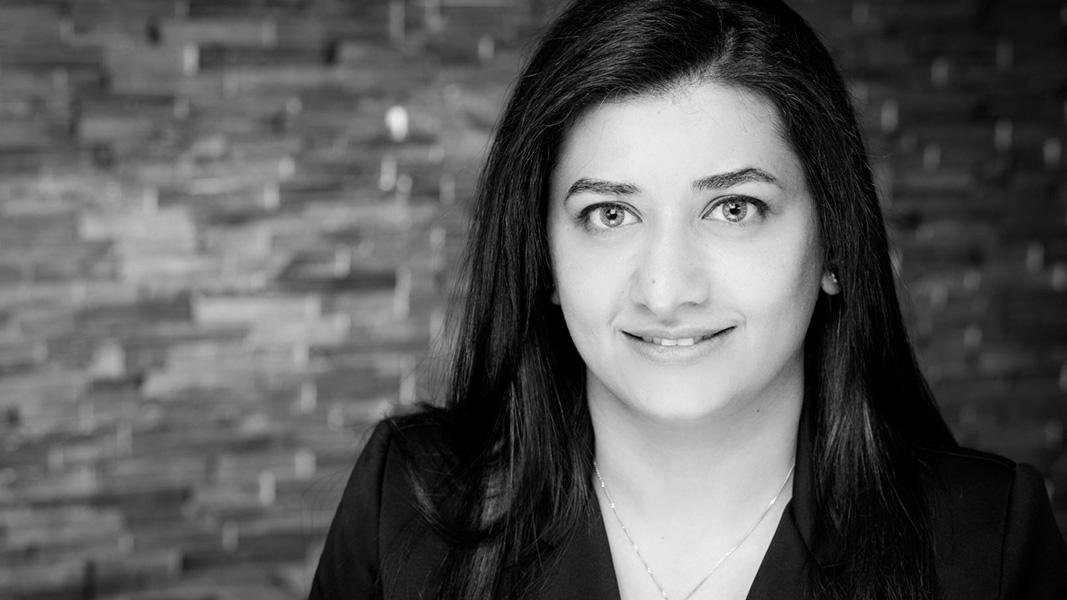
Autor/Autorin
The young mother Nour Abdal Khalek took on the unimaginable to give her children a life in peace and security. As a single mother, she was left without support after her divorce in war-torn Syria, so she had no choice but to flee to Europe. She describes the experiences of her flight and her first time in Germany, which was characterised by xenophobia and institutional racism from the authorities, in two articles in the magazine Here – in Bochum , where she works as a volunteer editor. Even though she is now better, she finds it difficult to talk about this time. All the more reason for us to thank her for granting us this interview as an important contemporary witness to current events.
An article about Nour Abdal Khalek can be found in the „Fritz Bauer Bibliothek – Im Kampf um des Menschen Rechte“.
DC: Hello Nour, thank you very much for the interview. You grew up in Damascus and lived there for 26 years. Can you tell us something about your childhood and youth in Damascus? What particularly characterised you?
NAC: My childhood in Damascus was a wonderful time. I grew up in a loving family. I was particularly influenced by my father, who was a great role model for me. I had a strong bond with him, he was my closest confidant.
DC: You then studied English in Damascus? When was that?
NAC: I graduated in 2008 and then studied at the University of Damascus. At the same time, I also trained as a computer scientist. English studies was not my first choice, I originally wanted to study business administration. But unfortunately my A-level average wasn’t good enough for that.
DC: What did you do after your studies?
NAC: I had two children during my studies, so I was a mum to two small children afterwards. I worked in a translation agency and also as a private tutor.
DC: When your children were still small, did you get divorced? What does that mean for a woman in Syria?
NAC: It means a lot of difficulties in Syria. I couldn’t have done it without my father’s support. You have no support as a woman on your own.
DC: The war in Syria began in 2011. Can you tell us how you experienced the first years of the war?
NAC: That is far too big a topic to discuss here. I still can’t talk about it in public. It was a very traumatising time. The children were also still very small… (her voice breaks).
DC: What made you decide to leave Syria in 2015?
NAC: The situation and circumstances were also becoming increasingly dangerous in Damascus. I wanted a safe home for my children. I also wrote in a magazine article: You can die anywhere: at sea, in the mountains, on the back of a lorry. I knew that, but I had no choice
DC: How did your family react?
NAC: My family was divided. Some encouraged me in this decision, others wanted me to stay in Syria.
DC: How did you prepare for your escape?
NAC: Above all, I gathered information. You can’t really prepare that much (…) It helped that I speak English well.
DC: Your escape to Germany took seventeen days. Can you tell us about your escape?
NAC: I wrote an article about my escape in the Here – in Bochum magazine, special edition 2018. It’s still very difficult for me to talk about it. I actually wanted to fly, but there were no flights from Syria due to a financial embargo. That’s why we first travelled to Lebanon by car and then flew on to Izmir in Turkey. It was difficult there because I don’t speak Turkish and only a few Turks there speak English.
From Izmir, we wanted to continue by boat to Greece. We tried three times. The first time, the boat sank because there was a hole in it. My son could already swim, but my daughter couldn’t. But thanks to the life jackets, everything went well. The second time, the Turkish police arrested us on the beach. All the refugees had to sign a paper stating that they would not try to leave Turkey again. Those who refused to sign the paper were deported to a refugee camp. I did sign it, but I really wanted to go to Germany. The third time we had to hide in the mountains for a long time without food and even sleep there because the police confiscated the boat and we had to wait sixteen hours for another one. I ran out of food for my children and decided to travel to Istanbul to try my luck from there.
On our fourth attempt to cross the Mediterranean by boat, we had already been at sea for three hours when the boat engine suddenly broke down. We were adrift at sea for two hours when a Turkish fishing boat happened to pass by and took us back to Turkey. The fifth time we managed to reach Greece. From there, we tried to find a way back to Germany somehow. First we travelled by bus to Macedonia, then by train to Serbia. From there we walked: from Serbia to Croatia, from Croatia to Hungary, from Hungary to Austria, from Austria to Germany. I didn’t sleep for nights on end because I was afraid for my children. In Austria and Germany, we were treated nicely for the first time and my children didn’t have to be afraid of the police.
DC: What gave you the strength to get through these terrible situations?
NAC: My children and my belief in myself.
DC: You spent your first time here in an initial reception centre in eastern Germany. Can you tell us about that time?
NAC: It’s very hard for me to talk about it, it always makes me weak… (her voice breaks several times).
DC: You wrote in one of your articles that on your 42nd day in the East, your previously positive image of Germany began to crumble. What happened then?
NAC: The people in the East were unfriendly, unhelpful and sometimes xenophobic. I was really shocked. In November… (voice breaks) Telling and thinking about these things over and over again is bad for my health and my doctor advises me against it.
I felt the reluctance of the German authorities to speak English with me. I couldn’t speak German yet. Yes, I know that I’m in Germany and I want to learn the language as quickly as possible. But I had just arrived a month earlier! How was I supposed to be able to communicate in German so quickly?
DC: You write that you had to sign a form under the threat that you and your children would have to sleep on the street in November. What kind of form was that?
NAC: When I moved with my children from the camp to a shared flat, I moved in with a Syrian woman who was also a single mother of two children. We became friends. The social worker, whose job it was to house the refugees, forced us to move after a short time. We had to move to a home in a village twelve kilometres away, where there wasn’t even a supermarket or a train station and where there was a bus twice a day – at 7am and 4pm. The social worker decided on us at random. She forced us to sign a form and threatened us that otherwise we would have to sleep on the street – it was November – and would be sent back to Syria. I was deeply shocked. Can you believe that in Germany you have to sign things under threat? I came here to live in a democracy.
DC: What was it like being alone in the village?
NAC: That was the worst time in my life. I was in a foreign country with no family, no friends, no future and no hope. I never left the house, I just sat there and waited for my residence permit.
DC: Did you experience everyday racism? Do you still experience everyday racism today?
NAC: In contrast to here, I was confronted with everyday racism much more often in the East, very often, yes. My children and I experience a lot of tolerance and help here in the West.
DC: In your article, you described some xenophobic attacks from your time in the East, such as blowing up the letterbox with firecrackers and attacking children playing in a car. Your children are also traumatised by war and flight. How do you deal with that?
NAC: My children and I are now undergoing psychotherapy and this has given us support. This therapy is still ongoing.
DC: But this therapy only started here in Bochum.
NAC: Yes.
DC: Did you also receive support back then?
NAC: No, not at all.
DC: What do you tell your children afterwards?
NAC: I tried to give them strength. I said be brave, be strong. There wasn’t much I could do.
DC: You then sought a dialogue with the director of the home. Did that help?
NAC: No, the conversation didn’t lead to any improvement in my situation. If anything, the situation got a little worse.
DC: In what way?
NAC: Every refugee receives a letter, the first letter from the BAMF (Federal Office for Migration and Refugees). I haven’t received this letter – not until today! I don’t know where this letter is. I don’t know, they’ve made the letter disappear, hidden it, I don’t know… (the voice gets quieter and quieter).
DC: You think they kept the letter from you?
NAC: Yes.
DC: Then you got your residence permit and found out that it had been issued three months earlier. What was going on inside you?
NAC: I was angry and also tired.
DC: Did you speak to the social worker about it? Did she say anything about it?
NAC: Yes. But she denied everything and said she didn’t know where the letter was.
DC: You then moved to Bochum. How was your time in Bochum? Did you also experience everyday racism here? Do your children experience rejection in kindergarten and school?
NAC: It’s good here in Bochum. My children experience a lot of tolerance and openness. Things are going well at the moment. My children go to school and feel comfortable there.
DC: You wrote that you were still afraid to go out on the street in the dark after the difficult time in East Germany.
NAC: Not any more, things have improved in Bochum.
DC: You are the editor of Here magazine – in Bochum . What does that mean to you?
NAC: I get recognition and motivation. I can get to know nice people. And I can also learn the language outside of the German course. I always had in mind how you can make friends here in everyday life, and I believe that you can make friends through volunteer work. And what’s really important: For the first time in my life, I learnt what freedom of the press really means! It was different in Syria. You’re not allowed to write or talk about some things there. There is no real freedom of the press in the entire Arab world.
DC: What can we do to support you? What help/support do refugees want from the people in Bochum?
NAC: I would like people in Bochum to be more friendly and less prejudiced. They often think: all Syrians are like this and all people are like that… I still experience that.
I used to have experiences like that with the job centre. They think that all Syrians don’t want to work and don’t want to learn German. That’s wrong! I learnt the language as quickly as possible and found an apprenticeship, even with two children.
DC: And now you’re doing an apprenticeship in the business sector.
NAC: Yes, as a tax clerk.
DC: Thank you very much for the interview. We wish you and your children all the best for the future and every success with your training.
Listen now
Discover the podcast series of the Fritz Bauer Forum
Here, experts talk about justice, human rights and social change. They provide in-depth insights and develop diverse perspectives on current issues that affect our society.

