
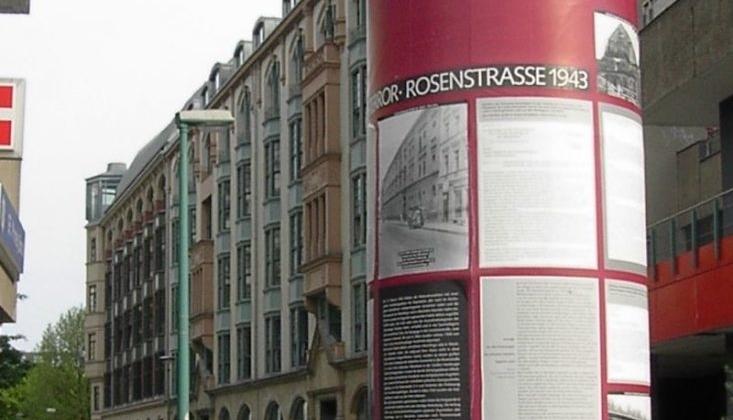
On 27 February 1943, 75 years ago, the National Socialist regime initiated the deportation of all non-privileged Jewish citizens still living in the so-called „Altreich“ with a nationwide arrest campaign. In addition, the systematic registration of Jews living in so-called „mixed marriages“ and those fellow citizens who fell under the National Socialist definition of „half-breeds“ began.
In Berlin, the Gestapo and SS arrested more than 8,000 Jewish citizens who did not fall under one of the categories of the „Nuremberg Race Laws“ and the implementing regulations, which allowed for (temporary) „restitution“ from deportation to the extermination camps, as part of the so-called „Factory Action“. Most of the „half-breeds“ and Jews living in „mixed marriages“ arrested during this action were interned in a house belonging to the Jewish community at Rosenstraße 2-4, not far from Alexanderplatz.
On the evening of 27 February, several hundred demonstrators, mostly „non-Jewish“ spouses and relatives of the detainees, gathered in front of the building to demand their release. Despite threats from the regime, they held out for several days. The detainees were released on 6 March 1943. Although the threat to „privileged“ Jews also increased steadily until the end of the war, their deportation was finally prevented by the advance of the Allies.
In total, over 50,000 Jewish citizens were deported from Berlin to the extermination camps.
Whether this unprecedented act of public protest during the Nazi regime was decisive for the release of the detainees is disputed. The complex system of temporary „restitution“ from the deportations allows for several possible interpretations. It is also unclear whether Propaganda Minister Joseph Goebbels intervened, who spoke of „various disagreements“ regarding the protests in his diaries.
However, it is significant that acts of public protest were possible, as the mood and situation reports of the security service of the Reich Security Main Office also show the importance the regime attached to the sensitivities of the „national community“.
This act of civic protest and commitment is of great importance for the political culture (of remembrance), as it testifies to the courage of individuals under the extreme conditions of the Nazi dictatorship and, as is often forgotten, it is not the immediate success that is important, but the courage to act.