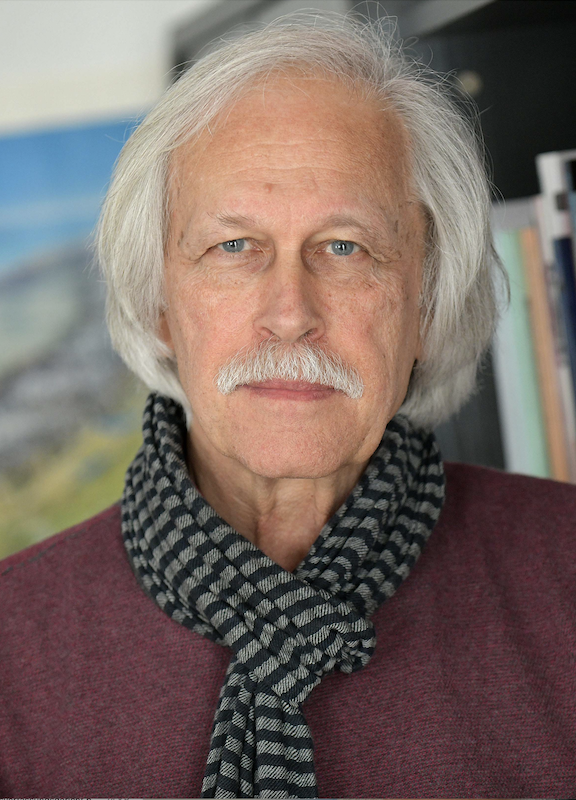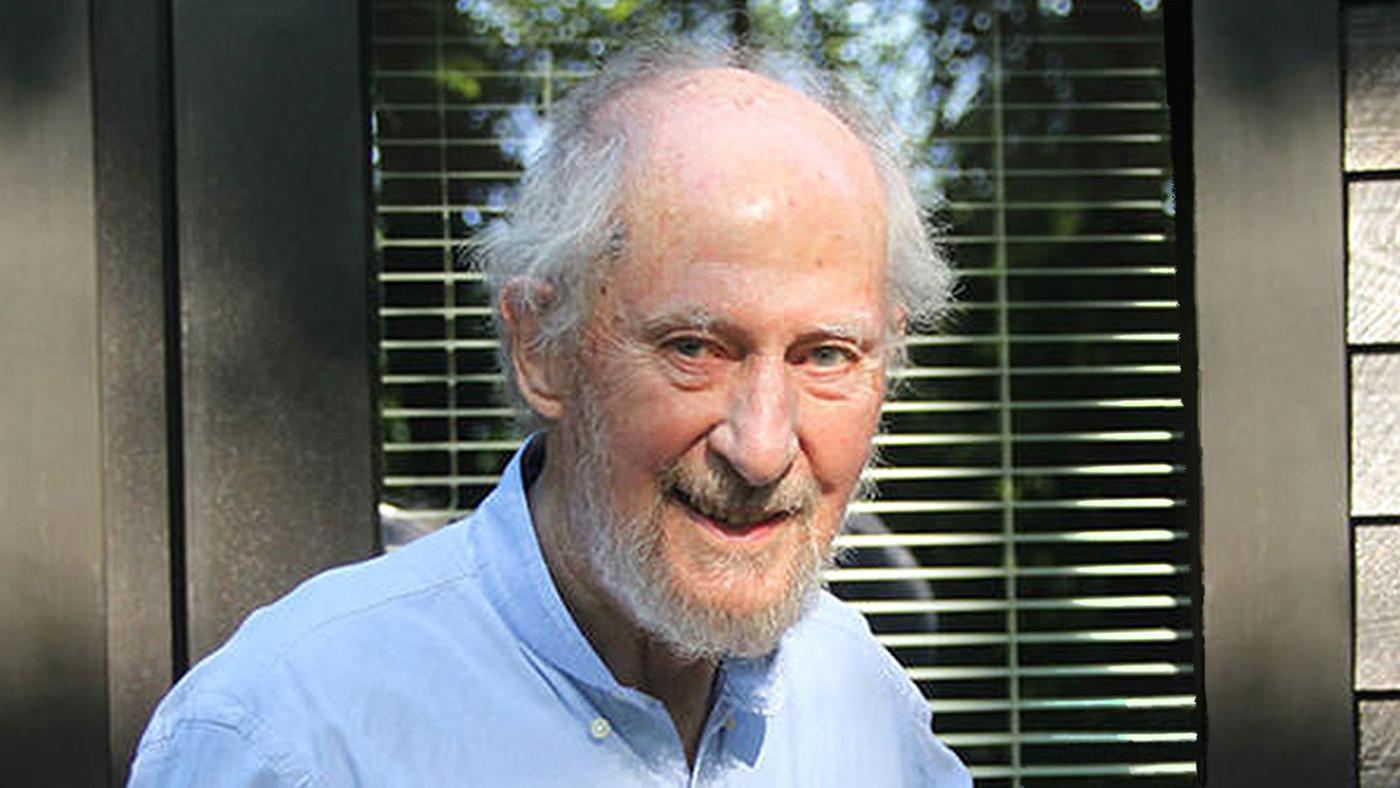
The death of the nationally renowned lawyer „for the little people and ostracised minorities“, Heinrich Hannover, brings back strong memories of professional and personal encounters and joint projects. I got to know and appreciate Heinrich Hannover at the end of the 1970s. His reputation as an intrepid defence lawyer and Bremen-based advocate for conscientious objectors, communists and people who resisted preceded him. But also his „reputation“ as a „terrorist lawyer“, which he was given by his political opponents.
I had just moved to Bremen at the end of the 1970s and was completing my training as a trainee lawyer in the Hanseatic city. I applied to the Hanover law firm for my traineeship, where I was actually accepted. My work focussed on recognition procedures for conscientious objectors. In the process, I learnt about law with a pacifist orientation, which became an essential part of my training. Hanover’s law firm did important pioneering work with these proceedings at that time. His commitment arose from painful experiences: the Second World War, in which he had participated as a soldier at the young age of 17, caused him to return from this war as a pacifist and anti-militarist, which he remained throughout his life. Not without satisfaction, he later summarised that his largely successful legal support for conscientious objectors had „certainly cost the Bundeswehr a small cannon“ .
After my second state examination in law and right at the beginning of my professional career as a lawyer and publicist in the early 1980s, I was directly involved in a violent confrontation with the police. Heinrich Hannover stood by my side as a lawyer during my legal defence. What had happened? On 6 May 1980, Bremen had witnessed a protest by 15,000 people against a public recruit pledge by the Bundeswehr in the Weser Stadium – a militant protest against militarisation tendencies that went down in the city’s history as the „Bremen riots“. Violent clashes with many injured, stones were thrown at police officers, Bundeswehr vehicles went up in flames – and I was right in the middle of it all: not as a demonstrator, but as a journalist in my role as Bremen editor of the daily newspaper (taz ) at the time.
Equipped with an openly worn special press pass from the 32 Armoured Infantry Brigade, I also went about my work at the Weser Stadium that day. But it wasn’t long before I was surrounded by three mousy-grey Bundeswehr soldiers and a plainclothes policeman who gave me a stern warning. My offence: I had photographed the wrong people – not demonstrators who were throwing stones at police officers protected by helmets and plastic shields, but police officers who were picking up the stones inside the stadium and throwing them back into the unprotected crowd. After I insisted on freedom of the press and the preservation of evidence despite the admonition and continued to take photographs, military police officers rushed at me shouting „That’s it“, led me past a line of violent military police officers with my arms twisted, pushed me down the stairs and handed me over to the police.
Now I was hoping for better treatment, but this was when it really started: the officers had formed a trellis to organise a kind of gauntlet run with me – as with many others: I was chased through the ranks, kicked and beaten with batons and pulled by my hair, which was still quite long at the time. It took half an eternity before I came to a halt at the end of the trellis and demonstrators brought me to safety.
Thanks to Heinrich Hannover’s legal and political intervention, this police violence in the Weser Stadium kept the press council, the public prosecutor’s office and politicians busy. He also represented other May 6th victims against unbridled state violence – but unfortunately without legal success, because the violent police officers in uniform and under helmets could not be named, so that ultimately no one could be held responsible. An old problem of a lack of control of the police and police behaviour that has not really been solved to this day.
My next encounters with Heinrich Hannover led to a joint project in the mid-1980s: the research project „Terrorists and Judges“ at the Hamburg Institute for Social Research. He had chosen the journalist and social scientist Margot Overath and myself as research assistants. The aim of this project was to analyse a highly problematic chapter in the development of German law from different perspectives. At its core, it was about the „fight against terrorism“, which had already been going on for two decades at the time, and the question of how this development changed the Federal Republic, its parliamentary democracy and the rule of law. We sought answers to the question of how the state, how the legislative, executive and judicial branches of government dealt with the threat posed by the „Red Army Faction“ (RAF) – and how they dealt with its protagonists, right down to the alleged „sympathisers“.
This multi-year research project resulted in a three-volume work published by VSA-Verlag Hamburg in 1991: In the first volume Terrorist Trials. Erfahrungen und Erkenntnisse eines Strafverteidigers [Experiences and Insights of a Defence Lawyer ], Heinrich Hannover settles accounts with the political justice system of the Federal Republic of Germany, which he had been trying to wrest justice from for more than three decades since the 1950s. The central thesis of his work, according to which the political trial is not primarily about finding the truth, but rather about fighting the enemy, was developed by the author from the perspective of the participating and thus also affected observer, which he was in his function as a politically aware defence lawyer in such criminal proceedings.
In the second volume, Das Anti-Terror-System. Political Justice in the Preventive Security State , I analysed the development of the special police-secret service-judicial terrorism law system that had developed in the meantime and its social functions and effects. These effects gradually infiltrated the entire left-orientated opposition right through to the new social and environmental movements (of the 1980s) and increasingly undermined the democratic constitution of the republic.
In the third volume, Drachenzähne. Conversations, Documents and Research from the Reality of High Security Justice by Margot Overath deals with the reality of political justice experienced and suffered by those directly affected in times of terror and the „fight against terror“. This volume was produced with the active support of those affected, the accused, the convicted and their defence lawyers. It also deals – using the example of individual court proceedings – with the numerous aggravated special conditions that characterise „terrorist trials“ and which at times call into question the principles of the rule of law.
The three-volume work provides answers to the questions of the effects and consequences of the tightening legal changes and armament measures that were made and implemented in the course of the „fight against terrorism“ at the time – and which have since been expanded and further tightened with several „counter-terrorism supplementary laws“, especially since 9/11 (for further developments: Gössner, Menschenrechte in Zeiten des Terrors. Collateral damage on the ‚home front‘. Hamburg 2007, and Datenkraken im Öffentlichen Dienst. ‚Laudatio‘ on the preventive security and surveillance state. Cologne 2021). The effects have had a considerable negative impact on the democratic constitutional state and the political culture in this country – right up to the present day.
One of Heinrich Hannover’s accomplishments was to have analysed and denounced such developments that endangered civil rights in a committed and critical manner and to have pushed for necessary changes. In doing so, he raised the awareness of many of his contemporaries for state arbitrariness and unjust conditions in the legal system. Heinrich Hannover is now dead. He died in Worpswede on 14 January 2023 at the ripe old age of 97. His decades of humanist-democratic, peace-political and enlightening work can and should serve as a role model for future generations of lawyers and defence lawyers.
Literature mentioned in the text:
Heinrich Hannover, Terrorist Trials. Experiences and insights of a defence lawyer. Hamburg 1991 (Volume 1)
Rolf Gössner, The Anti-Terror System . Political justice in the preventive security state. Hamburg 1991 (Volume 2)
Margot Overath, Dragon’s Teeth. Conversations, documents and research from the reality of high security justice. Hamburg 1991 (Volume 3)
Rolf Gössner, Human Rights in Times of Terror . Collateral damage on the ‚home front‘. Hamburg 2007
Ders., Datenkraken im Öffentlichen Dienst . ‚Laudatio‘ on the preventive security and surveillance state . Cologne 2021
In the meantime, numerous obituaries have been published for the defence lawyer, publicist and children’s book author Heinrich Hannover. Unlike in earlier times, all the authors today honour his life, his commitment to justice, his humanist-democratic, peace-political and enlightening work. Norman Paech published an obituary worth reading in the previous issue of Ossietzky – in the same issue in which I also wrote down some of my memories of professional and personal encounters and joint projects. I would now like to add another, rather suppressed chapter from early German history in the 1950s and 60s.
Heinrich Hannover would have liked to become a commercial lawyer in Bremen. But right at the beginning of his career as a lawyer in 1954, he was assigned the public defence of a communist. From then on, he took on further mandates of this kind. And he had the bitter experience of having to defend against a „political judiciary“ in the truest sense of the word – more precisely: against a politically motivated special jurisdiction that treated communists and other left-wingers as „internal enemies“ in the strict anti-communist tradition.
It was a common concern that prompted us to organise a press conference together in Bremen at the beginning of 2000 to draw attention to this dark chapter and its long-term consequences with our recently published books: Heinrich Hannover’s memoir Die Republik vor Gericht 1954-1974. Erinnerungen eines unbequemen Rechtsanwalts and the new edition of my book Die vergessenen Justizopfer des Kalten Krieges. Verdrängung im Westen – Abrechnung mit dem Osten? , for which Hannover contributed a foreword; both books were published by Aufbau-Verlag in Berlin. We derived legal policy demands from these collected experiences, analyses and findings.
But what exactly was our journalistic remembrance work about? With German reunification and the end of the Cold War in the early 1990s, the time seemed to have come to officially come to terms not only with the history of the GDR, but also with the taboo subject of political persecution in West Germany, which had been so strongly suppressed. This included two further, directly related basic burdens of early West German history that had a negative impact on the Federal Republic for too long: the delayed and inadequate reappraisal of the Nazi past and the reintegration of former Nazis into state and society, the Bundeswehr, police, secret services and judiciary.
Political persecution primarily affected communists, their supporters and „sympathisers“ – but also left-wing allies and mere contacts. The extent of this is hard to imagine today: from 1951 to 1968, there were criminal investigations against 150,000 to 200,000 people and thousands of convictions. More than twice as many – around half a million – were directly or indirectly affected by state investigative measures, such as long-term surveillance, wiretapping and pre-trial detention. Even non-violent protests against the rearmament of the time were prosecuted as criminal offences if they were deemed to be „communist-controlled“. People were punished for „endangering the state“ or „secret society“ because they advocated a demilitarised, neutral Germany or because they maintained German-German contacts.
The majority of those prosecuted were therefore people who had committed „no political murders, no attempts at insurrection, no acts of violence“, as the lawyer and later NRW Minister of Justice Diether Posser rightly emphasised. It is true that only about every twentieth investigation concluded with a conviction – that results in 7,000 to 10,000 convictions, mostly to prison sentences of several months, sometimes several years. But even those who were not punished could suffer existential damage: months of solitary confinement, years of imprisonment. Restrictions on civil rights, withdrawal of passport and driving licence, loss of job and loss of pension.
The climax of this history of judicial persecution was reached in 1956 with the banning of the Communist Party (KPD) by the Federal Constitutional Court – a judgement that, according to recent research based on previously secret documents, can be considered unconstitutional, among other things due to inadmissible executive influence (Foschepoth, 2017). This dubious decision ultimately legitimised the criminalisation of the political activities of communists and their organisations under constitutional law.
For a long time, political justice against communists operated in silent or open agreement with the majority of the population. Deep-rooted anti-communism, the omnipresent suspicion of communists and the fear of „communist infiltration“ paralysed even the trade unions and the SPD, which attempted to seal themselves off from (suspected) communists with „incompatibility resolutions“.
It was not until 1968 that the 17-year-long persecution of communists came to an end: the then CDU/SPD federal government initiated a liberalisation and correction of political criminal law, at least in part, and issued a „legal correction“ amnesty for suspects and those already charged in ongoing criminal proceedings on the basis of the Criminal Liberties Act. However, those affected, especially those who had long since „served“ their sentences, were neither rehabilitated nor compensated, even though the state protection trials at the time were hardly compatible with constitutional principles and civil rights standards.
For these reasons, Heinrich Hannover wrote to his former lawyer colleague Gerhard Schröder (SPD) in September 1999, six months before our above-mentioned press conference, with whom he had once defended in political proceedings and who had become Federal Chancellor of a red-green government coalition in 1998. Hanover wanted to remind him of his earlier stance as a defence lawyer and ask him now as Chancellor to finally ensure „that the living victims of the Cold War justice system, who as you know were produced not only in the GDR but also in the old Federal Republic, are rehabilitated and compensated“. And he emphasised: „There is an urgent need for action! The people affected are old, more and more are dying off.“
The Federal Chancellor had a ministerial director reply to his former lawyer colleague that „the criminal proceedings you have in mind were indisputably conducted in accordance with the principles of the rule of law“ – despite all the injustice involved. Hanover vehemently disagreed with this euphemistic assessment: the justice system at the time „was a weapon in the Cold War“ to exclude communists and their contacts, communist organisations and their allies from the public opinion-forming process. The judgements at the time were „judicial injustice contrary to the rule of law“ with existential consequences for those affected – including communist resistance fighters, who were denied all claims for compensation for their imprisonment in prison and concentration camps during the Nazi era. It was not uncommon for „terrible lawyers“, former Nazis who had already served the Nazi regime and were well versed in political persecution, to be involved in such decisions.
In response to Hanover’s objections, the Federal Chancellor replied via his ministerial director that the Federal Ministry of Justice saw no possibility of overturning the court judgements of the time by law „for legal reasons“, in particular because of the principle of separation of powers. For this reason, neither the rehabilitation of those convicted nor compensation is possible (with the exception of certain „hardship cases“).
And so, during our press conference in March 2000, we had to inform the media and the public that Federal Chancellor Schröder was refusing to rehabilitate the Western „victims of the Cold War“ and thus to make amends, as far as possible, for the judicial injustice committed in the 1950s and 60s. „The establishment of justice“, said Heinrich Hannover, was „always a matter of goodwill on the part of those in power“. In view of the obvious lack of goodwill, in his final letter to Schröder’s ministerial director, Hannover called on him to „please tell your boss that he should be ashamed of himself.“
This attitude of refusal has persisted under all federal governments to this day. Even if rehabilitation and compensation would come too late in the vast majority of cases in view of the few surviving victims, the following still applies: this judicial injustice must urgently be rescued from social repression and the surviving „victims of the Cold War“ must be rehabilitated and compensated on a case-by-case basis. Incidentally, this also applies to most of those affected by the occupational bans of the 1970s and 80s: as early as 1972, the persecution of communists was continued by other means with the „Radical Decree“ in the social-liberal era. For two decades, the entire left in this country was beset by hundreds of thousands of regular enquiries and rampant checks on political views by the „Verfassungsschutz“, thousands of occupational bans and over a thousand occupational bans against job applicants or holders in the public sector.
In most cases, this policy of occupational bans violated the principle of equality and the prohibition of discrimination as well as the fundamental rights to freedom of expression, freedom of assembly, freedom of association and freedom to choose an occupation. This policy, which has still not been dealt with today, poisoned the political and cultural climate, led to intimidation and deterrence, and destroyed numerous life prospects and professional careers with lifelong existential consequences.
This history, together with the associated violations of fundamental rights and the consequences suffered, must finally be wrenched from the shadows. The following must be demanded: an unreserved official reappraisal (as has so far only been the case in Lower Saxony and Baden-Württemberg), complete rehabilitation of those affected following an individual assessment, as well as material compensation for the disadvantages and losses in pensions and annuities that were demonstrably suffered.
This demand is also in the spirit of Heinrich Hannover, about whom Ossietzky co-editor Otto Köhler wrote in an article on his 80th birthday (2005) in his own ironic and sarcastic way: in his 50 years as a lawyer, the man to be celebrated „never did anything right“ – quite unlike his former lawyer colleagues Gerhard Schröder, who became Federal Chancellor, and Otto Schily, who mutated from „terrorist lawyer“ to Federal Minister of the Interior and security policy hardliner. And indeed: aside from such power-political mutations, Hanover has remained true to its fight for justice and thus to itself. Or from Otto Köhler’s point of view: even the „many defeats that Heinrich Hannover suffered in his long life as a lawyer“ were ultimately also victories „because they forced this state to recognise itself.“
However, as shown, Heinrich Hannover’s work went far beyond this: this „social fighter against militant unreasonableness and judicial injustice“ helped people who were oppressed and persecuted by the state and wrote a piece of judicial history with his substantial criticism of the justice system. And this also and especially includes the demand for political consequences, which we must now continue to pursue in his spirit.
Expanded version of the article by Rolf Gössner in: Ossietzky No. 4/2023 .
The 1st part of his memoirs of Heinrich Hannover appeared in: Ossietzky No. 3/2023: https: //www.ossietzky.net/artikel/erinnerungen-an-heinrich-hannover-i/
Literature mentioned in the text:
Correspondence (1999-2000) Heinrich Hannover – Federal Chancellor Gerhard Schröder : http://www.heinrich- hannover.de/briefwechsel.htm
Heinrich Hannover, The Republic in Court. Erinnerungen eines unbequemen Rechtsanwalts 1954-1974 (Volume I, Berlin 1998) and 1975-1995 (Volume II, Berlin 1999).
Rolf Gössner, Die vergessenen Justizopfer des Kalten Krieges. Repression in the West – Reckoning with the East? (Hamburg 1994; Berlin, expanded new edition 1998); with a foreword by Heinrich Hannover.
Rolf Gössner/Peter Kleinert, Ein Staat sah Rot , TV film (SAT1/RTLplus), 1994, therein: Interview with lawyer Heinrich Hannover.
Otto Köhler, „Three Friends“ , in: Freitag of 4 November 2005: https:// www.freitag.de/autoren/otto-koehler/drei-freunde
Josef Foschepoth, Unconstitutional! The KPD ban in the Cold Civil War. Göttingen 2017.
50 years of the Radical Decree: „That was no success story“, by Hermann G. Abmayr (interview) and Oliver Stenzel, in: KONTEXT, 12 January 2022: https: //www.kontextwochenzeitung.de/politik/563/das-war-keine-erfolgsgeschichte-7951.html
© Dr Rolf Gössner – Published with the consent of the author and Ossietzky – Verlag mail@rolf-goessner.de