
Autor/Autorin

©Ryan Parker
Dear friends, many of you have heard the sad news that Nina Lagergren has passed away at the age of 98. After a long and eventful life, Nina’s soul can now rest in peace, united with her husband, Gunnar Lagergren, her parents, Fredrik and Maj von Dardel, and her brothers Guy von Dardel and Raoul Wallenberg.
Her death marks the end of an era – for almost 75 years Nina Lagergren fought to save her older brother after his disappearance in the Soviet Union in 1945, as well as to preserve and spread his important legacy of empathy, moral courage and the fight against injustice, even in the face of seemingly insurmountable odds.
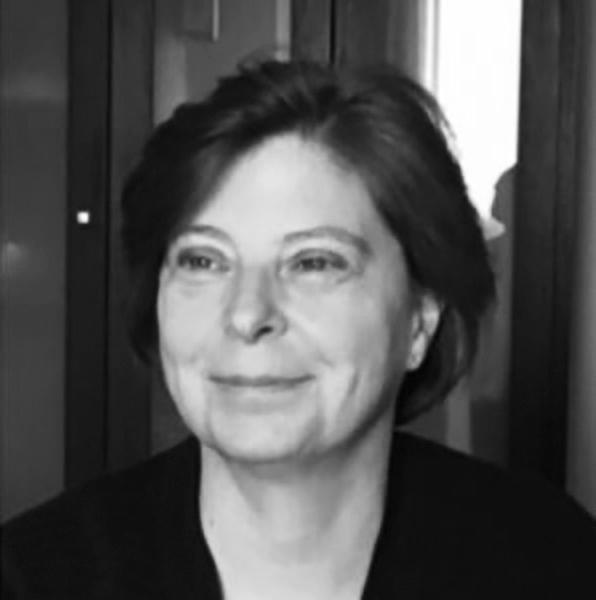
I chose the picture of Nina above because it shows her in a way that few of us have known – she rarely showed her lighter, unencumbered side in public, but she loved life and had a strong sense of humour. Nina Lagergren was born into a loving home – her mother Maj found new happiness after the difficult loss of her first husband, Raoul Oscar Wallenberg. Maj and Fredrik von Dardel welcomed baby Nina in 1921, and she made their family complete.
Those of you who have met Nina Lagergren know that she was soft-spoken and of inimitable dignity and grace. Behind this outward calm was a steely core that definitely seems to be a family trait. Nina was a fighter at heart, and she was until the end. As late as the 1990s, she travelled the world to tell the story of her brother’s courageous actions in Hungary during the Second World War, when he and his fellow diplomats, supported by a wide network of (not so) ordinary Hungarians and members of the resistance, managed to save tens of thousands of Budapest’s Jews from certain death.
Nina was deeply convinced of the need to educate young people, to encourage them to raise their voices against injustice, to overcome cultural and religious differences and to make a difference in their daily lives and communities. In 2001, she co-founded the Raoul Wallenberg Academy, which brings this message to the world through seminars, workshops and a series of special projects.
As Nina explained in an interview with Swedish radio in 2014:
„We as a family have all been affected by the bitter struggle to bring Raoul home, but for me it was important to also look forward and seize the light that emanated from Raoul, to let Raoul live on in the young people inspired by his work.“
Over the years, Nina was under enormous pressure to simply come to terms with the fact that her beloved brother had disappeared. Even though the exact circumstances of his death remained unclear, many felt informed enough to assume that he had died many years ago in the Soviet Union. Nina rejected such a tacit assumption, without reliable evidence – and she did it in her own way, through countless public appearances; her mere physical presence was a powerful reminder to officials and influential authorities of what they should and could do to ascertain the full truth about her brother’s fate, if only they could muster the will to act. In doing so, she reminded everyone that the fight for human rights concerns and affects us all. I was very moved that Nina, despite her failing health, attended the Raoul Wallenberg International Roundtable in Stockholm in 2017 (which highlighted the cases of her brother and other disappeared Swedes) to emphasise this very fact.
There is probably no greater pain than living with the unexplained disappearance of a loved one. The disappearance makes it impossible to live with the loss. It makes it impossible to find peace because you always have the feeling that there is something else you should be doing to end this nightmare. Nina has carried this heavy burden for over seven decades, just like her brother Guy and her parents before them. And just like the other members of her family, Nina did not and would not give up. But this incessant struggle took its toll. Nina didn’t wear her pain in public. It was her family – her husband Gunnar and the four children they raised together, as well as her many grandchildren – who provided an important place of comfort and unconditional support. It was with them that Nina found her greatest joy, where she could truly be herself and draw strength.
Nina Lagergren leaves behind a powerful legacy – courage, resistance, loyalty and love – and the world will feel her absence.
The research into her brother’s fate will continue – Raoul’s immediate family is no longer with us, but Nina Lagergren’s search for answers will continue.