
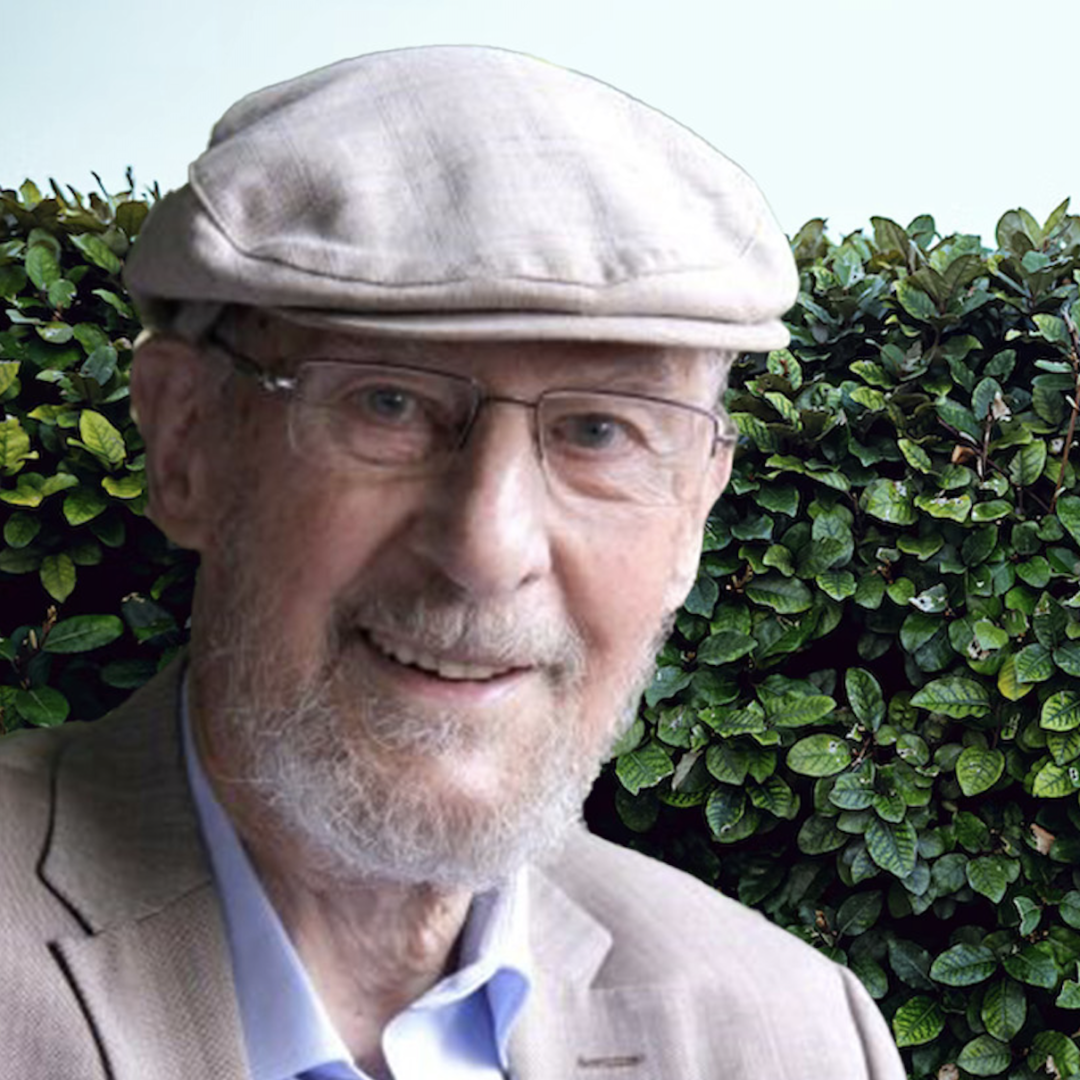
„My clientele also included defendants who had contradicted and acted contrary to the prevailing zeitgeist, pacifists and anti-militarists, communists and left-wing social democrats, anti-fascists, Jehovah’s Witnesses, revolting students and trade unionists, ‚traitors to the state‘, members of the RAF and – after the so-called Wende – ’state-affiliated‘ citizens of the GDR.“ In other words, a broad spectrum on the left fringe of German post-war society. „And there was hostility that not only affected my clients, but also their defence lawyers, which meant that the exercise of my freedom of speech as a lawyer was accompanied by the constant threat of being called to order through honourable court proceedings (…) and resulted in suspicions, insults and death threats.“ With these sober words, Heinrich Hannover described his professional activity as a criminal defence lawyer. There are not many outstanding political defence lawyers in Germany, such as Karl Liebknecht or Hans Litten. Heinrich Hannover was undoubtedly the most important defence lawyer in the post-war period. He was spared the fate of his two predecessors and died peacefully on 14 January at the age of 97.
That he would one day defend communists and „enemies of the state“ was certainly not predetermined by his parents from a „middle-class family“, as he himself called it. Because at home, „admiration for Hitler, Göring and Goebbels and their pithy anti-communist slogans prevailed. My friend Günter and I fantasised in long conversations about rulers of invented countries where there were no communists, so that everyone could live wonderfully and happily.“ He was in the Hitler Youth, in the Reich Labour Service and was drafted into the Wehrmacht in August 1943 until liberation, which he experienced as a prisoner of war in England. By his own admission, the atrocities committed during this time had turned him into an anti-militarist and pacifist. This was the first break with the world of his parents, who had taken their own lives in 1945 out of fear of the communists. The peace commandment of the Basic Law later became one of his most important commitments, which he repeatedly insisted on.
His subsequent studies and career choice as a real estate lawyer promised the continuation of a bourgeois life, if it were not for the defence of a communist, which was assigned to him as a compulsory mandate in 1954, leading to a second break with the family and tearing him out of this – it must be said – fascist milieu of thought. Without the turn to pacifism, the second break from the family and turn to the political left less than ten years later is certainly incomprehensible. In his book Politische Justiz (Political Justice) , Otto Kirchheimer pointed out that contact with a particular clientele at the beginning of a professional career can determine one’s entire later activity. But this also fails to explain why the communist „clientele“ won out over the undoubtedly more lucrative world of real estate. This must have been due to his deep-rooted sense of justice – even more importantly his active solidarity with the little people, the minorities, the resistant and the nay-sayers of „the generation rebelling against the capitalist system and new interference in war and genocide“, as he himself wrote. This political partisanship on the side of the persecuted and the left was to characterise his entire forensic practice for over 40 years.
This was also true of his literary work, which began programmatically in 1962 with a book on the political defamation of the opposition in a free democratic constitutional state and which he continued for twenty years. In 1982, his book Die unheimliche Republik , co-authored with Günter Wallraff, was published. Political Persecution in the Federal Republic of Germany . For the „liberal democratic order“ had made no progress in these twenty years. In between, in 1966, he and his first wife Elisabeth Hannover-Drück, a historian, had published a standard work on class justice in the Weimar Republic, Politische Justiz 1918-1933 . The book unfolds a depressing panorama of anti-democratic, monarchist justice, which supported Hannover’s realisation that fascism did not come from the margins, but from the centre of society. It also provides an important building block for understanding how the relapse into barbarism came about and which forces played a special role in it. The new edition in 2019 comes at the right time.
He achieved nationwide prominence through his decades-long presence in the courts as a defence lawyer for communists, resistance fighters, conscientious objectors and RAF members – an often unpleasant reputation. The reputation of many of his clients brought the „communist and terrorist lawyer“ a hostile public. Ulrike Meinhof’s mandate in particular not only brought him insults and death threats, but also drove him into serious trials of conscience. Because he was not only supposed to defend her, but also „the practice of the RAF“. However, he could not reconcile the RAF’s violence with his pacifism. There were fierce disputes in custody, with the result that he resigned his mandate even before the main proceedings began. The aftermath clearly shows the uncertainty and helpless aggression of society at the time. He was sentenced to a fine of DM 3,000 by the Bar’s Court of Honour for „conduct contrary to professional ethics“, as he had described Ulrike Meinhof’s prison conditions as torture.
Hanover’s large and wide-ranging trial activity, from the first trial in 1954 for an unknown communist, which he lost, to one of the last trials in 1993 for a well-known communist, Hans Modrow, which he also lost, but in between numerous successful trials, especially for conscientious objectors and many other unknown and well-known names, is well documented. While Karl Liebknecht’s trials are only now being collected by Matthias John and published in a multi-volume edition, Heinrich Hannover has combined the most important part of his trial activities with his memoirs in two comprehensive volumes, Die Republik vor Gericht 1954-1974 and 1975-1995 , to create an illusion-free, critical mirror of West German history.
Over time, this republic, at least its liberal representatives, also recognised the importance of this great, uncomfortable lawyer for its democracy and the rule of law. He received a number of prizes. At the time when I was able to award a doctorate to one of my students at the Humboldt University in Berlin/GDR, because his dissertation had no chance at his home university in Hamburg, Heinrich Hannover received an honorary doctorate from the Humboldt University, which was the most valuable of all the numerous honours he later received.
The last award he was presented with in 2019 was the Harbourfront Hamburg Literature Festival’s Honorary Tüddelband. This was long overdue, as his poetic and absurd children’s stories, collected in over 20 books, can still delight even his unenlightened contemporaries today. Thanks to his children Almut, Bettina, Heiner, Irmela and Philipp, they are said to have helped him find inspiration.
And this too: Heinrich loved to play. When we sat around the table playing with his second wife Dorette, Jutta Bauer, Gerd Siebecke and my wife Katrin Magnitz in Worpswede or Hamburg, it was loud and cheerful. Anyone who knew Heinrich Hannover will always remember his hearty laugh. When I think of Heinrich, I hear his laughter and it makes me feel good.
Source: OSSIETZKY. Fortnightly magazine for politics/culture/economics. Edited by Rainer Butenschön, Daniela Dahn, Rolf Gössner, Ulla Jelpke, Otto Köhler. Founded in 1997 by Eckart Spoo. Editor: Rüdiger Dammann, No. 3 (2023) from 4 February 2023, URL: https://www.ossietzky.net/zeitschrift/
Single copies and subscriptions via: Ossietzky Verlag GmbH, Siedendolsleben 3, 29413 Dähre.
Mail address publisher: ossietzky@interdruck.net / Internet: https://www.ossietzky.net/
Obituary for Heinrich Hannover by Norman Paech: https://www.ossietzky.net/artikel/heinrich-hannover-1925-2023/