
Autor/Autorin

They have been forgotten in many places: the political prisoners of the concentration camps. Yet they were the persecuted people who were first deported to the concentration camps by the National Socialists: Anti-fascists of various colours, most of them communists and social democrats.
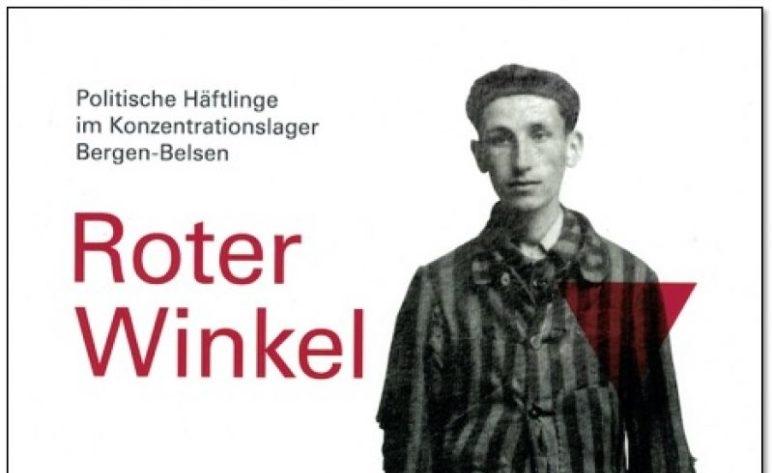
„In the public consciousness,“ says the foreword to the 52-page brochure on the travelling exhibition „Red Corner“, which was created by students at Leibniz Universität Hannover together with the memorial site director Dr Jens-Christian Wagner, „they are barely present – tens of thousands of men and women who were deported to the Bergen-Belsen concentration camp as political prisoners between 1943 and 1945 and most of whom died there.“ (S. 5)
Who still knows that at least eight members of the Reichstag were killed in the camp, who outside the city still knows the Social Democratic resistance fighter and former Minister President of the Free State of Brunswick, Heinrich Jasper (1875-1945), who was relentlessly persecuted by his NSDAP successor Dietrich Klagges from the day of the so-called seizure of power? Not to mention the thousands of resistance fighters from the neighbouring countries occupied by the Nazis, including commanders of the French Resistance and the Armia Krajowa , the Polish Home Army.
Half of the prisoners in Bergen-Belsen were political prisoners labelled with the „Red Angle“, most of whom came from Poland, the Soviet Union, Belgium and France. After an overview of the history of the camp, which had existed since 1940 and where prisoners of war were initially held, the SS took over parts of the concentration camp from 1943, which was eventually converted into a reception and death camp for those unfit for labour and for prisoners from the evacuated camps near the war fronts.
Using the example of eight political prisoners deported to Bergen-Belsen, the exhibition shows the diversity of resistance activities in the occupied countries.
The fight for human rights continued during the Cold War
Investigating these individual fates and the resistance in more detail is still a task for research, not least the self-assertion in the camps. Resistance under the most extreme conditions, which should be honoured all the more as most Germans cheered on the Nazi regime and lacked resistance and human self-assertion. The infamy of the camp system, with which they tried to turn victims into perpetrators, is an example of this („Between Collaboration and Resistance: Kapos“, p. 20).
For the survivors, liberation did not mean an immediate return home; thousands died as a result of their imprisonment in Bergen-Belsen. Polish survivors, for example, were reluctant to return to their homeland, which was under Soviet control, and rightly feared new harassment – another chapter of persecution in its own right.
Were the political prisoners, if that is even possible, compensated for what they had suffered, their resistance honoured and their suffering recognised? These are pressing questions that arise at the end of the exhibition. The courage and fate of the victims and survivors rightly draws attention to the fate of the individual, the struggle for human rights that continued in both East and West during the Cold War.
When Federal President Theodor Heuss opened the Bergen-Belsen memorial in 1952, as the exhibition concludes, he commemorated the suffering of the victims: „But he said nothing about the murder of the resistance fighters – and certainly nothing about the communists who were persecuted during the Cold War.“ The survivors‘ wish for the next generation was a world without anti-Semitism, racism, xenophobia and right-wing extremism, as stated in their „Legacy“, signed in Berlin on 26 January 2009. In the face of right-wing populism, the permanent tightening of asylum laws and the sealing off of borders in many European countries, their hope is more threatened than ever and the courage that the resistance fighters exemplified is all the more necessary.
The exhibition, which is well worth seeing, can be viewed daily from 10 a.m. to 6 p.m. until 20 August 2017 in the Forum of the Bergen-Belsen Memorial and can be borrowed. It consists of 15 partly interconnected panels (each 1 metre wide and 1.80 metres high) as well as a square biographical stele (side width 1 metre, height 1.80 metres) and two display cases.