
Autor/Autorin
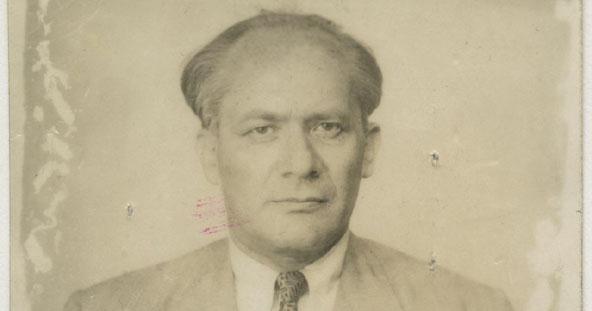
The vision of justice that some international treaties seek to achieve is sometimes linked to a unique name behind and an exceptional human history that made their creation possible. The 1948 Convention on the Prevention and Punishment of the Crime of Genocide was born as a sovereign decision of states, but it was grounded in the moral imagination and legal vision of the Pole Raphael Lemkin.
Lemkin combined a personal history of knowledge and empathy for the suffering of the persecuted in human history. It included the humiliations he experienced as a Polish Jewish child, his suffering as a victim —49 members of his family, including his parents, were murdered in Nazi death camps— and his refugee status that did not leave him from his escape from Warsaw in September 1939 until his death in New York in 1959.
Lemkin enjoyed through literature, to paraphrase Amos Oz, the ability to ‘imagine the lives of others’. Lemkin describes in his autobiography all the readings that enriched his vision of life and recalls the various genocides in human history, since Roman times the massacres of Christians, The Spanish conquer of the Americas until the 20 th Century Holocaust.
Lemkin’s account urges information, compels engagement and affirms that ‘the function of memory is not only to record the events of the past, but also to stimulate conscience’. Like us today in Gaza, Ukraine, Myanmar, Sudan, and all the other invisible crises with civilian victims, Lemkin faced during his studies at the Law Faculty of the University of Lviv in 1921 —whose back row benches were the obligatory place for Jewish students— the dilemma and moral crisis in the face of massacres of the Armenians in 1915 and the legal inaction against the Turkish perpetrators.
Lemkin realized that one cannot legally protect that which we have not previously conceptualized and exist in language. Without a word defining the object to be protected, it is difficult for the law to regulate and preserve it. Thus, with the invention in 1943 of the neologism ‘genocide’ and the subsequent adoption of the 1948 Convention by the states, Lemkin succeeded in crystallizing an aspiration for justice to which he dedicated and sacrificed his professional and personal life.
Historian Annette Becker has suggestively pointed out in her work Messagers du désastre. Lemkin et Karski et les génocides (Messengers of disaster. Lemkin and Karski and the genocides) that Lemkin, in the process of creating the term genocide, wanted to embrace a universal perspective of humanity and thus link genocide to a common human experience in history, which not only included the atrocious experience of the pogroms and the Nazi final solution against the Jewish people. By ‘dejudaising the concept of genocide he universalized it’ and thus made his concept transcend the global consciousness and the global legal vocabulary.
Professor Antonio Cassese explained that the sovereign states of the international community impose new limits and controls on their own sovereignty through international law, creating common rights and reciprocal obligations. Cassese, quoting Baron Holbach, recalls that International Law is an effort of a new conscience and it is like ‘the morality of madmen, who set limits to their own madness’, and International Law is above all ‘a system of ethical principles that is addressed to madmen, that is, to the states it seeks to curb their folly’.
Today we are part of the revolutions started by people like Lemkin. We have learned that human history evolves because there have always been people who have glimpsed new scenarios and built innovative spaces from which to reorient the human action of justice. The human rights revolution does not claim that people of a particular nationality, ethnicity, religion or group enjoy prima facie special probity, good faith or honesty, but that it is only our actions that determine our status and responsibilities. The Nuremberg trials established the legal principle that those who commit international crimes are responsible for them without exception. In 2025, what is important is how we protect victims more effectively, either at the domestic or international level, regardless of who committed the crimes. Therefore, the justice we demand is for the victims of the atrocities committed by Hamas in Israel on 7 October 2023, whether they were killed or the survivors who are still in Gaza today, in 2025, as hostages of that terrorist group; and for the various international crimes that are being perpetrated indiscriminately by Israel against the civilian population of Gaza.
To accuse of anti-Semitism those who interpret the actions of the Israeli army as constituting genocide, such as the UN Rapporteur Francesca Albanese, the jurist Aryeh Neier or the journalists who survive in Gaza and report what is happening, is a form of censorship and moral violence directed against those who choose not to remain indifferent in the face of massacres, It also justifies an abject logic that leads to infamy, as those who have intentionally caused the starvation and murder of tens of thousands of people remain unscathed by opprobrium and untouched by legal responsibilities and moral reproach. Silence has never helped the victims; neither has distorting noise. Only the voice of the people who advocate civic action and seek a national and international institutional response can limit indifference.
What is happening in Gaza is too important to be left to jurists alone. Rejection of the catastrophe and the abhorrent pain can and must be expressed. Civic history has taught us humanitarian disasters, conflicts that our outrage is intermittent. But we also know, thanks to the legacy of people like Lemkin, that revolutions are all impossible, until they happen. Then they become inevitable. Albie Sachs, Jewish jurist, apartheid victim and Constitutional Court judge in Nelson Mandela’s new South Africa, noted that ‘While one should always be skeptical about the law’s pretensions, one should never be cynical about the law’s possibilities’. And so Lemkin’s legacy cannot be an entelechy. In Gaza and now in 2025, we have the chance to oppose further barbarism and prevent impunity. In Lemkin’s words, this is a new cause of humanity. Thanks to Lemkin, law offers a possibility of a response to the helpless and almost invisible victims. And it is certainly a humane and imperfect justice in the face of the catastrophe that has been inflicted, but it is a possible and crucial justice.
About the author
Joaquín González Ibáñez is the translator and editor of Totally Unofficial . Autobiography by Raphael Lemkin ( Ohne Auftrag. Autobiografie ), and associate Professor of International Public Law at the Complutense University of Madrid and Director of the Berg Institute (Madrid).
The BUXUS STITUNG and the Berg Institute (Madrid) have jointly established the Fritz Bauer & Raphael Lemkin Human Rights Film Award , which will be presented again on September 7, 2025, as part of the UNLIMITED HOPE film festival in Bochum.