
Autor/Autorin

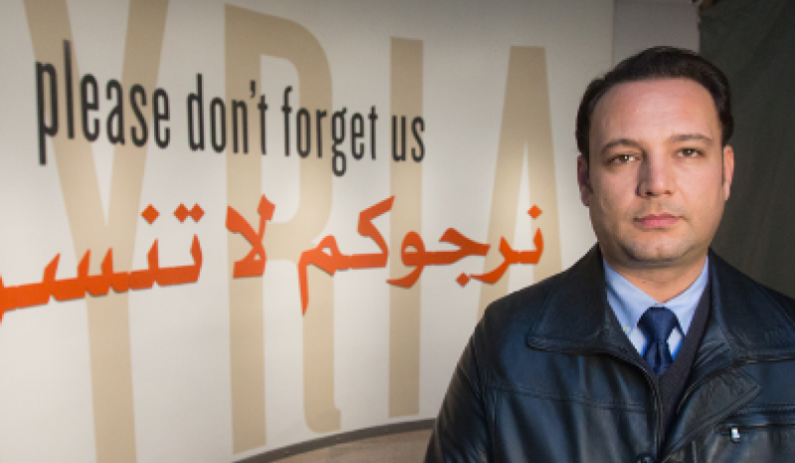
This article can be found in The New Yorker magazine: „Written in Blood and Rust from a Syrian Prison: ‚Don’t Forget us'“. Robin Wright tells the survival story of her Syrian colleague Mansour al-Omari , who spent a year documenting the names of those arrested who „disappeared“ in the turmoil of a chaotic civil war in Syria after the inspiring Arab Spring. Then Mansour al-Omari, who studied English literature and began his journalistic work as a student, was one of the disappeared himself. In 2012, the human rights activist was arrested at the Centre for Media and Freedom of Expression in his home city of Damascus, of all places .
Mansour al-Omari survived prison and torture. What he and everyone else in the military prisons had to endure and continue to endure can hardly be described. The young journalist did not give up and, in prison, resolved to keep his idea alive, which he had already committed himself to a year earlier: he would document the names of Syria’s „disappeared“.
His fellow sufferers helped him and, using an ink made from their own blood and rust, they succeeded in saving the names of the „disappeared“ from oblivion on pieces of cloth. When al-Omari was released, he managed to smuggle the five pieces of cloth out of prison. Once free again, he used them to secretly contact the relatives of the „disappeared“ and inform the families of his cellmates. He had to do this secretly so as not to reveal where the lists with the names came from and not to endanger anyone else.
Al-Omari then managed to flee to Sweden via Turkey, where he spent a year. He is currently continuing his documentary work there, collecting the names of the „disappeared“ in Syria and keeping their memory alive. He saved the writing with the names on the five scraps of fabric by scanning them with Photoshop, as they too are in danger of fading and disappearing. Like the stories of his companions in the prisons, which must not be forgotten, they must be preserved with the utmost care.
According to estimates by Human Rights Watch , writes Robin Wright in her article in The New Yorker , more than 117,000 Syrians were arrested or „disappeared“ between 2011 and 2016 without their relatives being able to learn anything about their current whereabouts. „For journalists,“ says Wright, „Syria is now the deadliest country in the world. Reporters Without Borders‘ online barometer of deaths and detentions lists two hundred and twenty-eight journalists, citizen journalists, and media assistants who have been killed since 2011. Dozens are still detained.“ Al-Omari writes on his website of 65,000 „disappeared“ in his home country of Syria.
Of those who helped Mansour al-Omari to document the names of the „disappeared“, three have already died in prison. How the five precious pieces of fabric were saved can currently be seen in an exhibition at the United States Holocaust Memorial Museum in Washington. They are each displayed separately in a darkened room to prevent the writing from fading even further. The title of the exhibition, which denounces the conflict in Syria, is: Syria – Please Don’t Forget Us .