
Autor/Autorin

The documentary shows that Sweden and Hungary concluded an intelligence agreement on Soviet espionage operations in 1943. The material may have important implications for the search for the young Swede who saved thousands of Hungarian Jews during the Holocaust and disappeared in the Soviet Union in 1945.
At the request of the authors and members of Raoul Wallenberg’s family, the Swedish Military Intelligence and Security Service (MUST) published three documents last July that have remained secret for 75 years. (1 ) The new documents show that in October 1943, Swedish intelligence officers concluded a secret agreement with high-ranking members of the Hungarian military and defence organisations concerning communist and Soviet espionage operations. Among other things, the Swedish defence staff prepared a secret report on Soviet intelligence networks in Sweden, which they shared with their Hungarian colleagues. In return, Swedish intelligence services received sensitive information about communist underground activities in Hungary. Only the Hungarian report was made public, and it is unclear whether the Swedish report has been preserved.
The Swedish action was in direct response to a personal request from Major General István Ujszászi, the head of the Hungarian State Security Centre (ÁllamvédelmiKözpont), which coordinated military and civilian defence activities in Hungary.
The agreement was discussed and approved at the highest level of the Swedish defence staff. Ujszászi and Lieutenant Colonel Harry Wester, the Swedish military attaché in Budapest, met regularly. At least once in early 1944, Captain Helmuth Ternberg, deputy head of C-byrån (C-Bureau, a highly secret Swedish service under the Defence Staff during the Second World War), met with Wester to discuss the implementation of the secret exchange of intelligence (2 ).
The hitherto unknown contacts indicate that the agreement was part of a broader focus of the Swedish secret services on the Soviet Union, which began in 1943 and extended beyond the traditional territories of Finland and the Baltic states to Eastern and Central Europe and the Balkans. Swedish involvement in such activities was particularly sensitive, as Sweden had officially represented Soviet interests in Hungary and other Axis countries since 28 June 1941. This is almost certainly one of the reasons why the documentation has so far remained secret. Moreover, in 1943, members of the Swedish defence staff began a more willing and extended cooperation with US and British intelligence officials, which had lagged behind the traditionally close exchanges with German officials.
The new material is particularly valuable as almost all information about the clandestine activities of the Swedish Defence Staff in Hungary seemed to have disappeared from the Swedish archives. It is believed that the material was deliberately destroyed after the Second World War, but many analysts doubt that all the information has disappeared. The new documentation released from the MUST is a strong indication that at least some information has survived and is still to be discovered, both in Swedish intelligence collections and in other international archives.
The new information is also of interest because GneralmajorUjszászi was detained by Soviet NKVD troops in early 1945 and taken to POW camp No. 27 near Moscow. Some of his testimonies about the joint preparations of Hungary and Nazi Germany for the war against the Soviet Union were presented before the International Military Tribunal in Nuremberg. He was then questioned in detail by Soviet interrogators about the various attempts by the government of Miklós Kállay – Hungary’s prime minister from March 1942 to March 1944 – to establish contacts with the Western Allies. In August 1948, Ujszászi was sent back to Hungary at the request of the Hungarian State Security (ÁVO). The published record of his interrogations shows that he was questioned by the ÁVO investigators specifically about his wartime contacts with the Swedish military attaché Harry Wester. (3 )
The joint Swedish-Hungarian intelligence treaty ended almost immediately with the German occupation of Hungary on 19 March 1944, but the noticeable shift in focus of the Swedish intelligence services in 1943 adds an important new dimension to the secret Swedish collaboration with the Anglo-American Allies in Sweden and Hungary in 1943-1945 and the simultaneous efforts of Hungarian government officials to keep their country out of the hostilities of World War II. The Soviet leadership was highly suspicious of Hungarian efforts to achieve a „separate peace“ with the Western Allies and feared that this might eventually lead the defeated Axis powers to join the Anglo-American forces in a one-front war against the Soviet Union. All of this raises important additional questions about the background of Raoul Wallenberg’s humanitarian mission to Budapest in July 1944 in support of Hungarian Jews, his possible connection to Swedish and Allied intelligence services, and the official Swedish handling of Wallenberg’s disappearance in 1945 and the following years.
The timing of the secret Swedish-Hungarian agreement in autumn 1943, nine months before Raoul Wallenberg’s appointment as Swedish diplomat in July 1944, may be significant. This also applies to the people involved in these discussions. The new documentation suggests that systematic preparations by US and Swedish intelligence agents to gather information from Hungary and to actively support the Hungarian resistance began in earnest as early as the end of October 1943 and not in the spring and summer of 1944, as previously assumed. The aim of these efforts – which also included important Hungarian contacts in Stockholm – was to examine the feasibility of a planned Anglo-American military intervention in Hungary in order to bring about the defeat of Nazi Germany and at the same time prepare for the expected Soviet occupation of the country.
Previous investigations have revealed no evidence that Wallenberg had formal links to Swedish or Allied intelligence services. However, the newly released information shows that an important part of the communication between Swedish and Hungarian intelligence services was channelled through the Hungarian Legation in Stockholm. The broader Swedish and Allied co-operation also directly and indirectly involved people with whom Wallenberg had personal contact in Sweden at the time. These were primarily Dr Antal Ullein-Reviczky, the Hungarian minister who had known Raoul Wallenberg since September 1943 and attended his farewell dinner before Wallenberg left for Budapest in July 1944; Robert Taylor Cole, head of the US Office of Strategic Services‘ (OSS) Secret Intelligence (SI) branch in Stockholm; and possibly also Captain Helmuth Ternberg (whose brother, the Swedish naval officer Egon Ternberg, was one of Raoul Wallenberg’s godparents). Later in Hungary, they included Lieutenant Thorsten Akrell, a special representative of the Swedish defence staff, Lieutenant Colonel Harry Wester, the Swedish military attaché in Budapest, and Dr Géza Soós, one of the leaders of the Magyar Függetlenségi Mozgalom (MFM, the Hungarian Independence Movement), Hungary’s main resistance group. After the war, R. Taylor Cole emphasised in his memoirs that „our Hungarian interests and contacts led to a meeting with Raoul Wallenberg“ shortly before his departure for Budapest, suggesting that Wallenberg’s mission may have included aspects beyond purely humanitarian objectives (4 ).
In the course of analysing the newly released documents, several additional details emerged about Swedish intelligence operations in Hungary in the years 1943-1945, which are also of interest to Raoul Wallenberg research. These new details are particularly interesting when analysed in the context of already known facts.
Material published by the American National Archive in the early 1990s shows that the Swedish C-Bureau – in close co-operation with US intelligence officers in Stockholm – attempted to support the Hungarian resistance by drawing up a secret „signalling plan“ to be used during a planned revolt against the German occupiers. Géza Soós, one of the leaders of the MFM, played a central role in these plans. He also had direct contact with both Raoul Wallenberg and Per Anger, the First Secretary of the Swedish Legation in Budapest, who provided Swedish protective documents prior to Wallenberg’s arrival.
As early as 2000, the Swedish secret service archivist Göran Rydeberg pointed out that several (possibly up to five) Swedish intelligence officers were sent to Hungary from the end of 1943. British intelligence historian Craig McKay has recently identified one of these officers as Nils „Nisse“ Johansson, who was apparently on loan to the Swedish Defence Staff from his regular employer, the Swedish National Defence Radio Establishment (FRA). (5 ) According to McKay, „Nisse“ Johansson and his colleagues may have provided the necessary technical assistance to Soós and his colleagues in the autumn of 1944. None of the messages sent and received by the Swedish Signals Intelligence Service in Budapest have been released by Swedish archives. Johansson’s mission and his work in Hungary were never officially recognised by the Swedish authorities.
The presence of Swedish intelligence officers in Budapest suggests that the members of the Swedish legation, including Raoul Wallenberg, had an additional channel for secret communication with Stockholm. The new findings also lend credence to earlier claims that members of the Hungarian resistance passed important information about possible bombing targets to Allied forces in Bari (Italy) and Malta via a transmitter in the Swedish Legation. This information was first outlined in 2013 by Swedish historian Gellar Kovacs. (6 )
The newly published information also raises additional questions about Per Anger’s contacts with the Hungarian resistance. On 23 and 25 October 1944, Anger, in his capacity as a Swedish diplomat, sent two messages to the Soviet authorities on behalf of Géza Soós and the MFM. (7 ) No trace of these two messages, which the MFM intended to pass on to Soviet officials, has been found in Swedish archives. Anger almost certainly did not transmit these messages directly to the Soviet Union, but probably sent them to the Swedish Foreign Ministry in Stockholm for onward transmission to Moscow. If this is the case, a copy of these messages should be in the central archives of the Swedish Foreign Ministry. It is known that the Soviets received and replied to the messages. This means that there should also be records in the Russian archives, including those of the Soviet embassy in Stockholm. This documentation could provide helpful clues to additional information about the activities of the staff of the Swedish legation, including Raoul Wallenberg, in Hungary and how the Soviet political leadership may have evaluated these contacts.
It has never been fully revealed what exactly Raoul Wallenberg’s colleagues told Soviet officials when they themselves were arrested by Soviet NKVD troops in Hungary in early 1945 and later to their Swedish superiors. If either the members of the Swedish Legation or Raoul Wallenberg were actively involved in supporting the Hungarian resistance and other Swedish Allied intelligence projects in Budapest in 1944, this would provide a possible additional explanation for why Swedish officials chose to reveal as little as possible about these activities after Wallenberg disappeared.
Raoul Wallenberg’s humanitarian mission and his selection for this mission must now be placed in the context of this more complex reality. In particular, the extent to which Swedish officials were aware of this complexity and feared the exposure of the extensive secret co-operation between Swedish and Anglo-American intelligence 1943-1945, partly against Soviet interests, needs to be further investigated. It was clear that this co-operation would continue in the post-war period and may have influenced the official Swedish handling of Raoul Wallenberg’s disappearance after January 1945. A key question remains as to why the new information has only now, more than seven decades later, been made publicly available. Requests made by researchers on behalf of Raoul Wallenberg’s family almost a year ago, in March 2018, to review relevant documents in the archives of the Swedish Foreign Ministry and the Wallenberg Family Archives (Stiftelsen för Ekonomisk Historisk Forskninginom Bank och Företagande, SEHFBF) have not yet been answered positively. (8 ) Officials at the Swedish Foreign Ministry have indicated that they are reviewing up to one shelf metre of the still secret documents for release.
It is time for Swedish officials to provide long overdue answers to the important unanswered questions in the Raoul Wallenberg case and to grant full access to the documents that are urgently needed to finally establish the full circumstances of Wallenberg’s fate in Russia.
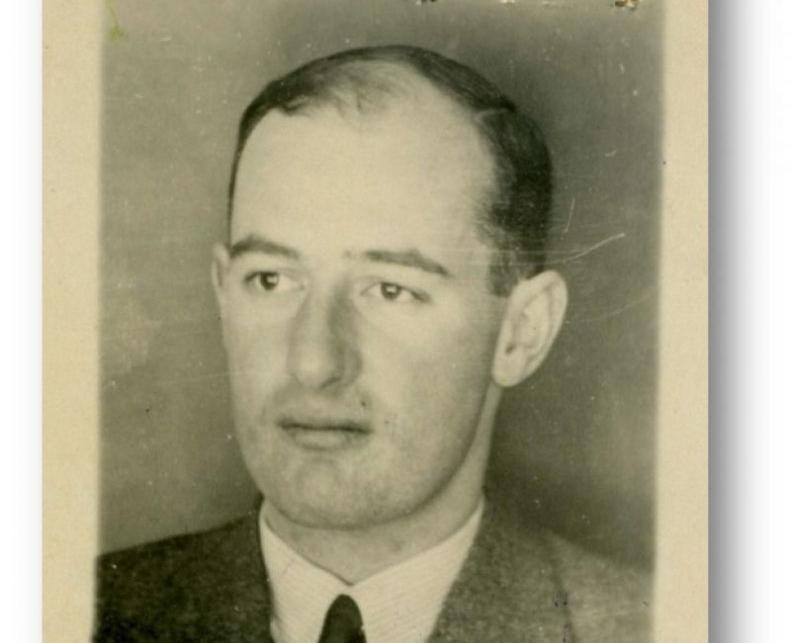
Raoul G. Wallenberg (1912-1947?) was a Swedish diplomat and businessman. At the end of World War II, Wallenberg showed extraordinary courage when he began a humanitarian mission – initiated and funded in large part by the U.S. War Refugee Board – to protect the remaining Jewish communities in Hungary from Nazi persecution. During six devastating months in 1944, Wallenberg and his colleagues succeeded in protecting thousands of Budapest Jews from deportation and certain death. In January 1945, Wallenberg was arrested by Soviet military counterintelligence and taken to Moscow, where he disappeared. Soviet and later Russian authorities claimed that Wallenberg died suddenly in a Moscow prison on 17 July 1947 as a result of a heart attack. However, this information was never confirmed.