
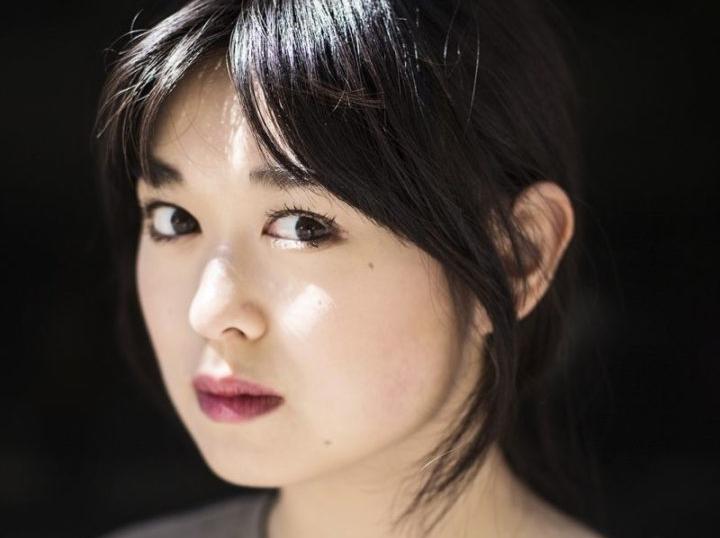
26 June is no ordinary day in my life. I have had twenty-four birthdays, twenty-three Christmases, three school graduations and almost seven general elections. Baptisms, receptions, funerals. This is now my twenty-third 26 June. In the first two decades, the day slipped past me unnoticed. In the last three years of my life, it has become much more urgent and close to me.
26 June marks the International Day in Support of Victims of Torture. For the past three years, my relationship with this day has been very complicated. My father, Gui Minhai, was abducted by Chinese agents in October 2015 because of his work as a dissident publisher. I suddenly became a kind of human rights activist. Thanks to my rather hazy knowledge of the Chinese legal system at the time, I was unsure for a long time whether the actions against my father could be labelled as torture. It seemed very likely – but the word torture tastes strange in a Swedish mouth that has only known banana-flavoured toothpaste throughout its school years. It’s easier to spit it out and think that you just don’t know for sure.
When my father’s first public „confession“ was broadcast on Chinese television, torture made itself heard again. There are many types of torture. Electric shock, for example, and brutal beatings until your teeth loosen and your face swells grotesquely, but you are still made to smile for the camera.
Prisoners can be deprived of sleep for days on end and their relatives threatened. In the first two years, I didn’t know what to favour. Now, in my third year, information about the treatment of prisoners like my father is slowly leaking out. Recently, the human rights organisation Safeguard Defenders published a report on forced confessions . Torture, in its many forms, is a fact.
Today we remember all the people who fall victim to the terrible variety of torture in the world. Tomorrow we forget them again.
Of all human rights issues, torture should take pride of place on the other 364 days of the year. Although the word torture is hard to say, it is a word that affects and that we emotionally associate directly with the term „human rights“. Perhaps it is the universality of the body that awakens in us a strong empathy for victims of torture.
But feelings are fleeting.
On all the other days of the year, I try in different ways to weave the topic of human rights into all kinds of conversations. I explain, clarify, nuance. But often the battle is lost from the outset as soon as you bring up the issue of human rights. „A nice idea,“ say many. „It’s nice that you’re idealistic, but you have to understand that you also have to be realistic in politics,“ a young man told me after one of my talks last autumn. On the train journey home, I asked myself whether we don’t have a completely unclear picture of what human rights actually mean. Perhaps our well-intentioned empathy has eroded the concept to such an extent that it is now only understood on an abstract level.
How can it be that a protest against the use of enormous resources to imprison and torture people is labelled „idealistic“? The topic of human rights seems to have developed into a very specific discussion, regardless of the current context.
The most common objections to the concept of human rights relate to ideas of morality and ethics. Many believe that human rights are valuable simply because they indicate what is moral or immoral – but nothing more – or that they impose a code of ethics on other cultures that function differently from our own.
I think there are two fundamental errors of reasoning here that make human rights difficult to understand. Firstly, it is claimed that human rights are a single, coherent concept. This contributes to shifting the debate from the practical to the abstract level. Secondly, human rights are primarily perceived as a formalisation of moral principles. This does not leave much in the way of a pragmatic discussion.
Fortunately, the issue of human rights is much more complex. They cannot possibly consist of a single abstract concept because they are embedded in the reality of their daily environment. In practice, human rights are less like a cloud of general values hovering over society and more like a tree with roots that spread out to intervene in its environment. The abduction of my father from Thailand to China can be described both as a pure human rights issue and as a fundamental problem of state sovereignty. This means that human rights issues are inevitably always questions of politics and law.
Putting human rights issues in a broader context means that we expand the toolbox of problem solving. In cases of torture, this applies in particular to local and international legislation: in addition to the Universal Declaration of Human Rights, there are also special requirements and conventions. Individual countries themselves decide whether to sign or ratify them, but if they do, the conventions are binding. Certainly, although China ratified the UN Convention against Torture in 1988, torture still takes place. But of course such international laws are better than nothing. In recent years, there have been serious attempts to build on this foundation to find new and more direct ways to protect human rights. These include the expansion of the principle of universal jurisdiction – a legal provision that allows human rights violations to be punished regardless of where they take place – and the so-called Global Magnitsky Act , a law passed in the U.S. in 2016 that imposes targeted, international sanctions against individual human rights violators.
It is high time to stop simply talking about human rights as if they exist in a vacuum. Human rights touch all aspects of our society, and to protect them we need to understand how they function as part of a larger system. The belief that human rights are a mere collection of loose ideals is a misconception that does us no good. We need to remind ourselves of this fact every day so that we don’t forget it tomorrow.