

Autor/Autorin
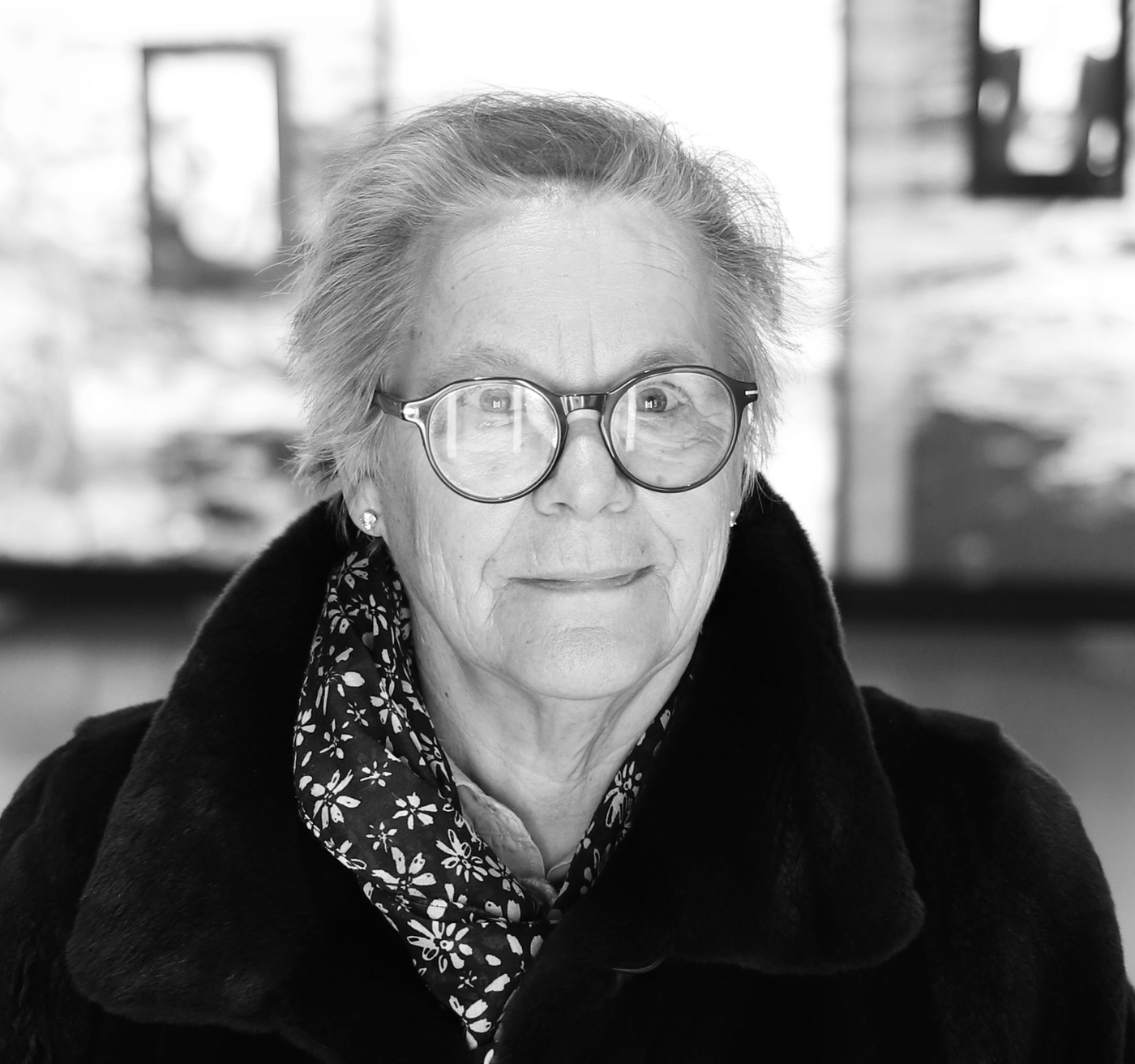
On Holocaust Remembrance Day 2026, at the Fritz Bauer Forum in Bochum, we spoke not only about the past, but above all about the present and future of democracy. Israel, long perceived as a vibrant, albeit conflict-ridden democracy, has become a laboratory for democratic decline in recent years and at the same time an impressive example of the power of a resistant civil society. The war in the Middle East, the erosion of democratic institutions in Israel and the profound change in German Middle East policy are inextricably linked. Anyone talking about democracy today can no longer do so without talking about Israel and Israeli civil society and without asking what all this has to do with us in Germany.
The deterioration of Israel’s democratic quality is now well documented. The V-Dem Institute has downgraded Israel from a liberal democracy to a purely electoral democracy, the first such downgrade in over five decades. Freedom House recorded a drop from 81 to 73 points between 2014 and 2025, i.e. a significant decline in civil liberties. In January 2026, an expert panel of political scientists attested to deteriorations in all areas of democratic quality analysed. This decline is no coincidence, but the result of a clear political strategy. Over 380 anti-democratic legislative initiatives between January 2023 and April 2025 were aimed at restricting judicial control, weakening freedom of expression and delegitimising the opposition. At the same time, surveillance and criminalisation of protesters increased, police violence was normalised and the authority of the Supreme Court was publicly undermined. What was sold as a „reform“ from the government’s perspective is experienced by many citizens as a systematic dismantling of the separation of powers. In surveys conducted by the Israel Democracy Institute, 75 per cent of Arab citizens and 54 per cent of Jewish citizens see democracy as seriously threatened. The polarisation between ethnic groups is deepening and with it the mistrust in state institutions.
The Hamas attack on 7 October 2023 was a terrorist shock of unprecedented proportions, but it was also a political shock. Suddenly, everyone realised what many had previously only suspected: a catastrophic failure of state institutions. The response was slow, evacuation plans were lacking, military equipment was inadequate and there were hardly any support structures for civilians. Civil society stepped into this institutional vacuum. Within hours, citizens, NGOs, spontaneous initiatives and existing networks began to take on tasks that the state should actually fulfil: rescuing, feeding and sheltering hundreds of thousands of people. What followed was an unprecedented mobilisation and a turning point in the relationship between state and society.
One particularly impressive example is the „Brothers and Sisters in Arms“ movement (Achim Le’Neshek). It originally emerged at the beginning of 2023 as a protest movement against Netanyahu’s judicial reforms, supported by IDF veterans. Thousands of reservists, including elite units and fighter pilots, announced that they would refuse their reserve service if the government undermined the separation of powers. After 7 October, the movement underwent a radical transformation: the protest organisation became a rescue organisation. Overnight, the activists coordinated the transport of reservists, organised evacuations, set up logistics centres in Tel Aviv, the south and the north and developed digital tools to coordinate between those affected, helpers and security forces. „No agenda to enforce: just save families“ became the new motto. Between 2024 and 2025, Achim Le’Neshek developed into a kind of parallel structure to the state: at its peak, the organisation mobilised 15,000 volunteers every day and maintained specialised teams for transport, psychosocial support, agriculture, education and medical care.
The role of the kibbutz movement received little attention in international reporting, but was enormously powerful. As a traditional form of collective life with a high organisational density, it was able to show its full strength during the crisis. Within a few hours, the kibbutzim activated their existing structures, set up central aid centres and coordinated the reception of evacuees. Each receiving kibbutz formed a joint secretariat with the evacuated kibbutz; regional councils organised distribution, supplies and support. Over 150 volunteer teams were mobilised per community to provide housing, childcare, education and psychological support. Instead of anonymous hotel accommodation, the kibbutzim relied on „dignified accommodation“ in community structures, supplemented by financial guarantees, flexible programmes such as the „nomadic kibbutz“ and long-term solidarity networks. This illustrates an important point: civil society is not a collective term for „good NGOs“, but rather a diverse network of old and new organisations, from local initiatives to national associations and transnational networks. In Israel, this spectrum ranges from traditional human rights organisations such as B’Tselem, ACRI or Adalah to health and women’s rights organisations and movements for peace and coexistence.
The second major wave of civil society mobilisation began a few weeks after 7 October: the hostage protest movement. From November 2023, spontaneous vigils and expressions of grief by relatives developed into one of the most influential civil society movements in Israel’s history. Between December 2023 and August 2024, the protests grew into large weekly demonstrations in Tel Aviv and many other cities. A turning point came on 1 September 2024: following the murder of six hostages, the protests escalated and the largest general strike in the country’s history took place. In the months that followed, activists put pressure on the government with mass demonstrations, road blockades, occupations of symbolic places and international public relations work. Despite many arrests, massive police violence, surveillance by the domestic secret service and militarised police tactics, the movement did not collapse. Decentralised forms of mobilisation enabled over a hundred parallel protest locations throughout the country on individual „days of unrest“; infrastructure such as motorways, airports and government buildings were blocked at times. The result was historic: in January-May 2025, the hostage movement forced the government to sign a comprehensive hostage agreement against its original wishes. On 13 October 2025, the last living Israeli hostages were released as part of a ceasefire agreement, while President Trump announced the end of the two-year war. Hours later, Muslim and European leaders met in Egypt to discuss the future of Gaza and a possible regional peace. The central resource of this movement was not violence, but moral authority. Families of the abductees could be sure of public empathy; their demands for an agreement were politically controversial, but hardly morally contestable. It was precisely this combination of moral legitimacy, strategic intelligence and international networking that made it possible to force a government unwilling to act into action.
Democracy does not only collapse through tanks and coups, but often through slow shifts in discourse. In a widely acclaimed analysis, Israeli journalist Guy Rolnik has shown how anti-democratic rhetoric in the Israeli mainstream media has gradually become normalised. The starting point was an incident in December 2025: Finance Minister Bezalel Smotrich described the President of the Supreme Court as a „violent megalomaniac“ and declared that the government would „roll over him“. Instead of characterising this attack as a frontal assault on the separation of powers, the leading TV channel Kanal 12 treated it as an ordinary „two-sided debate“. The main criticism was the tone, not the substance, as if it were about bad manners and not an attempt to politically subjugate the judiciary. Rolnik describes a pattern in three stages: first extremist rhetoric appears shocking, then it is negotiated as „controversial but legitimate“, and finally it becomes part of the normal political spectrum. Historical parallels are obvious. As early as 1937, Karl Loewenstein analysed how fascism uses democratic freedoms to destroy democracy from within. The pattern is repeated in Weimar Germany, Hungary, Poland and Turkey: the media focus on legal details and supposed „balance“, while the actual intention, namely the destruction of the separation of powers, is ignored. Rolnik’s conclusion is bleak: „Democracies don’t die because nobody warns against it. They die when society pretends that the democratic infrastructure is still intact while it is being systematically dismantled.“ This does not only apply to Israel.
Parallel to Israel’s internal development, German policy towards Israel is also changing fundamentally. In opinion polls, large majorities are in favour of an arms embargo against offensive military operations, in favour of EU sanctions due to settlement policy and Gaza and against unconditional support for the Israeli government. Leading German politicians emphasise that friendship with Israel does not automatically mean agreement with every government policy. This change in elites and society is fragile, but real. Hundreds of thousands demonstrated in Berlin in 2025 in favour of a ceasefire, for human rights and against a purely government-loyal interpretation of the „reason of state“. At the same time, there is growing unease about systematic expulsions in the West Bank, about „creeping ethnic cleansing“, in which Bedouin communities are forced to leave through violence, intimidation and living conditions. The Israeli historian Moshe Zimmermann has taken this debate to extremes. He argues that the formula „historical guilt = unrestricted support“ is historically incorrect. The lesson of the Holocaust is not automatic solidarity with every government, but the obligation to prevent atrocities everywhere. „Never again“ is only credible if it is understood universally: Never again such crimes, against no one, by no one. Zimmermann also criticises the inflationary use of the term „genocide“ and the strategic instrumentalisation of accusations of anti-Semitism in order to delegitimise legitimate criticism. Anyone who calls everything genocide is relativising the Holocaust; anyone who defames any criticism of a government as anti-Semitic is weakening the fight against genuine anti-Semitism.
The developments of recent years raise uncomfortable questions, both in Israel and in Germany. Can civil society permanently halt the erosion of democracy in Israel, or is it only temporarily compensating for a structural regime problem? Will Germany really change its Middle East policy from a logic of loyalty to governments to a logic of universal human rights and will society support this change in the long term? One thing is certain: civil society is not a romantic substitute for the state. It is a necessary corrective. When the state fails, it can save lives, build structures and force governments to act. But in the long term, democracy needs both functioning institutions and an alert, resistant public. Perhaps the most important lesson from Israel is therefore: democracies do not die overnight, but in the mode of „normalising the unbearable“. Whether this happens depends not only on governments, but also on whether the media, civil society and each and every individual are prepared to name the unthinkable for what it is, even if it is uncomfortable.