
Autor/Autorin

After the armed forces carried out a coup d’état in Argentina on 24 March 1976, they established a regime of terror and persecution, as a result of which 30,000 people of all ages and social classes were forcibly disappeared for political reasons. Among them were hundreds of pregnant women who gave birth in captivity and children who were abducted with their mothers and/or fathers.
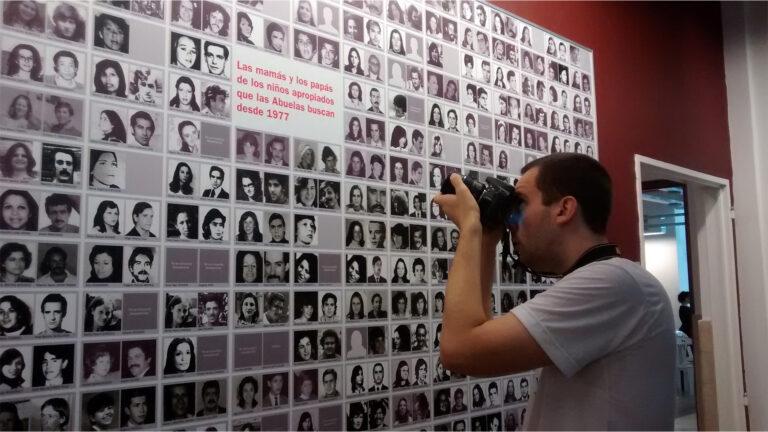
Giselle Bordoy WMAR – Own work; Exhibition at the Casa pro la Identidad, 2015, CC BY-SA 4.0
The relatives of the victims turned to courts, police stations, hospitals, churches and public institutions for information – and for years they were met with complicit silence. Gradually, they came together to share information and give each other strength.
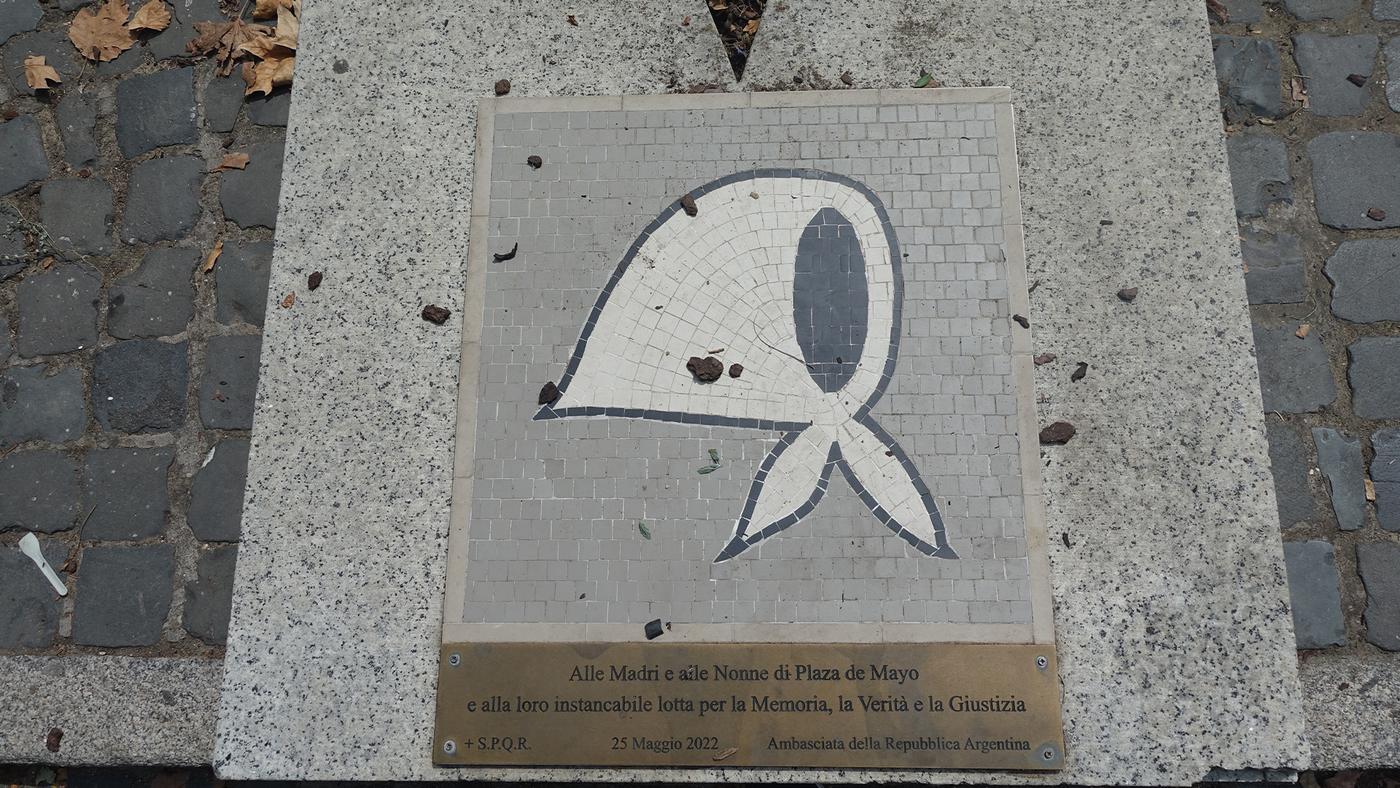
One year after the military coup, in April 1977, the mothers of the Plaza de Mayo ( Madres de Plaza de Mayo ) transformed the police order allowing them to „walk around“ into a „Thursday round“, in which from then on they wore a white cloth tied around their heads as a mutual sign of recognition, reminiscent of the white cloth nappies of their sons and daughters who had been forcibly „disappeared“.
Six months later, one of the mothers, who was also a grandmother, left the circle and asked: „Who is looking for their grandchild or has a pregnant daughter or daughter-in-law?“ That was the moment when twelve of the women who were there at the time realised that they would have to organise themselves to find the children of their children who had been abducted by the dictatorship. They met for the first time on 22 October 1977 and began their joint struggle, which continues to this day.
Alicia „Licha“ Zubasnabar de De la Cuadra, Raquel Radío de Marizcurrena, Haydée Vallino de Lemos, Delia Giovanola, Clara Jurado, María Isabel „Chicha“ Chorobik de Mariani, Mirta Acuña de Baravalle, Vilma Sesarego de Gutiérrez, Eva Márquez de Castillo Barrios, Leontina Puebla de Pérez, María Eugenia Casinelli de García Irureta Goyena and Beatriz Aicardi de Neuhaus became the twelve founders without realising it at the time. They called themselves Abuelas Argentinas con Nietitos Desaparecidos (Argentine Grandmothers with Disappeared Children), later adopting the name given to them by the international press and calling themselves Abuelas de Plaza de Mayo (Grandmothers of the Plaza de Mayo) .
The Argentine dictatorship pursued a systematic plan for the appropriation of babies and children, with illegal detention centres such as ESMA, Campo de Mayo, Pozo de Banfield, La Perla, the 5th Police Station in La Plata and other places where secret maternity wards were operated. Around 500 children of the forcibly disappeared (desaparecidos) , born in captivity or stolen with their mothers and/or fathers, were abducted between 1975 and 1980. Some children were handed over to families close to the armed or security forces; others were abandoned in orphanages as NNs (children without names). In all cases, their identities were cancelled and they were deprived of living with their families, knowing their true stories and the rights and freedoms to which they were entitled.
The grandmothers of the Plaza de Mayo did not let anything or anyone stop them in their search. They took turns in their detective work, visiting juvenile courts, orphanages and offices on a daily basis, while at the same time investigating the adoptions of the time. In order to find the children who were stolen by the military and given up for adoption, they also followed the clues they received from society.
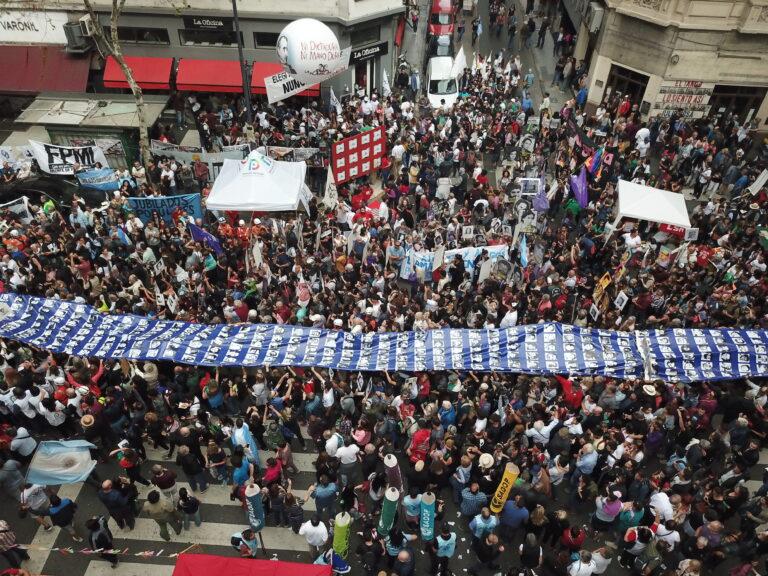
Día por la Memoria, la Verdad y la Justicia 24-03-2019, CC BY-SA 4.0
Over the years, the grandmothers developed various tools and strategies to search for their now long-grown children. They intensified their collaboration with scientists, journalists, teachers, lawyers, athletes and artists, who made their knowledge available. Through mass and regional communication campaigns, they appealed to common sense to help society understand the seriousness of the crime of child abduction and the difference between a bona fide adoption and the abduction of a minor. They promoted advances in genetics – such as the formulation of the Grandparenthood Index, which allows them to identify their grandchildren, even without their forcibly disappeared mothers and fathers.
In legislation, they achieved the creation of a new right with the inclusion of Articles 7, 8 and 11 in the „International Convention on the Rights of the Child“: the right to identity . They initiated legal proceedings to demand the punishment of those responsible and to defend the three pillars of reappraisal: memory, truth and justice .
Their search continues and is already affecting the generation of their great-grandchildren, who live like their mothers and fathers without knowing their true family origins. This situation is a challenge for democracy, because as long as the last grandson or granddaughter stolen during the dictatorship has not been found, the state continues to commit this crime and the identity of an entire generation is called into question.
The Grandmothers of the Plaza de Mayo continue to have the task of passing on the collective memory in order to preserve the legacy of their struggle and ensure that this terrible human rights violation is not repeated.
This task has intensified since the election of President Milei, as the successes of the longstanding struggle of the mothers and grandmothers of the Plaza des Mayo are being called into question by the current government. Those affected saw this coming and reacted with anger and determination to the government’s intention to make their search more difficult in future and to close the institutions that were set up on their initiative.
President Javier Milei has already ordered the dissolution of the Special Investigation Unit (Unidad Special des Investigación , UEI), a key body in the search for minors who were stolen during the dictatorship, by decree (727/2024) of 13 August 2024. It was assigned to the National Commission for the Right to Identity (CONADI) and is now assigned to a unit of the Public Prosecutor’s Office.
The Instituto Universitario de Derechos Humanos de las Madres de la Plaza de Mayo was also closed by law (Ley No. 26.995 of 7 November 2014). The „Forced Disappearances“ working group, which has been setting up a website since 2015 with the support of the Elisabeth Käsemann Foundation, among others, and is based at the Ecumenical Office for Peace and Justice (Munich), reports on this in a blog post on its „ Argentina page „.
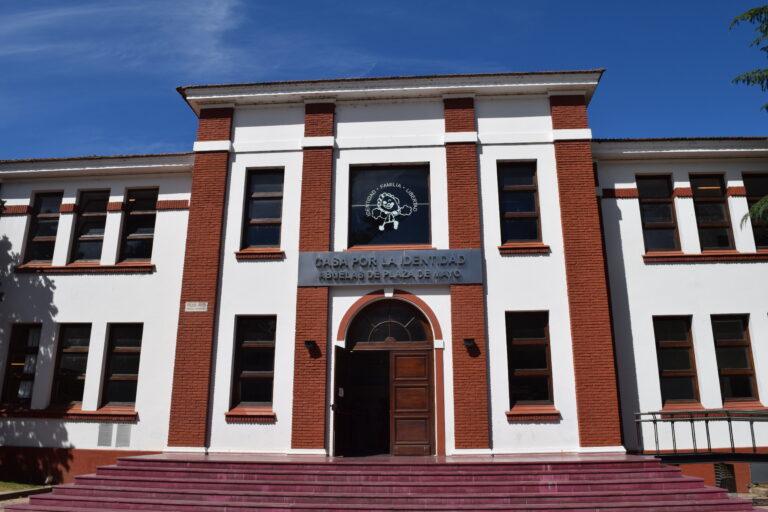
Leandro Kibisz – Own work, CC BY-SA 4.0. La Casa por la Identidad de las Abuelas de Plaza en el antiguo predio de la Escuela Superior de Mecánica de la Armada (ESMA) en el barrio porteño de Núñez.
A person’s identity is a lifelong process. It encompasses not only the aspects of their biological constitution, but evolves and includes the experiences they have with their reference groups, their family, their community, when they are given a name, acquire a language and when their life is inserted into a culture, a territory and a collective history. The stories in which our own history is inscribed allow us to socially project ourselves as unique and unrepeatable beings in time, always in relation to others.
The right to identity is the fundamental right of every human being to know their origins. In Argentina, during the last civil-military dictatorship, this right was violated by a systematic plan to eliminate the identity of children by the state itself. This historical fact made it clear that the right to identity had to be made explicit in order for it to be considered a fundamental human right and therefore a state obligation to guarantee this right.
Thanks to the active participation of the Grandmothers at the UN, in November 1989, Articles 7, 8 and 11 were included in the Convention on the Rights of the Child (CRC) to guarantee the right to identity worldwide. In recognition of this struggle, they are also known as „the Argentinian articles“.
Article 7
Article 8
Article 11
The inclusion of the articles on the right to identity in the UN Convention on the Rights of the Child (Convention on the Rights of the Child, New York, 20 November 1989, treaties.un.org; German text published by the Federal Ministry of Family Affairs, PDF ) and their subsequent incorporation into the national constitution (in September 1990) provided an expanded and strengthened frame of reference from which the struggles for the importance of this issue could be deepened both in the legal sphere and in social representations.
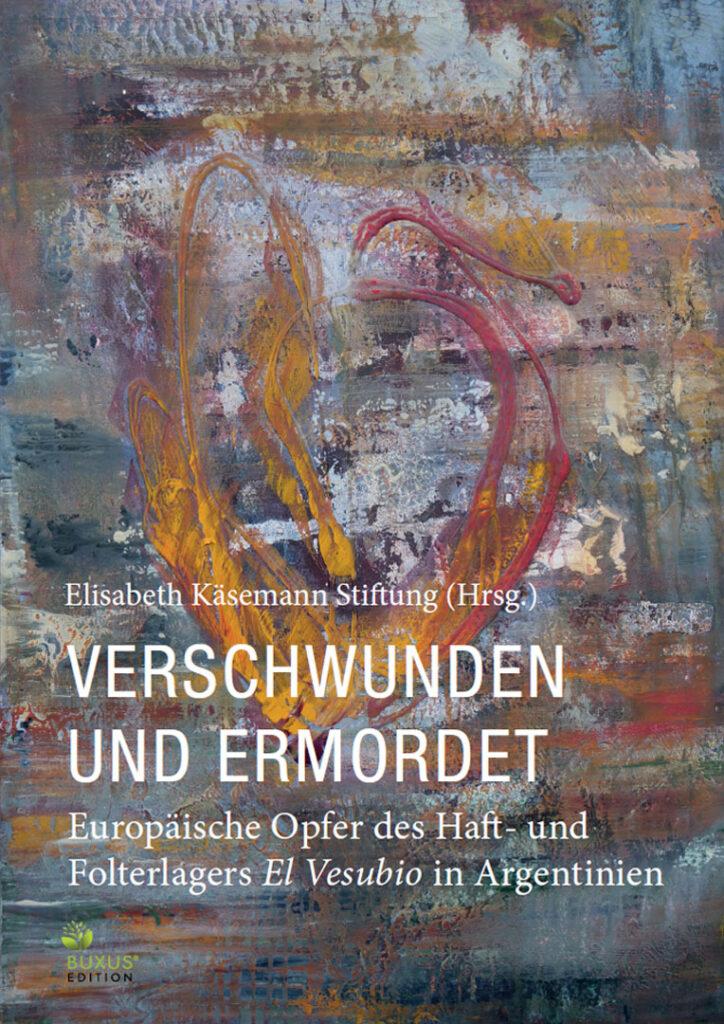
Collection published in 2023, 143 pages, numerous illustrations 19 euros, order here
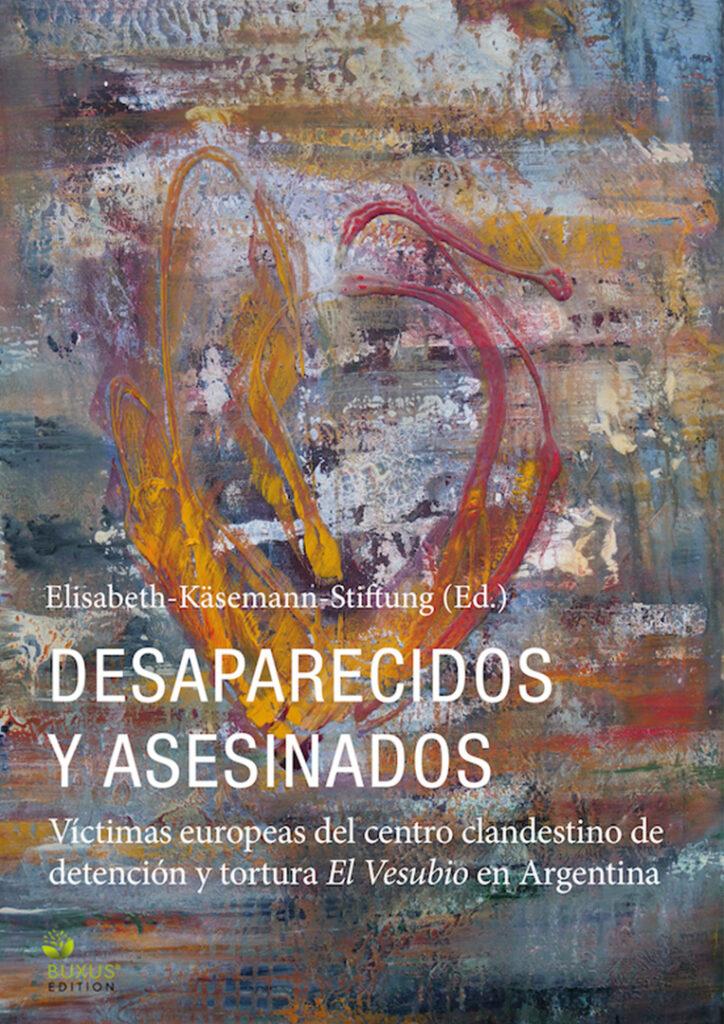
E-book, colección publicada en 2023, 142 páginas, numerosas ilustraciones, 13,99 euros, pedir aquí
To remember means to resist forgetting, to stand up for truth in the sense of historical enlightenment and for the restoration of justice in the sense of more justice. It was and is a long-lasting struggle in Argentina and elsewhere, where civil-military dictatorships have come to power.
In 2027, it will be 50 years since the grandmothers of the Plaza de Mayo, together with their daughters and sons, fought for the rights of their children and grandchildren. Many will have passed away and never met their grandchildren.
Today, in September 2024, the website of the Grandmothers of the Plaza de Mayo states that more than 300 children are still being sought, and 137 children or grandchildren have been found: https://www.abuelas.org.ar/nietas-y-nietos/buscador . The website documents the extent of one of the worst crimes of the civil-military dictatorship and at the same time the story of the impressive and courageous grandmothers who did not bow to state power and continue to fight for their rights and those of their children to this day.
There are now numerous documentaries and testimonies from witnesses and victims that make it clear what painful processes the investigation of individual cases can trigger in the abducted children, who as adults are suddenly confronted with their origins and their true parents or grandparents. In addition, the military also gave some of the children to couples whose fathers were themselves military personnel and involved in the crimes of the military dictatorship. In the search for their personal identity, these children/grandchildren may learn that their adoptive parents were involved in the murder of their biological parents or knew about it. For some, this is so unbearable that they cannot or do not want to be exposed to this truth.
The Organisation of the Grandmothers of the Plaza de Mayo, together with relatives of the disappeared and many individuals, was also one of the non-governmental organisations that campaigned at the United Nations for an „International Convention for the Protection of All Persons from Enforced Disappearance „ . It was adopted by the United Nations General Assembly on 20 December 2007 and had already been in existence for around thirty years at the time. The crime of enforced disappearance, which has been part of the systematic practice of civil-military dictatorships since the dictatorships in Chile and Argentina, was first named in a resolution of the UN General Assembly in 1978 . The history of the working group and the progress it has made is documented on the ICAED website , where you can join its efforts.
The Convention states:
Article 1
(1) No one shall be subjected to enforced disappearance.
(2. Extraordinary circumstances of any kind, whether war or threat of war, internal political instability or any other public emergency, shall not be invoked as a justification for enforced disappearance.
Article 2
For the purposes of this Convention, „enforced disappearance“ shall mean arrest, deprivation of liberty, abduction or any other form of deprivation of liberty by agents of the State or by persons or groups of persons acting with the authorisation, support or acquiescence of the State, followed by a refusal to recognise such deprivation of liberty or concealment of the fate or whereabouts of the disappeared person, thereby depriving him or her of the protection of the law.
Article 3
Each State Party shall take appropriate measures to investigate and bring to justice those responsible for acts referred to in article 2 committed by persons or groups of persons without the authorisation, assistance or acquiescence of the State.
The Convention has been ratified by 95 member states (as of September 2024) (see https://www.icaed.org/home /) .
We would like to thank the Grandmothers of the Plaza de Mayo for personal conversations and the information they have provided us with via their website and current contributions.
Abuelas de Plaza de Mayo . Official website: https://www.abuelas.org.ar/
Espacio Memoria y Derechos Humanos. Ex ESMA. Official website of the memorial site set up in the former Escuela Mecánica de la Armada, a training centre of the Argentine Navy, where those persecuted as so-called „internal enemies“ were tortured and from where they were abducted and „disappeared“. The site commemorates the 5,000 victims of Argentine state terror who were murdered and disappeared here: https: //www.espaciomemoria.ar/historia/ – In September, the educational and memorial site was added to the UNESCO World Heritage List.
Papelitos. 78 historias. 78 Papelitos sobre un Mundial en dictadura. Ed. por Memoria Abierta and NAN. (In 78 stories, this multiplatform research developed by Memoria Abierta and NAN , with the support of the Embassy of the Netherlands , collects testimonies, recovers speeches, reconstructs stories and offers analysis of different perspectives that went through that sporting event: that of its actors -football players and coach staff from Argentina and other countries-; the protagonists of the context of terror -men and women kidnapped in clandestine detention centres, their relatives who didn’t know what had happened to them, the human rights organisations-; that of those who from exile struggled to turn that sporting spectacle into an opportunity to reveal the crimes against humanity that happened in Argentina; the one offered by the media, which was reflected in the cultural expressions; the experience of the fans; the experience of the repressors.) Website spanish/ english: https://papelitos.com.ar/nota/agenda
Dillon, Marta, Historia de los Organismos de Derechos Humanos – 25 años de Resistencia, 1/ Abuelas de Plaza de Mayo (1998), Online Ressource Comisión Provincial por la Memoria, PDF
Eisenstaedt, Eva, Twice Survival. From Auschwitz to the Mothers of the Plaza de Mayo. The story of Sara Rus. Translated from the Spanish by Regina Malke Schmiedeberg. Vienna: Mandelbaum-Verlag, 2010.
Gorini, Ulises, Historia de las Madres de Plaza de Mayo. 1. la rebelión de las Madres: 1976 – 1983. Buenos Aires: Grupo Ed. Norma, 2006.
Gorini, Ulises, Historia de las Madres de Plaza de Mayo. 2nd La otra lucha: 1983 – 1986. vol. Buenos Aires: Grupo Ed. Norma, 2008.
Guzmán Bouvard, Marguerite, Revolutionising motherhood. The mothers of the Plaza de Mayo. Wilmington, Del.: SR books, 1994 (Latin American silhouettes).
.jpg#file)