
News
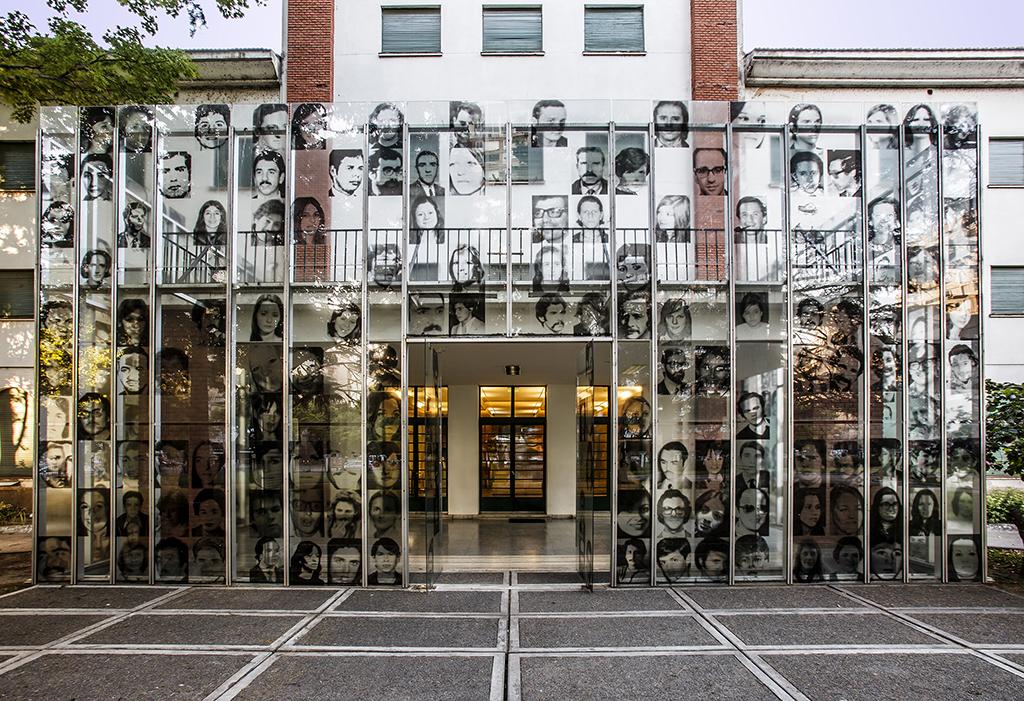


Pedro Crovetto, © Richard Lensit, Fritz Bauer Forum

Information on
During the Argentinian military dictatorship from 1976 to 1983, thousands of people were tortured and murdered. The process of coming to terms with the past is ongoing and is considered exemplary – the majority of the perpetrators have been prosecuted, the victims have been compensated and memorials have been erected in many places to commemorate the many victims and their fates. However, all of this is under heavy attack under President Javier Milei. The memory of the military dictatorship is to fade into the background, numerous jobs and funds have been cut and many facilities and institutions are under acute threat of closure. The aim is to reinterpret the dictatorship, which has so far only been analysed „one-sidedly“. Milei wants to emphasise the necessity of the dictatorship, which was a reaction to left-wing guerrillas. Pedro Crovetto and Germán Wiener will talk about how civil society in Argentina is dealing with this, what it means for the future and what a successful culture of remembrance can look like. Valeria Vegh Weis will also be connected online to talk about „The ping-pong strategy: confronting atrocities from exile“. Belén Estefania Altamirando Taranto will also be joining us live from Argentina to talk about the search for identity and the current situation of the Abuleas de Córdoba.
Pedro Crovetto is a social, economic and political scientist in Bochum. He grew up in Chile and was involved in student organisations against the Pinochet dictatorship. He works as a lecturer for special tasks at the
Germán Wiener comes from Argentina and left the country in the wake of repression by the military dictatorship in power at the time. He worked for many years at Dortmund University of Applied Sciences and Arts, where he taught film and digital media.
Dr Valeria Vegh Weis, LL.M is Argentinian and teaches Criminology and Transitional Justice at the University of Buenos Aires (UBA) and the National University of Quilmes (Argentina). She is currently a Research Fellow at the Zukunftskolleg at the University of Konstanz, where she is researching the role of human rights and victims‘ organisations in dealing with state crimes. From 2019 to 2021, Vegh Weis was an Alexander von Humboldt Post-Doctoral Fellow at the Free University of Berlin, where she continues to teach State Crime Criminology.
Belén Estefania Altamirando Taranto (Abuelas de Córdoba) was born in June 1977 during the imprisonment of her mother, Rosa Luján Taranto. The young woman was abducted in Buenos Aires in May 1977 together with her partner Horacio Antonio Altamiranda when she was seven months pregnant. The two were held captive in the secret centre „El Vesubio“. The following month, Rosa was taken to the Campo de Mayo military hospital to give birth and then returned to Vesubio, where she told another prisoner that she had given birth. The girl was handed over to the Christian Family Movement, which gave her up for adoption when she was three months old. Her foster family named her María Belén. In 2005, she decided to go in search of her origins. She volunteered at the Grandmothers‘ Branch in Córdoba, the city where she lives. In mid-2006, the National Commission for the Right to Identity (Conadi) took up her case. Following a document check, the organisation ordered DNA tests. On 29 June 2007, the National Database of Genetic Data announced that the young woman was the daughter of Rosa and Horacio.
An event organised by the Fritz Bauer Forum
Cover picture: Museo Sitio de Memoria ESMA (training facility of the Argentine Navy, torture centre during the military dictatorship, today a memorial site). © Camilo Del Cerro, CC BY-SA 4.0, httpscommons.wikimedia.orgwindex.phpcurid=69367812

Magdalena Köhler (M.A.)
Events and interactive Fritz Bauer Library
Phone
+49 (0) 1573 2562392email address
magdalena.koehler@fritz-bauer-forum.deOpening hours:
Monday to Wednesday 10.00 - 16.00 | Thursday 14.00 - 17.00 | Fridays by appointment