
News

Information on
The book project, presented by historian Professor Dr Winfried Schulze, tells the well-documented story of a German lawyer in the 20th century. The opponent of National Socialism became a senior employee in the personnel department of IG Farben, which built a large chemical plant in the immediate vicinity of the Auschwitz concentration camp between 1941 and 1945 with the help of thousands of Jewish prisoners. He thus became a co-organiser of the system of forced labour of concentration camp prisoners and thus of „extermination through labour“ in this camp.
At the same time, he became the protector of a large group of French forced labourers, whose activities for the Resistance he supported and whom he accompanied on their dangerous journey to the West in January 1945. This earned him the title of „anti-Nazi assassin Schneider“, and the French government praised his „bienveillance“ towards the forced labourers. He formed a lifelong friendship with the young Frenchmen, which led, among other things, to a Franco-German town twinning. After his testimony in the Nuremberg trial against IG Farben and a lengthy denazification process as well as a criminal trial, he became the head of the town of Goslar in 1949, author of political-philosophical texts and correspondence partner and friend of Ernst Jünger.
Dr Irmtrud Wojak (historian, Bochum) is the initiator of the BUXUS STIFTUNG, which is currently setting up the Fritz Bauer Forum in Bochum. I. Wojak was deputy director of the Fritz Bauer Institute in Frankfurt, head of the historical department of the International Tracing Service in Bad Arolsen and founding director of the Nazi Documentation Centre in Munich, and as a Frieda L. Miller Fellow at the Radcliffe Institute for Advanced Study at Harvard University, she investigated the resilience of people who maintain a point of view based on legal norms even under extreme conditions.
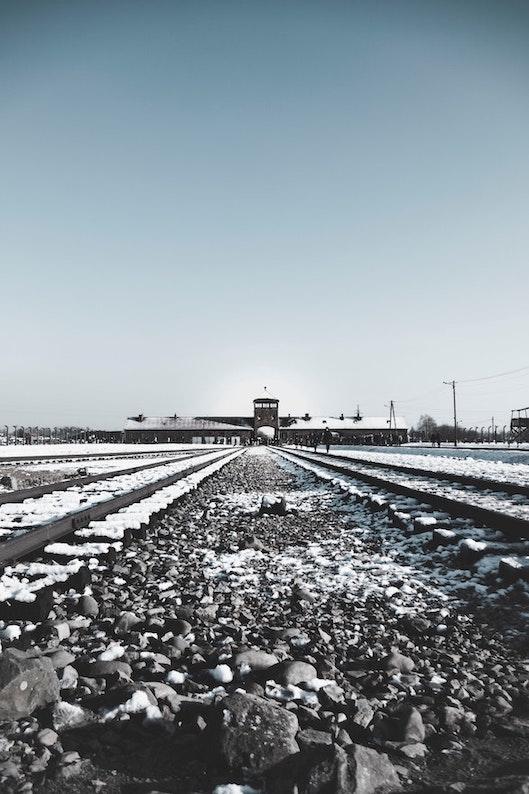
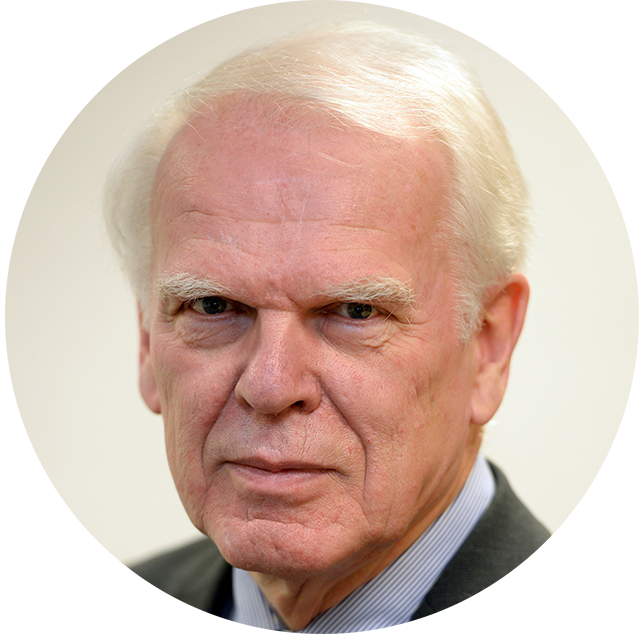
Header photo of the Auschwitz concentration camp: Erica Magugliani (unsplash), Featured images: Winfried Schulze

Magdalena Köhler (M.A.)
Events and interactive Fritz Bauer Library
Phone
+49 (0) 1573 2562392email address
magdalena.koehler@fritz-bauer-forum.deOpening hours:
Monday to Wednesday 10.00 - 16.00 | Thursday 14.00 - 17.00 | Fridays by appointment