
Autor/Autorin

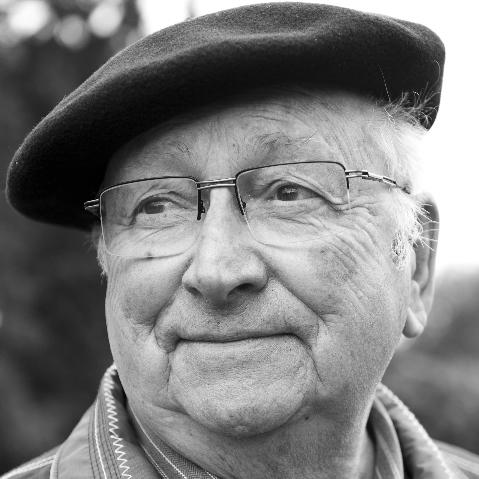
His last email with texts for his website arrived at the Fritz Bauer Forum in Bochum on 30 October. With the note: „At 97, tomorrow may be too late“. Kurt Nelhiebel died in Bremen on 11 November 2024. He is one of the last contemporary witnesses who not only knew Fritz Bauer’s concerns, but also shared them without hesitation and always defended them.
Kurt Nelhiebel was born in Bohemia in 1927. After the Second World War and his expulsion from his „old homeland of northern Bohemia“, he became a journalist and author for Radio Bremen. He is the author of an extensive body of journalistic and publicity work. Born during the Great Depression, as the son of a German anti-fascist he experienced the rise of the Sudeten German Nazis, the occupation of his homeland by Hitler’s Wehrmacht and subsequently the terror of the National Socialist regime. As a soldier, he learnt about the horrors of war during the fighting in Berlin and was taken prisoner of war by the Soviets. He managed to escape shortly before the end of the war and made his way back to his homeland. There he narrowly escaped being shot by Czech security forces. A letter from his father, which identified him as the son of an opponent of Hitler, saved his life. In the book „ Im Wirrwarr der Meinungen. Two German anti-fascists and their voices“, this letter and the course of events are documented (Peter Lang Verlag, 2013).
At the age of 19, Kurt Nelhiebel experienced the inevitable move to West Germany together with his father Eugen Nelhiebel, who left his homeland with a transport of German anti-fascists. In the West, the young anti-fascist met the old Nazis again as a spokesman for the expellees and engaged with them as a journalist. He saw his hopes for fundamental change as being best served by the Communists and experienced marginalisation and persecution once again after the party was banned.
Kurt Nelhiebel was not one to go with the flow when fundamental and human rights were in danger. In order not to get his employer into trouble, he chose the pseudonym Conrad Taler for his journalistic work and continued to shed light on the political events of the early Federal Republic of Germany, which were still soaked in Nazi propaganda and nationalist thinking. When injustice occurred and danger was imminent, he, unlike many others, did not remain silent. From the very beginning of his writing and journalistic career, „Conrad Taler“ criticised anti-Semitism and, as its perpetual flip side, nationalism for what they are: a continuation of racist and nationalist thinking, which has a sadly long tradition in Germany. For him, the Cold War was no excuse for the failure of denazification, which he saw as a matter for all Germans. Just as he was outraged by the revanchism of no fewer of his compatriots, whose forgetfulness of history he criticised.
Reflecting on his own experiences, Kurt Nelhiebel described in his books and articles the collusion of the Sudeten German ethnic German politicians with Hitler in the destruction of the Czechoslovak Republic and, as a consequence, the expulsion of three million Germans after the end of the war. His conclusion: „If the Second World War had not taken place, the expulsion would never have happened.“
On the occasion of Kurt Nelhiebel’s 90th birthday in 2017, two books were published that bring together some of his important essays on German post-war history, some of which he had published under his pseudonym „Conrad Taler“, alongside unpublished works: Gegen den Wind (Against the Wind ) published by PapyRossa Verlag in Cologne and Schwejk trifft Candide (Schwejk meets Candide ) published by Ossietzky Verlag.
Based on his childhood memories of the peaceful coexistence of Czechs and Germans in his Bohemian homeland and the subsequent period of persecution during the Nazi regime, Kurt Nelhiebel spoke out against the abuse of love of homeland by the expellee organisations, which were riddled with old Nazis. His criticism of German rearmament led him to side with the German anti-fascists and their fight against the resurgence of Nazi ideology in the form of anti-communism as a new state doctrine after 1945.
Kurt Nelhiebel’s encounter with the Hessian Attorney General Dr Fritz Bauer and his impressions as an observer of the Auschwitz trial encouraged him in his fight against the levelling of German history. He was guided by Einstein’s call for a new quality of thought and Fritz Bauer’s admonition: „Nothing belongs to the past, everything is still present and can become future again.“
The trials for National Socialist crimes of violence and the refusal of the German justice system to come to terms with its own history were always high on Kurt Nelhiebel’s agenda. As a trial observer, he reported on the first Auschwitz trial, which took place from 1963 to 1965 in Frankfurt am Main on the initiative of Attorney General Fritz Bauer. The collection of poignant reports by Kurt Nelhiebel was first published by Cologne-based PapyRossa Verlag in 2003 and reissued in 2015 with the addition of several texts about Hessian Attorney General Bauer.
The journalist made clear what courage it took for the victims and survivors to face their former tormentors by describing the unbearable mockery by the perpetrators and some of their defence lawyers during the Auschwitz trial. The fight for a different, anti-fascist, anti-national socialist memory runs like a red thread through Kurt Nelhiebel’s books and articles. They appeared in large numbers in the journals Die Tat , Ossietzky , the Neue Rundschau , the Frankfurter Hefte and the Blätter für deutsche und internationale Politik .
To mark Kurt Nelhiebel’s 90th birthday, the BUXUS STIFTUNG has published a website with numerous selected articles, essays and notes and continues to update it: www.kurt-nelhiebel.de. The Fritz Bauer Forum team will continue to maintain this website in the future. We hope that this will make Kurt Nelhiebel’s writings accessible to more and more schoolchildren who are interested in history and are committed to the present. After all, it is astonishing how relevant many of Nelhiebel’s contributions and objections from the early years of the Federal Republic still are today. Throughout his life as a critical journalist and author, Kurt Nelhiebel warned against what we are now experiencing again. In the foreword to his book „Rechts wo die Mitte ist – Der neue Nationalismus in der Bundesrepublik“ (S. Fischer Verlag), Harry Pross wrote in 1972:
„Conrad Taler’s account of the similar argumentation of the CDU, CSU and NPD has become a pamphlet, motivated by concern for repressed progress and borne by a pathos to which Helmut Qualtinger’s sentence fits best: You have a national feeling when you are ashamed of your nation. Shameful enough is reported. The book shows that people in the centre of the West German scene argue in the same way as the gravediggers of the Weimar Republic did.“
To mark the 50th anniversary of Fritz Bauer’s death in 2018, Kurt Nelhiebel published a remarkable collection of texts entitled „Einem Nestbeschmutzer zum Gedenken“ („A Nestbeschmutzer in Memory“) with Ossietzky-Verlag. On this occasion, the publisher summarised what a close look and critical journalism can achieve:
„ Born to German parents in northern Bohemia in 1927, Kurt Nelhiebel published an article about the Nazi past of the Federal Minister for Expellees Theodor Oberländer (CDU) in the Frankfurt anti-fascist weekly newspaper „Die Tat“ in 1959, triggering an avalanche that forced the minister to resign. In 1964, he recalled in the „Israelitisches Wochenblatt für die Schweiz“ that Heinrich Bütefisch, Deputy Chairman of the Supervisory Board of Ruhrchemie AG, who had just been honoured with the Grand Federal Cross of Merit, had been sentenced to six years in prison in 1948 for involvement in crimes at Auschwitz. Bütefisch had to return the medal on the same day. In 2010, Kurt Nelhiebel criticised the historical revisionist orientation of the Foundation Flight, Expulsion, Reconciliation by its founding director Manfred Kittel in the „Zeitschrift für Geschichtswissenschaft“. Four years later, Kittel was dismissed from his post with immediate effect. In 2014, he denounced the Fritz Bauer Institute’s treatment of its namesake in the Berlin newspaper „Tagesspiegel“; four months later, the director responsible, Raphael Gross, resigned. In 2014, Kurt Nelhiebel received the Villa Ichon Culture and Peace Prize in Bremen. In 2018, he was awarded the Federal Cross of Merit in honour of his services to the reappraisal of Germany’s recent history and to reconciliation and international understanding“ (to the website of Ossietzky-Verlag).
Kurt Nelhiebel’s voice is now missing. We will not forget him.