
News

Information on
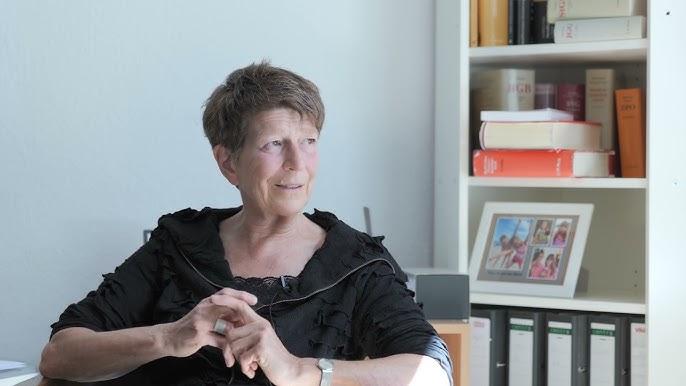
Gabriele Heinecke is a lawyer specialising in criminal law in Hamburg and a member of the extended board of the Republikanischer Anwältinnen- und Anwälteverein e.V. She represented the family of Oury Jalloh in the proceedings before the Magdeburg Regional Court and in the enforcement proceedings.
… When the police arrive on the scene, there is a verbal argument and violence. At some point Jalloh lies on his stomach on the floor, screams, is handcuffed, dragged into the police car and driven to the police station. Four hours later, Oury Jalloh’s body, chained hand and foot, is found cooked and charred in custody cell no. 5.
A few hours after his death was confirmed, the rumour spread that Jalloh had set himself on fire. How is not known. The cell is tiled, what could possibly burn there? Three days after the fire, a discovery is suddenly made: a charred lighter is found in a bag of fire debris. The fire investigators had not noticed it in the cell, although they had searched every centimetre with their hands.
In 2005, charges were brought against one of the arresting officers and the head of the police station. The regional court acquitted the two police officers in 2008. However, the judgement was overturned by the Federal Supreme Court in 2010 and referred to the Magdeburg Regional Court for a new trial. After a two-year trial, the squad leader was sentenced to a fine for involuntary manslaughter in 2012 because the monitoring of Oury Jalloh, who was handcuffed in the cell, had been inadequate and it had therefore been possible for him to set fire to himself with a lighter hidden in his clothing. The appeal against this judgement was rejected by the Federal Court of Justice in 2014. The enforcement proceedings against two other police officers on behalf of Oury Jalloh’s family in early 2019 on suspicion of murder were rejected by the Naumburg Higher Regional Court at the end of 2019. The constitutional complaint lodged against this was not accepted for decision at the end of 2022.
The joint plaintiff used objective evidence to show that the police and public prosecutor’s office never conducted an open-ended investigation, but instead pursued the goal from the outset of having the courts establish that Oury Jalloh himself and not third parties – police officers – set the fire. Attorney Gabriele Heinecke reports on how the police organised witness support after the fire, how important evidence disappeared, how forensic video recordings were interrupted at crucial points, how power cuts that never actually took place hindered the preservation of evidence and how – virtually out of nowhere – a lighter appeared that is said to have been a tool for the suicide.
Moderator: Dr Irmtrud Wojak, Managing Director of the BUXUS STIFTUNG and initiator of the Fritz Bauer Forum
Featured photo: Tim Hufner (Unsplash); photo by lawyer Gabriele Heinecke: Fritz Bauer Forum

Magdalena Köhler (M.A.)
Events and interactive Fritz Bauer Library
Phone
+49 (0) 1573 2562392email address
magdalena.koehler@fritz-bauer-forum.deOpening hours:
Monday to Wednesday 10.00 - 16.00 | Thursday 14.00 - 17.00 | Fridays by appointment