
Autor/Autorin

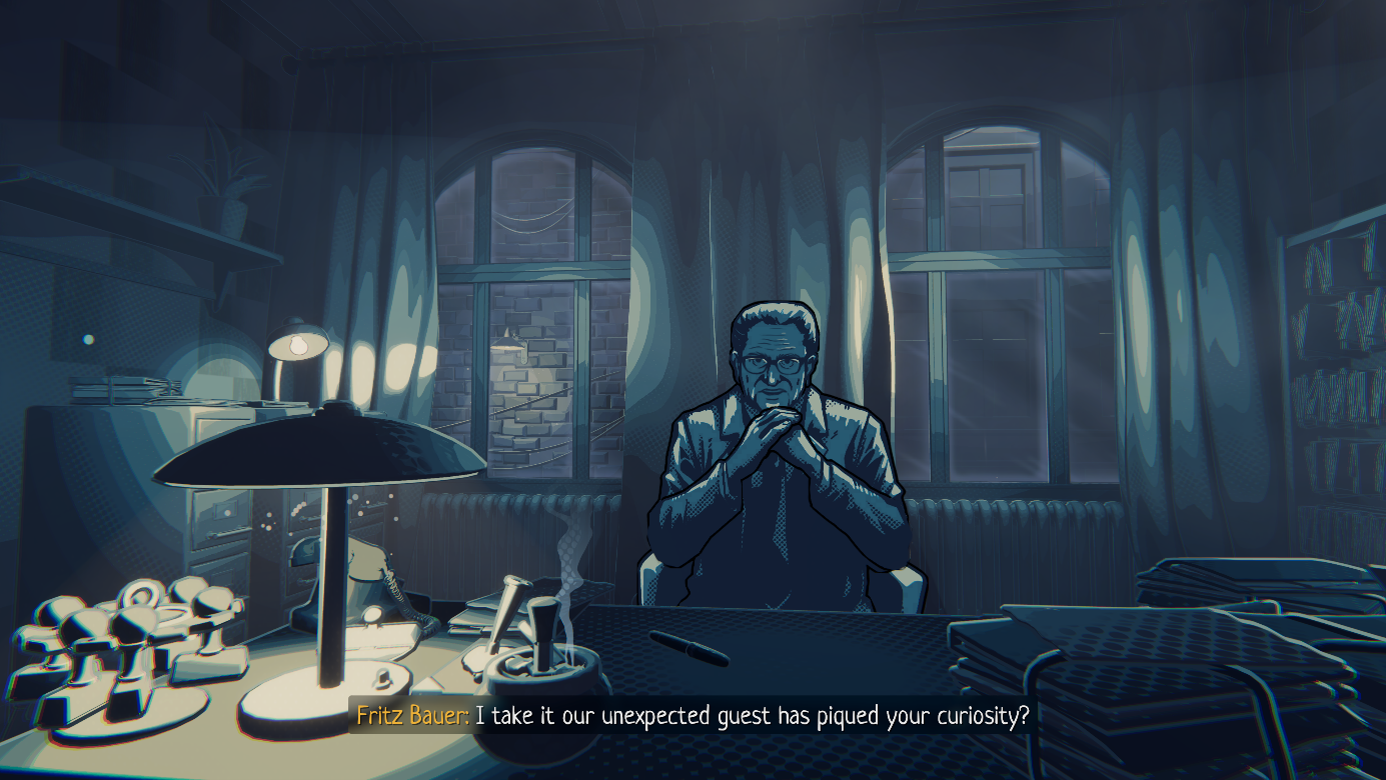
It is a grey autumn day. The rain is pattering steadily against the façade of the building. A faint beam of light shines into the gloomy office. I am sitting opposite Fritz Bauer, who, in a hoarse voice, asks me – from behind the smoking ashtrays on his desk – whether I am up to the task of investigating Nazi war crimes. Fortunately, this isn’t a memory of my job interview, but a scene from the computer game ‘The Darkest Files’ by the German development studio Paintbucket Games, which this year won the German Computer Game Award in the categories of Best German Game and Best Serious Game.
Paintbucket Games
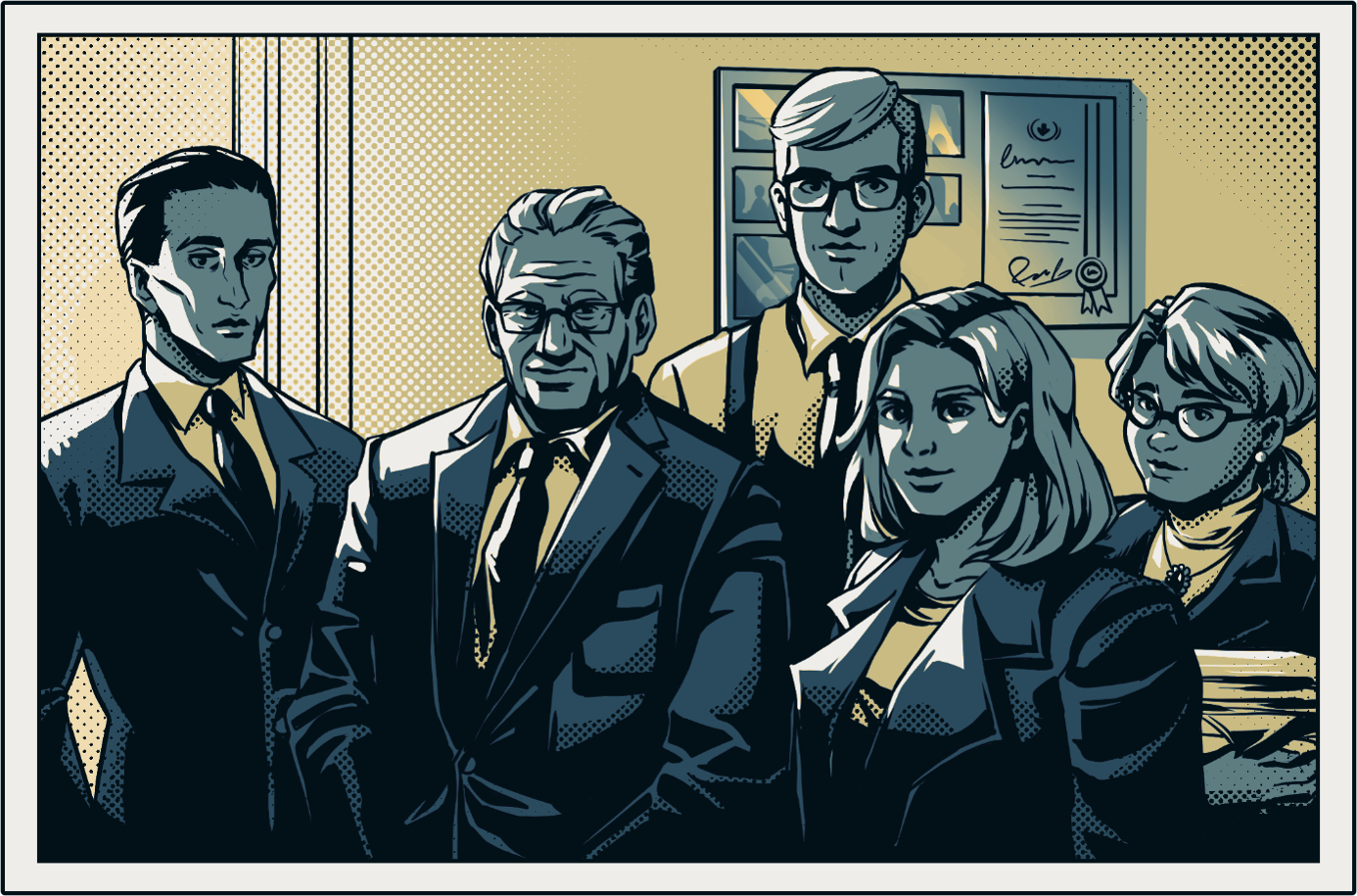
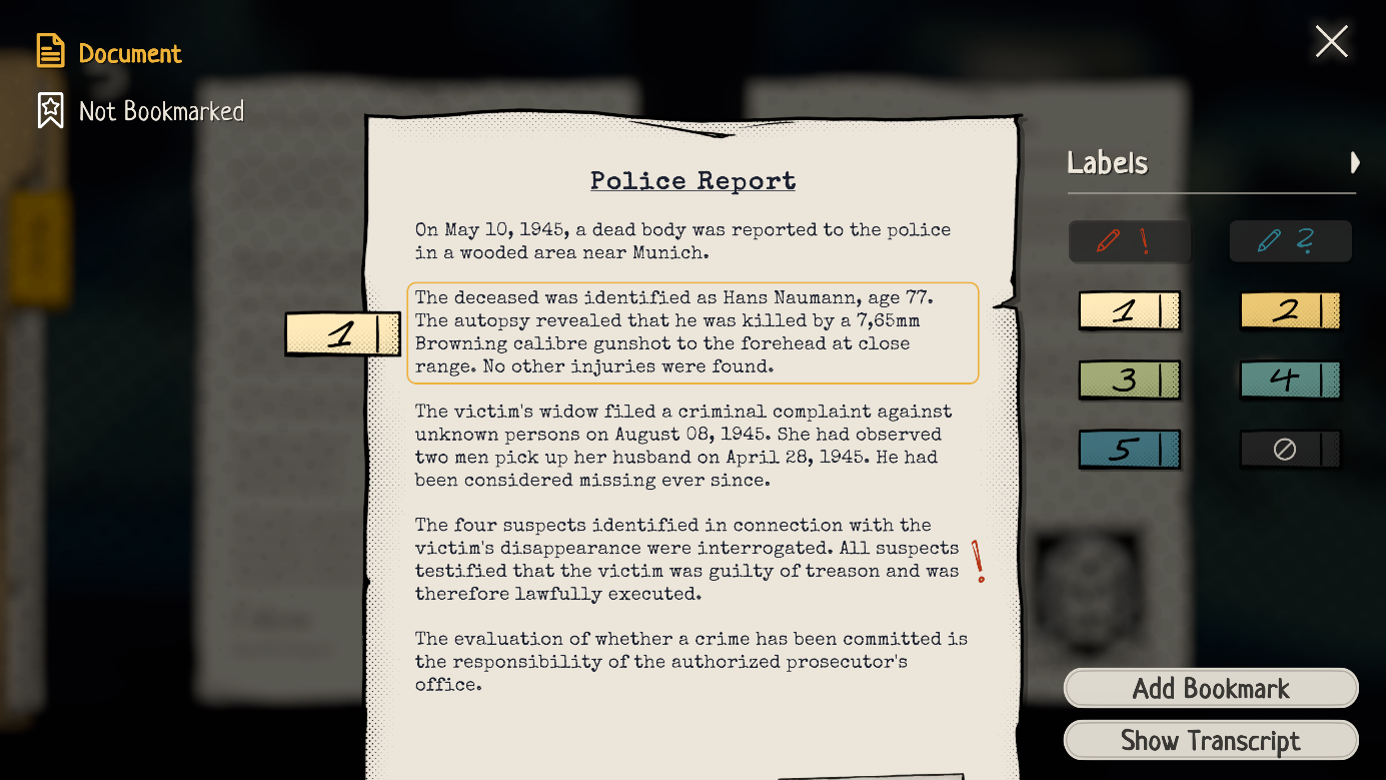
The game puts us in the shoes of Eva Katz, a newly appointed public prosecutor, on her first day in her new job as part of Fritz Bauer’s team. And so we become part of the story ourselves and can get a sense of what it was like to bring Nazi crimes to trial in post-war West Germany – both successfully and unsuccessfully. Because in ‘The Darkest Files’, we have to conduct the investigation ourselves. To do this, we rummage through archive files, decipher notes and interview witnesses. These interviews are particularly gripping, as we delve into the witnesses’ memories and piece together clues. Eyewitness accounts in the truest sense of the word! And you really do have to read the documents carefully and highlight the relevant sections, otherwise you’ll fail in the court hearing and the perpetrators will be acquitted. A thoroughly realistic portrayal.
The atmosphere of everyday office life in the post-war era is also captured very well. Almost everyone smokes, and dirty crockery piles up in the kitchenette. Newspaper articles keep you up to date with current events. Furthermore, as a female prosecutor, you’re frequently confronted with sexism. It also becomes clear that the work of Fritz Bauer and his team is being closely scrutinised. At a certain point, you start receiving threatening letters and learn from colleagues that this is not unusual. Yet within the microcosm of the office, there’s also room for gossip. This gives the characters depth. For example, one colleague hints that he once worked for the Nazi regime. The witnesses, too, behave very differently and are sometimes more, sometimes less willing to contribute to the investigations. Fritz Bauer is portrayed as an aloof superior; his office is often locked, or he cannot be reached by telephone. At times, he is absent ‘on business in Argentina’ – a clear reference to his investigations into the Adolf Eichmann case.
Paintbucket Games
What makes Paintbucket’s games special is that your actions within the game influence the course of events. This is even more pronounced in *The Darkest Files* than in its predecessor, *Through the Darkest of Times*, in which you are part of a resistance cell during the Second World War. This becomes particularly clear during the court proceedings, as you must have all the evidence you’ve gathered logically linked and ready to present at the right moment; otherwise, you’ll lose the case and the perpetrators will be acquitted due to lack of evidence. This is particularly frustrating when you realise that the two cases playable so far are based on real-life crimes. And that is one of the things that makes the game so good and immersive.
It creates a direct encounter with eyewitnesses, their personalities and their stories. The interaction feels plausible thanks to the range of statements and questions to choose from. Objects often serve as clues to evidence, each of which always holds a piece of the story and is thus contextualised with a certain aura. For example, the recreated case files are partly redacted or bear burn marks. The first-person perspective ensures that we find ourselves right in the thick of the action. Small details, such as the office cat Marlene, further enhance the gaming experience. The dark film noir comic style suits the crime aesthetic and prevents the game from drifting into the cyborg-like uncanny valley. It really makes you want to delve into the true story of Fritz Bauer, his colleagues and his cases. In doing so, ‘The Darkest Files’ not only makes an important contribution to digital remembrance culture, but also offers a good introduction to the topic of coming to terms with the Nazi past – a subject that never loses its relevance. And it’s worth sticking with it right to the end, as there’s a little twist hidden in the epilogue..
“The Darkest Files” is available for PC, Mac and the Nintendo Switch. New downloadable content entitled “Battalion” has already been announced. You can find resources for using the game in the classroom here [1] . You can find out more about Fritz Bauer and his work, as well as other stories of the resistance, on our forum or in the interactive library.